Monochrome

monochrome / group exhibition

opening: 24/05/2024   closing: 31/07/2024

Alexandra Zuckerman, Indanthrene Blue, 2024, soft pastel on paper 102 × 72 cm
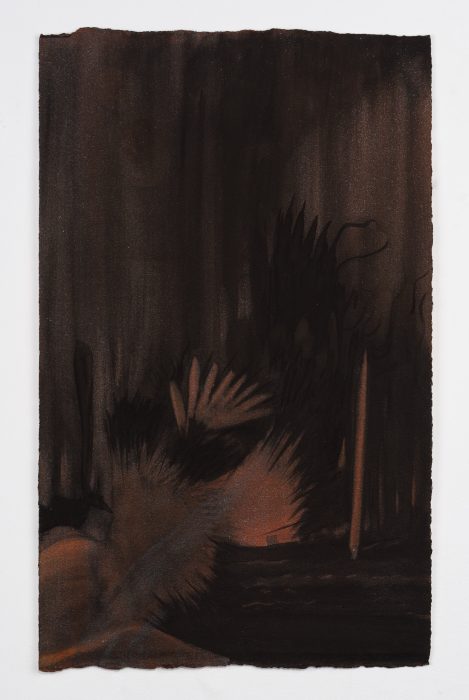
Alexandra Zuckerman, Scarlet Red, 2024, soft pastel on paper 102 × 72 cm
Joshua Borkovsky, Dream Stones 25, Oil on wood, 40 × 40 cm
 Joshua Borkovsky, Echo and Narcissus (Dyptich), 2020 Distemper on gesso on wood 81.5 × 70 cm
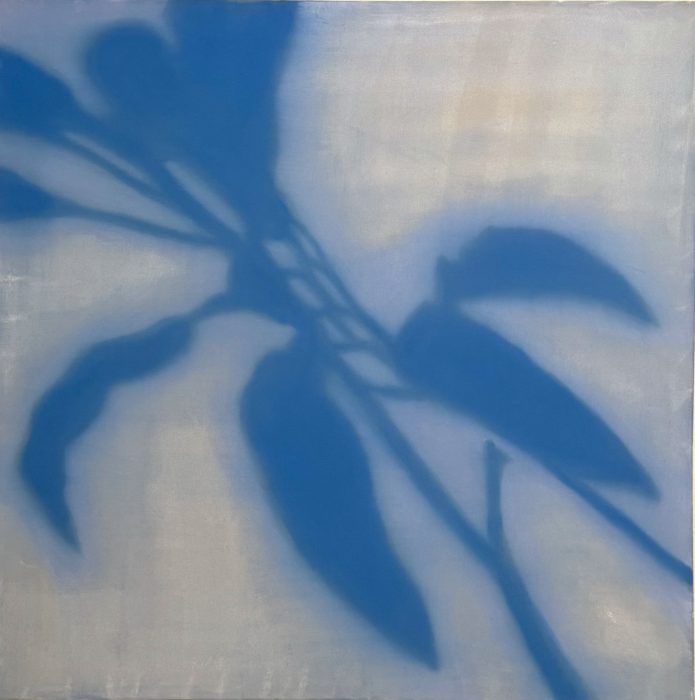
Yitzhak Livneh, The Invention of Photography 8, 2012, Oil on canvas 100 × 100 cm
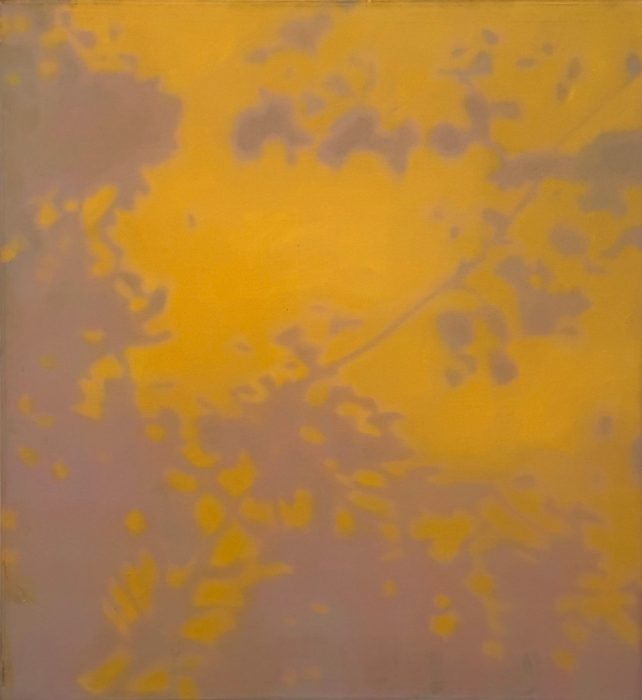
Yitzhak Livneh, Adonis, 2011,Oil on canvas, 100 × 90 cm
Mosh Kashi, Blue Spectrum #3, 2019 Oil on canvas 60 × 40 cm
Maayan Elyakim, Pineal Gland, 2010 archival inkjet print on cotton rag paper 180 × 120 cm
Maayan Elyakim, Untitled (Ha'levana), 2018 screen print, offset print, foil emboss and pencil on black paper in artist frame 47 × 35 cm
Maayan Elyakim, Untitled (Kiss), 2017 Archival Pigment Print 34 × 23 cm
Talia Keinan, Untitled (Moths), 2020 Mixed Media on paper 49 × 48.5 cm
Carlos Amorales, Bird Woman Family, 2010, Oil on wood 50 × 38 cm
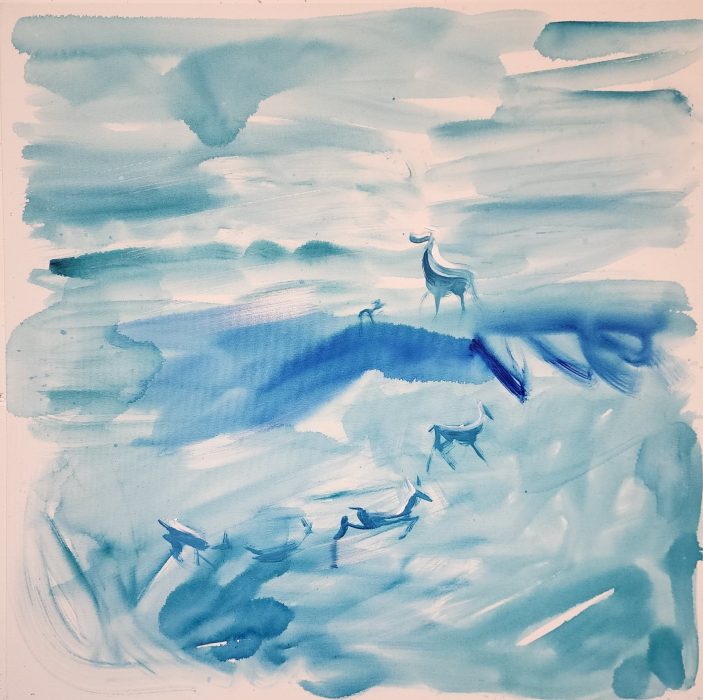
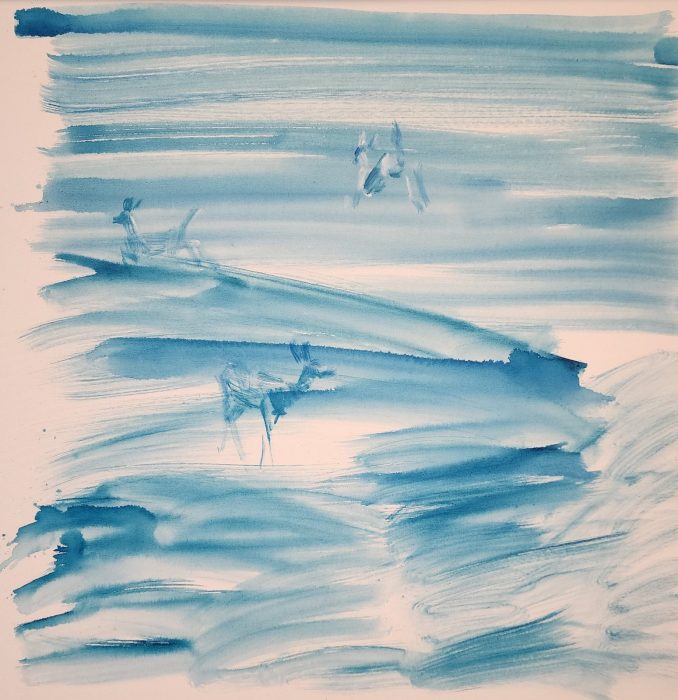
Eti Jacobi Lelior, The Blue Bambi 2, 2023, Acrylic on canvas, 100×100 cm
Lea Avital, Eye, 2014, Mixed Media, 41 × 45 cm
Yonatan Zofy, Rock, 2023 Pin holes on paper 31 × 42 cm
Rachel Rabinovich, Untitled, 2022 Acrylic and gouache on paper 45 × 25 cm
Rachel Rabinovich, Erut Layla, 2022 oil and pencil on wood 60 × 52 cm

Carlos Amorales · Lea Avital · Joshua Borkovsky · Itzhak Livneh · Maayan Elyakim · Eti Jacobi Lelior

Mosh Kashi · Talia Keinan · Rachel Rabinovich · Yonatan Zofy · Alexandra Zuckerman


The painting presents the “outward appearance of the self-centered inner life” *

The monochromatic painting, reduced in colour, tending towards abstract minimalism is the symbol of material erasure and spirituality. it allows a deeper reflection and an inward observation.

For the exhibition, single coloured works in a variety of tonal shades were chosen. most of them are in lack of an image, or it may appear hidden or disguised.

Although each of the participating artists works in a different method, the reduction of means offers a quiet, focused uniformity, free of noise, converging into silence.


* “The Western System of the Arts”, P.O Kristeller • M. Barash
The Western System of the Arts, (D) p. 88

Surface

Ido Michaeli / Surface

opening: 22/03/24  closing: 18/05/24

Installation photography: Lena Gomon
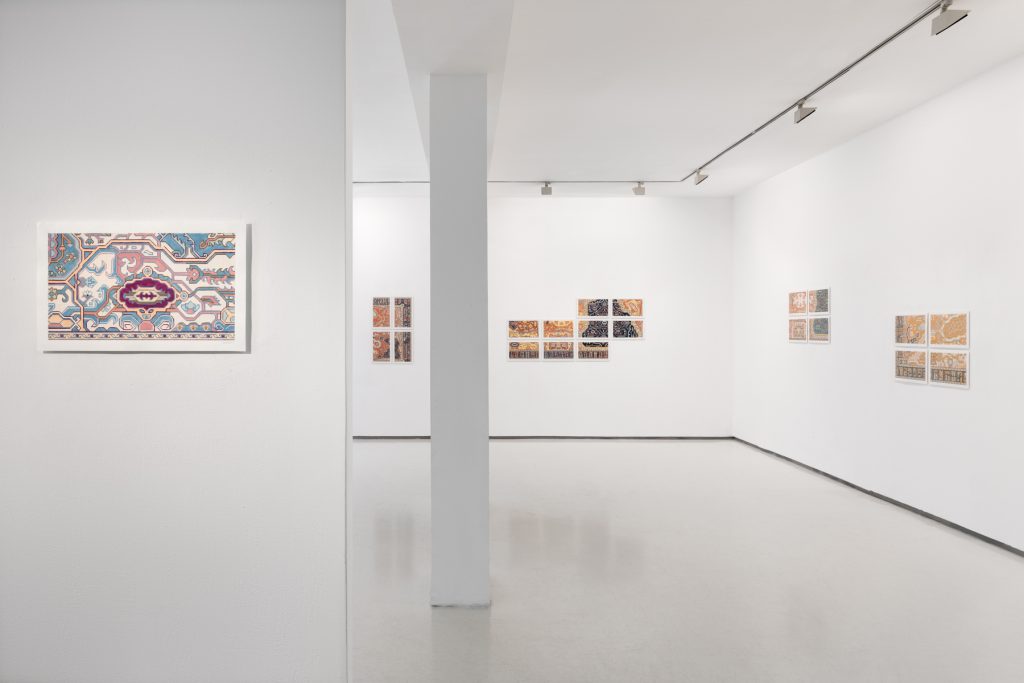
Central Park Carpets (D), 2022, 90x60cm, Watercolor on paper
Central Park Carpets (35), 2022, 45x30cm, Watercolor on paper
Central Park Carpets (06), 2022, 45x30cm, Watercolor on paper
Central Park Carpets (25), 2022, 45x30cm, Watercolor on paper
Central Park Carpets (E), 2022, 180x90cm, Watercolor on paper
Central Park Carpets (09), 2022, 45x30cm, Watercolor on paper
Central Park Carpets (11), 2022, 45x30cm, Watercolor on paper
Central Park Carpets (13), 2022, 45x30cm, Watercolor on paper

Noga Gallery is pleased to announce the opening of Ido Michaeli’s first solo exhibition at the gallery and at Artport Gallery,  Tel Aviv.


The exhibitions feature an ambitious project that Michaeli has been working on for the past few years, conjoining images of the West with techniques from the East.


Four large scale carpets woven in Afghanistan according to the artist’s instructions depict Central Park in New York. Each carpet represents a season: winter, summer, autumn and spring. The carpets are rich in details from the park depicting gardens, lakes, paths, bridges, statues and nearby buildings, in the style of a Persian carpet.


The exhibition at Noga Gallery will feature drawings that were the base for the creation of the Central Park carpets.

Prior to the production of the carpets, Michaeli translates the map of Central Park into detailed symbols and images which are then transferred onto grid paper, where each square marks a location. From there, the paintings are sent to traditional carpet weavers in Afghanistan.

Michaeli’s work is rich with symbols and images taken from past and present cultures. It aims to bring closer the boundaries between art and craft.
In long-term projects, he collaborates and works with professionals and traditional artisans from around the world: Afghan carpet weavers, Chinese tailors, Palestinian tailors and Ethiopian embroiderers, people with whom the situation in the world prevents him from meeting directly. He builds partnerships, weaves traditions and brings together eastern and western cultures that have grown apart. By combining different historical traditions, both in the process and the product, Michaeli raises questions about Orientalism, identity politics, economics and globalisation.

In a quote from his website, Michaeli says: “Born to an immigrant family, I grew up on the seam of conflicting identities: The Eastern traditions of my family versus the Western environment we were living in. This cultural split made me constantly juggle between different cultural codes; an experience that deepened even further a decade ago when I moved to the United States and became an immigrant myself. My main motivation as an artist is to challenge cultural, racial, and political stereotypes, and to bring together clashing worldviews. I believe that art enables us to find the common ground where it seems as if there is none.”

“…I come from a tradition of iconography designed to mediate stories for those who cannot read and write in signs and symbols. My way of working is similar to a graphic designer or an architect in terms of creating an outline and sending it to execution. But I try to stretch it to a critical point: an artist is expected to raise questions and be critical while infographics are meant to give answers, similar to missionary or religious art…”


Ido Michaeli, b. 1980, Petah Tikva, Israel is a multidisciplinary artist who lives and works in Connecticut, United States. He has a bachelor’s and master’s degree in art, from Bezalel Academy of Art and Design in Jerusalem.

His work is on the seam between art, craft, textiles, stained glass, ceramics, digital painting and painting.

He is the winner of the Kolliner Award for a young artist from the Israel Museum for 2017, the Young Artist Award 2015, the Artport scholarship for the years 2013-2014. Michaeli has exhibited in many exhibitions, in Israel and world wide.

Michaeli’s works are included in private and public collections  such as:  The Israel Museum, The Herzliya Museum of Contemporary Art Collection, the “Haaretz” Art Collection, the Igal Ahouvi Art Collection, and the Serge Tirosh Collection.


The Central Park Carpets project was made with the support of the following organisations:

Tel Aviv Museum of Art

Artport,Tel Aviv

Pioneer works

Turquoise Mountain

Outset

To Draw a Breath

yonatan zofy / to draw a breath

opening: 09/02/2024   closing: 16/03/2024

To Draw a Breath, White glue and acrylic, 50*70 cm, 2023
Sand Rabbit, White glue and sand, 53*79 cm, 2023
Rock, Pin holes on paper, 35*42 cm, 2023
Cloud, White glue and acrylic on glass, 12*20 cm, 2023
Sand Crown Daisies, Sand and white glue, 70*100 cm, 2023
exhibition view, photo by elad sarig

No more art in sand, no sandbook, no more masters.

Nothing gained by dice. How many
Mutes?
Seventeen.

Your question – your answer.
Your song, what does it know?

Deepinsnow,
eepinnow,
e-i-o.

Paul Celan / 
Translated by Karl S. Weimar

Yonatan Zofy’s works are deceptive in their complexity. His images transmit a thin silence, but allow restlessness to rise to the surface at the same time. They are full and compressed, yet contain emptiness and lack of grip. The silence seeks to reveal a secret emotional charge.

Through exploration and experimenting, Zofy gives special attention to the sensitivity and complexity of the materials.

The materials are basic: white glue, sea sand, glass, one shade of acrylic pigment.

The images he uses are simple: stone, sand, sky, cloud, hand, line.

The line of horizon between the sea and the sky is elusive, difficult to grasp.


The surface and the image above it – whether it is concrete or abstract – merge into each other, forming an enigmatic new being.


The world depicted in the exhibition is clean and calm and at the same time it contains loneliness and emptiness. It is a void of humanity, like before/after civilization. All that remains is sand and sky.


Yonatan Zofy, born in 1983, lives and works in Ramat Gan.

Graduated from the fine art department in Bezalel Academy of Art and Design, Jerusalem (2010).

Winner of the Osnat Mozes young artist Award (2017), an artist-teacher scholarship from the Ministry of Culture (2019) and an award of excellence for his studies at Bezalel (2011).

Participated in museum group exhibitions, Shutters and Stairs at the Israel Museum (2020), Code vs Code (2019), and And the Hand Draws On (2018) at the Tel Aviv Museum.


His works are featured in the collections of the Tel Aviv Museum, the Israel Museum, the Knesset collection and other private collections.

Back Mind

Anat Betzer / Back Mind

Opening: 15/12/2023   Closing: 03/02/2024

Untitled, 2022-2023, oil on canvas, 30x30 cm
Untitled, 2022-2023, oil on canvas, 40x40 cm
Untitled, 2022-2023, oil on canvas, 30x30 cm
Untitled, 2022-2023, oil on canvas, 40x40 cm
back mind, exhibition view. photo by elad sarig

Anat Betzer, Noga Gallery of Contemporary Art, 2023
(The text was written before the Oct 7th attacks and ensuing war)


“With the wreath’d trellis of a working brain” (John Keats).


The central image in my new exhibition is a woman’s head painted from behind. The back of the
neck, the less familiar, vulnerable, hidden side. Long months of painting a portrait that is not a face,
a hidden face (“hester panim,” if you will). A topography that turns back, charting with 0 and 00
brushes the details of this “no-face coming towards me” (Abraham Chalfi).


The different hairdos in the paintings are like a shroud, a curtain or a veil, which cover, conceal, and
illuminate – a woman, femininity.


The head that grows from the bare back seems to emerge from a nebulous background, like an
infinite cosmic space. Pictorial surfaces, brush strokes or splashes of paint seem to unfold from an
indeterminate realm. The ball of hair is in sharp focus with realistic specificity and characterization,
which is paradoxically also abstract and almost indistinct, like an obsessive realization of the
decorum, the ornate, the trifling.

The pattered or chaotic arrangement, the regular or irregular construction reveals how the “tangle”
on the back of the head is the X-ray image of a structural paradigm, method, thinking. Conversely,
these can also indicate eclectic modes of seemingly disheveled disorganized order, piled and tossed
back in a rush, like examples of chaos theory (a paradoxical expression), like the movement of the
clouds in the sky, their shape and transformation, which are not logical and cannot be replicated.


Metaphorically, one can think of a hairdo as the pet scan/reflection of the brain, of electric circuits,
the exploration or attempts to pattern the mysteries of the unknown. A network of synapses that
carry information, thoughts, an emotional labyrinth as thick as the depths of the forest – continuing
my early forests paintings and those featured in this exhibition. The twists of the paths in the forest
disappear towards the dense darkness or a source of light, towards the unknown.


In the painting, a polyphony of interlacings that intertwine one on top of the other, sometimes
interwoven separately, or as a flower and foliage arrangement that emerges from the purple-green
darkness – this is a dark (and enchanted) metaphysical nature that appears as a disturbed, mysterious
mutation, like the back of the neck that remains hidden from view. The painting heightens the
concealment, veils the veiled.

The woman that appears in the paintings, who turns her back to the viewer almost defiantly, is
“nature.” This is a seductive and thorny, embellishing and wounding, floating or captured “nature.”
The beauty erupts from within it or disappears into it like a miraculous grafting, like a parasitic plant that climbs a body, a human head, above the timeline of the mind. This is a dark forest lit by flickering fireflies.


The beauty, which I insist on, is a deceptive mask. Underneath its meticulous aesthetics, this series of
paintings can be read as an echo of an ongoing struggle, which also reflects the cardinal dramatic
conflicts of this time. Behind the curtain of beauty, unfolds the drama of undoing orders, of
challenging the “method” to the point of unbearable conceptual chaos.


“…the Impressionists, were perfectly right in electing domicile among the scrub and stubble of the
daily spectacle. As for us our heart throbs to get closer to the depths…. These oddities will
become…realities…because instead of being limited to the diversely intense restoration of the
visible, they also annex the occultly perceived portion of the invisible” (Paul Klee, quoted by
Merleau-Ponty in Eye and Mind).


Anat Betzer

protest (prologue)

protest (prologue) / group exhibition

Opening: 08/09/2023   Closing: 27/10/2023

Erez Harodi, photography class 2023#292 inside Kaplan Squares, photograph, 70X100
Itzhak livne, On a thin rope, 2022, oil on canvas, 60x80
Einat Arif-Galanti, The girl with the hat under the scroll of independence in a demonstration in front of the Knesset 02/20/23, 2023, digital painting, 50x70
Tamar Lev-on, Plate, 2023, digital drawing, 30x40
Yorai Liberman, I will lift up mine eyes neither slumber nor sleep, 2023, photograph, 60x90
Tama Goren, Vomit Party, 2023, water color on paper, 15x105 cm
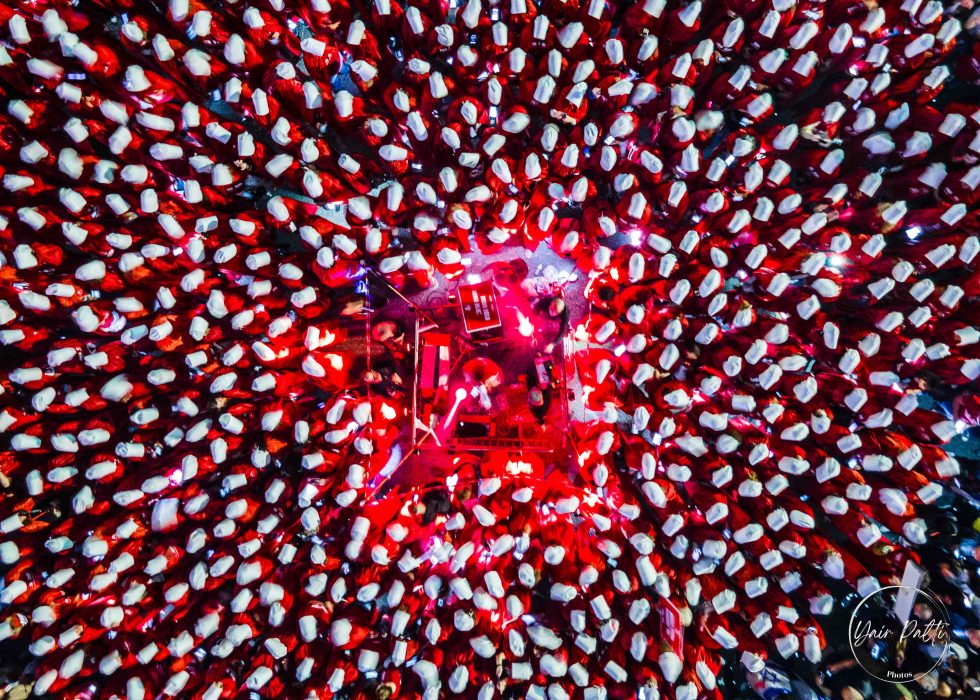
Yair Palti, The Heart of Light, 2023, photograph, 90x67.5
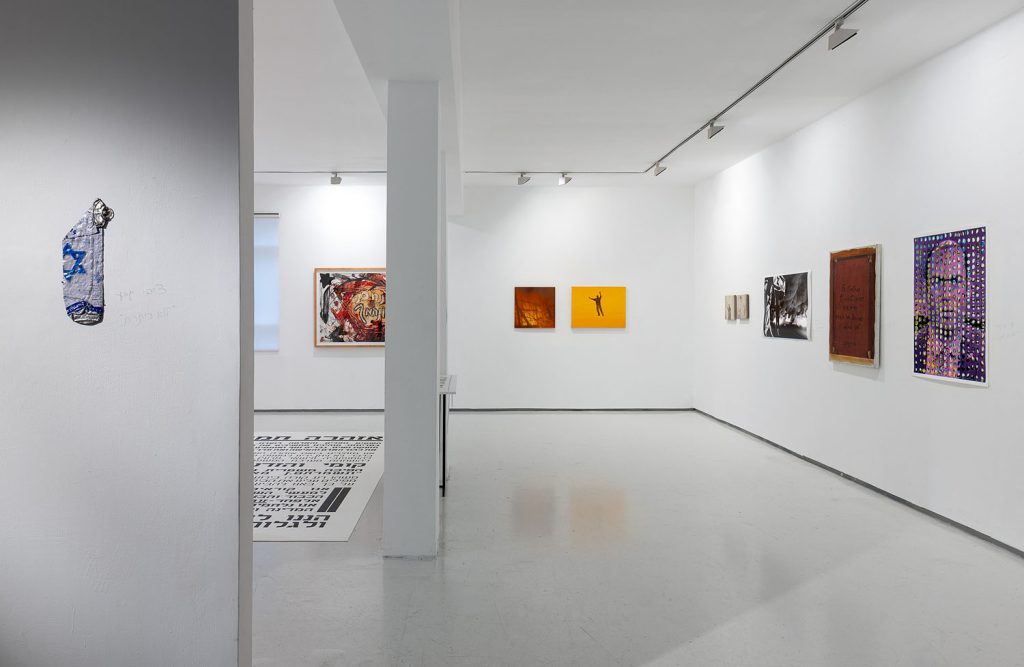
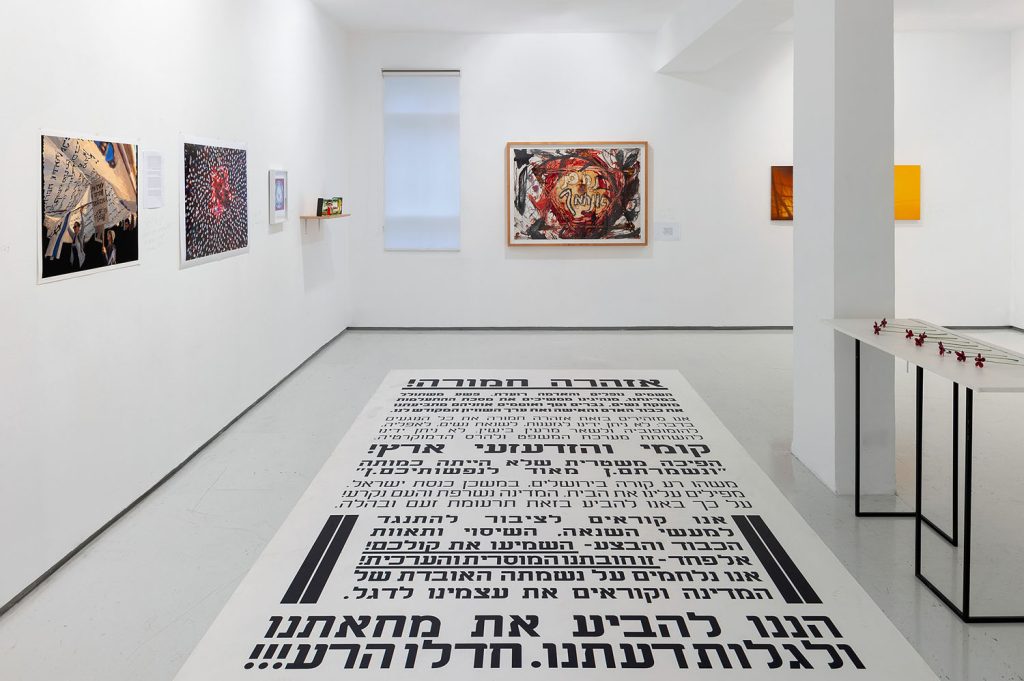
protest (prologue), exhibition view

Zeev Engelmayer / Moran Kliger / Tessy Cohen / Yoray Liberman / Adi Brande  / David Ginton  / Erez Harodi  / Jossef Krispel  / Itzhak Livne / Moshe Gershuni / Tama Goren / Tamar Lev-On / Yair Palti / Einat Arif Galanti / Ido Bar-El / Belu Simion Fainaru / Maya Shimony / Dafna Kaffeman / Tsibi Geva / Amikam Toren

…”Like a tightrope walker who suddenly looks at his shoes, and then at the abyss, we are becoming increasingly aware of the fragility of our existence here; of the sense that the ground is falling out from beneath our feet. Suddenly, nothing can be taken for granted. Not the camaraderie, not the spirit of sacrifice, not the “people’s army,” not the mutual responsibility, nothing. Before our horrified eyes, the one-of-a-kind state that was created here is being emptied of fundamental components of its character, of its specialness, its uniqueness”…

The exhibition about the Protest / “Juridical Coup” was formulated in Kaplan on one of the Shabbat evenings of the month of Tammuz. The heartbreak, the rift between families and friends, between the different tribes, and the recognition that the State of Israel is already in the abyss, alongside with the empowerment we experience together in the demonstrations, caused a sense of urgency that requires action, here and now.

This exhibition was curated in order to bring to the surface the voices of artists who reacted and are reacting to the current situation in Israel.

Nachami Gottlib

the blue bambi

eti jacobi lelior / the blue bambi

Opening: 16/06/2023   Closing: 28/07/2023

Eti Jacobi Lelior, The Blue Bambi 05, Acrylic on canvas, 100×100 cm, 2023
Eti Jacobi Lelior, The Blue Bambi 06, Acrylic on canvas, 100×100 cm, 2023
Eti Jacobi Lelior, The Blue Bambi 04, Acrylic on canvas, 100×100 cm, 2023
exhibition view, photography by elad sarig

berest livneh & co

deganit berest and yitzhak livneh / berest livneh & co

Opening: 05/05/2023   Closing: 02/06/2023   Gallery Talk: 19/05/2023

דגנית ברסט ויצחק ליבנה, משקפי שמש, טכניקה מעורבת, 155 על 120 סמ, 2000-2023
דגנית ברסט ויצחק ליבנה, דגנית, טכניקה מעורבת, 120 על 120 סמ, 2000-2023
דגנית ברסט ויצחק ליבנה, קלפים, טכניקה מעורבת, 120 על 120 סמ, 2000-2023
דגנית ברסט ויצחק ליבנה, סמדר, טכניקה מעורבת, 120 על 120 סמ, 2000-2023

Artists Deganit Berest and Yitzhak Livneh have been studio mates for almost two decades. They work in two identically sized spaces at a former diamond cutting and polishing facility that was split down in the middle.

The nucleus around which the exhibition took shape was Berest’s offer to Livneh to use large prints from her photographic series The Dreams, exhibited in 2001 at the Herzliya Museum, which have since faded and discoloured, as the support of his paintings.

Livneh, who at the time was experimenting with the amalgamation of painting and photography, happily accepted her offer. The outcome is the exhibition Berest & Livneh & Co, which features the photos from The Dreams series after Livneh painted on them.

The exhibition is also a late expression of the artists’ years long experience of working on opposite sides of the same wall.

Text: Prof. Efrat Biberman

Corpus

Mosh Kashi / Corpus

Opening: 02/03/2023   Closing: 29/04/2023   Gallery Talk: 10/03/2023

PURPLE STORM D-120cm 2023
BLUE SPECTRUM 300cmx120 cm 2023
ROUND LANDSCAPE D-120 cm 2023 Not Framed
CRIMSON CORE 50cmx35cm 2023
CRIMSON CORE D-49 cm 2023
CRIMSON ICON D-60 cm 2023 C
OVAL PANORAMA 112cm x69cm 2023
VANISHING POINT D-95 cm 2023 Not Framed
CRIMSON CORE D-60cm 2023

Mosh Kashi’s solo exhibition includes an impressive body of work created from Kashi’s consistent pictorial research in recent years. For the first time, we witness a sharp color turn that goes beyond the color scale that characterized Kashi’s previous works, along with a shift to panoramic and round formats – moves that lead the show to new realms.

The exhibition includes meticulous oil painting and subjects that have become identified with Kashi’s themes, the nature and the universe in all its cosmic elements: the cycles and the one-off events captured in the painting, like a photographic snap-shot.

The constant tension between the trivial and the sublime in Kashi’s paintings receives additional expressions in these works, in which a large-scale universe converges into circular formats with refined color palette where only a tiny glimmer of light from the darkness indicates the possibility of an infinite space around. In the large-scale works, a reversal – a tiny horizon point becomes a monumental panorama.

The large and small formats complement each other and merge into a harmonious show in the exhibition space, creating the possibility of capturing the random and the ephemeral into a pictorial reality. Kashi’s perception of painting is an open invitation to an imagined encounter between the viewer’s consciousness and the painting mystery.

leftovers

Keren Cytter / Leftovers

Opening: 27/01/2023   Closing: 24/02/2023

keren cytter, leftovers, installation view, photo by lena gomon
Outlet, Colorpencil on paper 43 x 35.50 cm, 2021
Untitled 1, Colorpencil on paper, 21x29.7 cm, 2021
Keren Cytter, Diagonal Table, Blue pen on paper, 84x89.1 cm, 2022
Keren Cytter, Monkey 2, Blue pen on paper, 84x89.1 cm, 2021
Keren Cytter, Kenneth Anger, Blue pen on paper, 84x89.1 cm, 2021

Keren Cytters’s extensive body of work includes video, performances, books and drawing. Many of Cytter’s works deal with everyday life and her personal environment, or in places that are staged as such. It focuses on the issues of social alienation, language representation and the functioning of individuals in predetermined cultural systems.

In her works, Cytter conducts deconstruction; she disassembles, separates, splits, cuts and connects. Adjacent papers are connected into single unit and create an array of images (objects, portraits, nature and landscape) embedded in an enigmatic and compressed space, echoing layers of observation, memories and associations. Realism meets the poetic, and the imaginary meets the everyday, accompanied by textual allusions.

The sense of the fragmented narrative intensifies when the gaze moves through the space between the single drawings on the walls and the drawings spread out on the tables, consisting pieces that does not connect completely. What emerges is a mindset, an associative mental process that rejects any attempt at a cohesive connection.

Cytter’s films consist of multiple layers of images – conversation, monologue and narration that are systematically assembled, aim to undermine linguistic conventions and schemes of traditional interpretation. The film shown at the exhibition, “Bad Words or When you wake up and realize that you are late to your job interview with your best friend‘s ex and you are not a lesbian but the product of a patriarchal society that‘s conditioned you to see women as sex objects” (2021), deals with the new ‘normal’, dominated by social media and the Internet. The present situation is characterized by a constant presence on the networks which leads to the collapse of boundaries between the private and the public.

Potential Space

Group Exhibition / Potential Space

Opening: 25/11/2022   Closing: 06/01/2023

Gali Blay | Joan Vellvé | Shahar Livne | Guy Königstein | Lila Chitayat

Curator: Tal de Lange

Installation view, photo by lena gomon
Guy Königstein, Present Absence, Blood River Monument Natal Province, 2016 Digital collage, fine art print on aluminium 24x30 cm
Lila Chitayat, Urban Spores, 40X70 cm
Gali Blay, Desert Ark, Stills from video
Stills from video, Consume! by shahar livne 2
Guy-Königstein,-Present-Absence,-Pioneer-Leader-Karel-Landman-Monument,-Alexandria,-2016,-Digital-collage,-fine-art-print-on-aluminium,-24x30-cm
Joan Vellve, Stills from Video 2, Oikos, 2022
Lila Chitayat, Casbah 02, 40X70 cm
Joan Vellve, Still from Video 3, Oikos, 2022
Lila Chitayat, Casbah 01, 40X70 cm

The term “Potential Space” (intermediate area) is taken from the theory formulated by psychoanalyst D. W. Winnicott. According to Winnicott, the potential space stretches between existence that is detached from reality to one that holds on to reality. The term delineates a third mental realm, a place of encounter between Inner and Outer Reality. Neither external nor internal, this space is a nebulous intermediate zone where subjective experience and creative life unfold. A dynamic realm of play and creativity, where the cultural experience takes shape. As an intrinsically indefinite realm, this space lends itself to new discoveries.

The term serves as a conceptual basis for the exhibition, where the potential space is given complex interpretation, drawing on the tension between the three states. The six works featured in it offer a personal take on this concept, while each address it in its own unique way, presenting disparate and diverse readings.