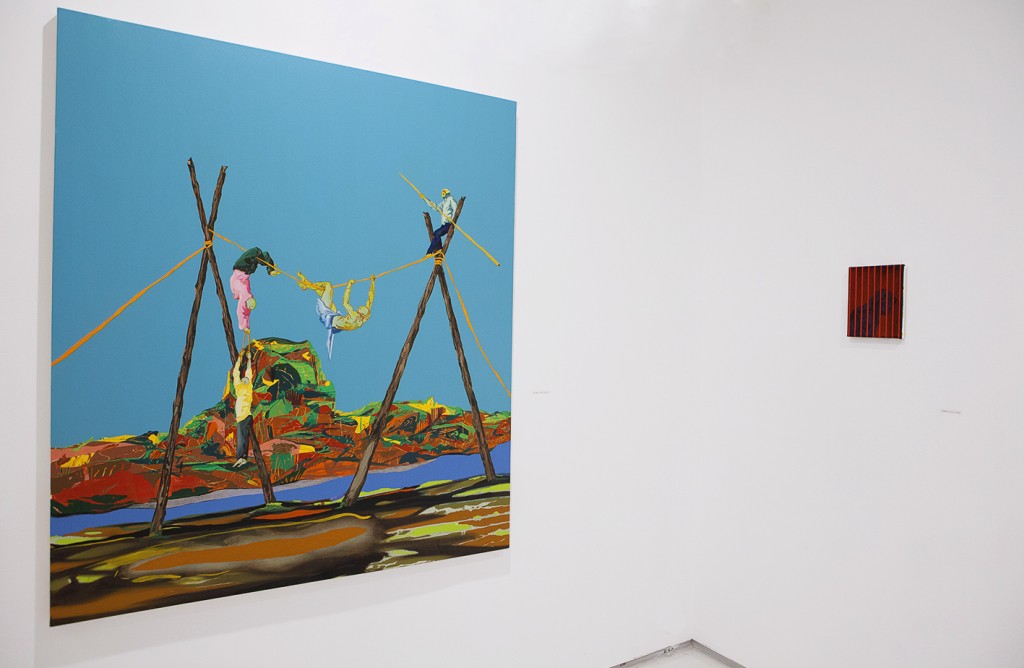
Linked Thread

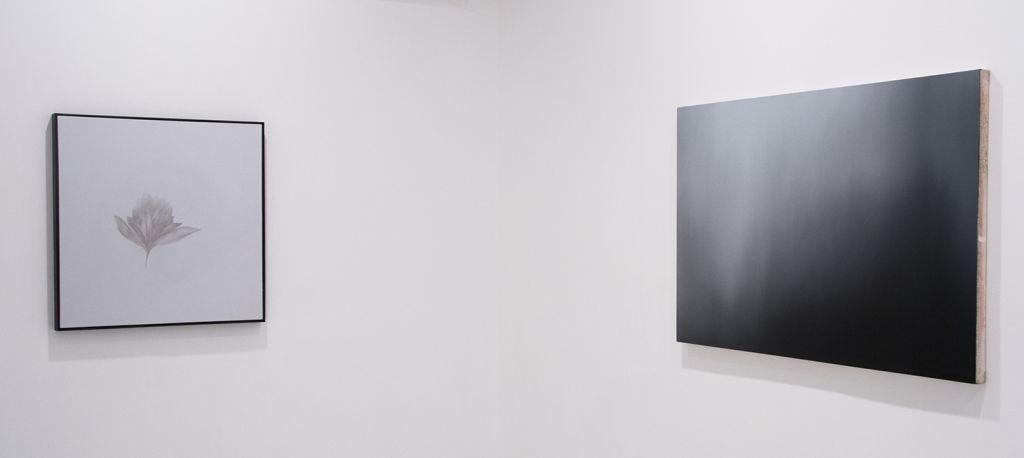
Group Exhibition / Linked Thread

orit akta hildesheim
sapir gal
aviv keller
ofer rotem


Opening: 27/01/2017   Closing: 10/03/2017

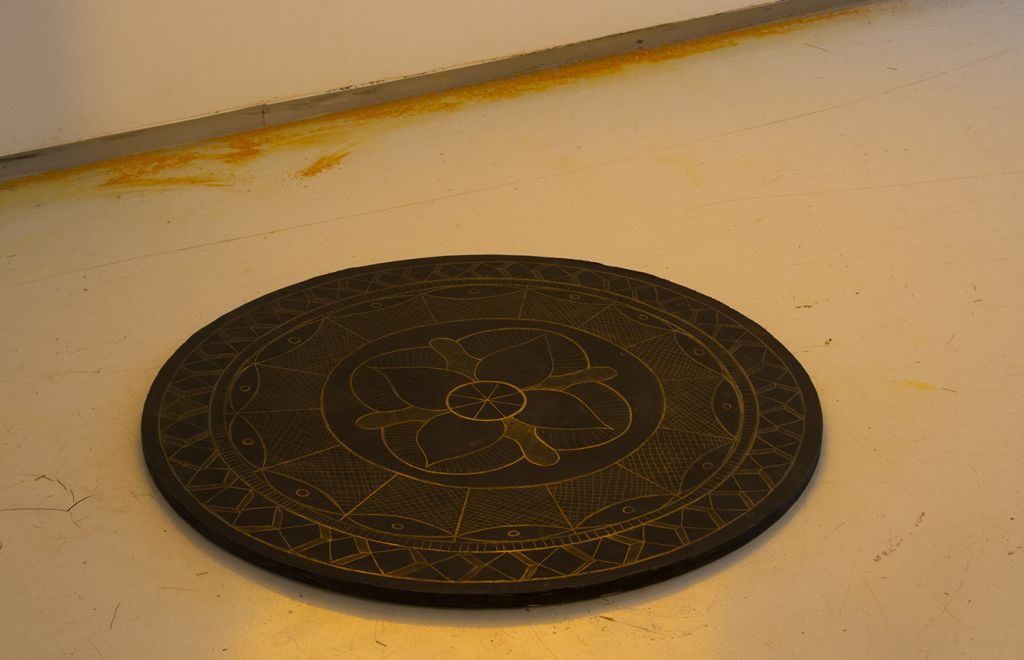
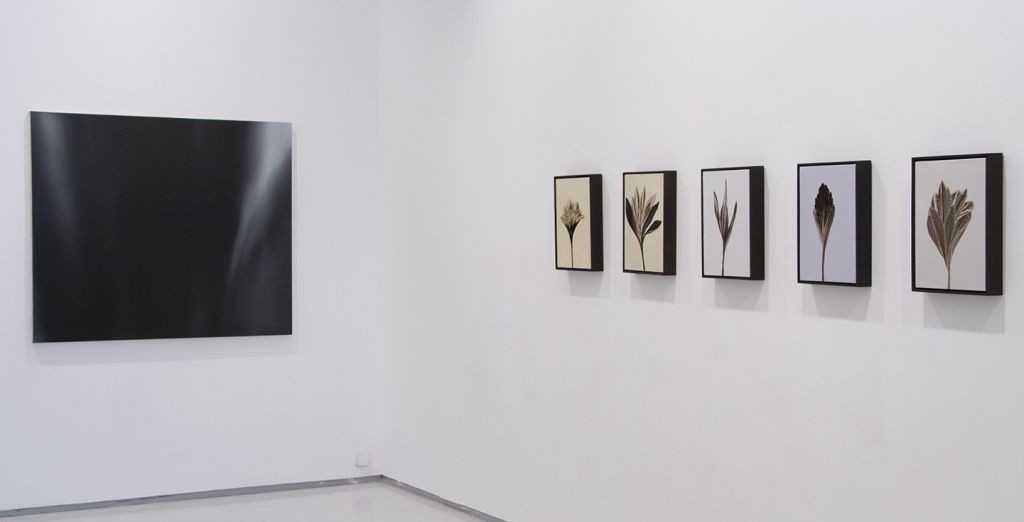
Linked Thread, Exhibition View, Noga Gallery, 2017
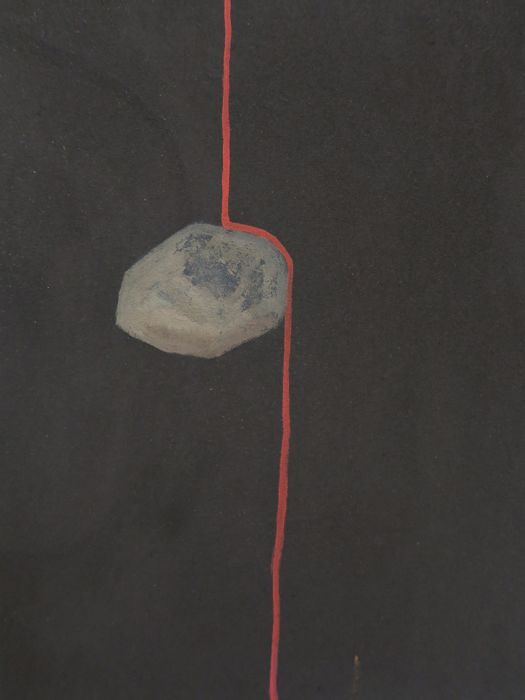
Aviv Keller, north east, embroidery on canvas, 58x44cm,2016
ofer rotem, ayla vista, drawing on cardboard 102x75cm, 2016
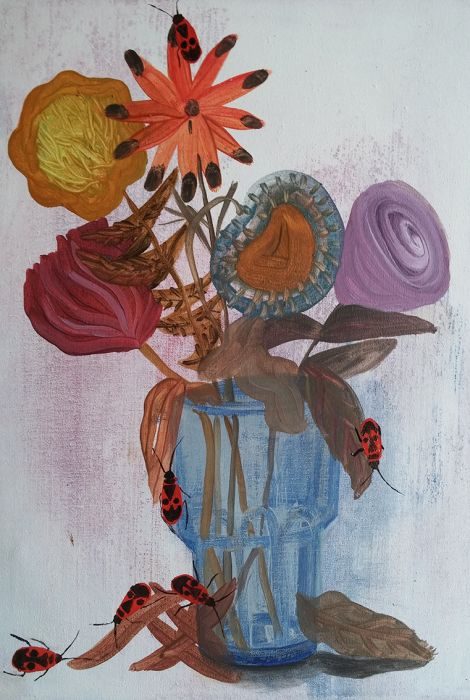
orit akta hildesheim, untitled, oil on canvas, 60x40cm, 2016
sapir gal, softner free, oil on canvas, 120x120cm, 2016

New Works

Dina Shenhav / New Works

Opening: 10/11/2016   Closing: 10/01/2017

Dina Shenhav, Installation view, Noga Gallery of Contemporary Art, 2016

Floating World

Ori Gersht / Floating World

Opening: 08/09/2016   Closing: 04/11/2016

Floating World, Exhibition view, Noga Gallery, 2016
A Matter of Life and Death 01, 130x184cm,2016
Floating World 01, Archival Pigment Print, 120X118cm, 2016
Melting world 02, Archival Pigment Print,120X120cm, 2016
Hanging Sky 02, Archival Pigment Print, 120X138cm, 2016
Floating World 04, Archival Pigment Print, 120X119cm, 2016
Hanging Sky 04, Archival Pigment Print, 120X125cm, 2016

Ori Gersht: Floating World


Central to Gersht’s work is an examination of the evolving nature of the camera. Traditionally a device that recorded what was in front of it, it has now become something that creates our world rather than documents it. Since the digital revolution the speed of information transmission has compressed both time and space. We can now immediately see images of events as they are happening on the other side of the world, and the technology that makes this possible is now available to millions more people than ever before. This has profound implications for how we see and experience what is outside of us. Nothing remains fixed for long; everything is in flux. What is reality?


In November 2015 Gersht spent ten days in Japan visiting and photographing the Zen gardens located in and around Kyoto. Created to reflect the essence of nature, not its actual appearance, and as aids to meditation, these gardens are self-contained worlds within the wider world; places where time stands still. For Gersht they represented an alternative to our image saturated ‘world in flux’. Gersht chose particular places to photograph within the gardens where natural forms are reflected in water.


During the post-production process, in an attempt to perfectly integrate the reflection with the reflected objects – what he calls the virtual with the material – Gersht inverted and overlaid the photographs that he had made in Japan. The fused combinations created new spaces which hover between material and virtual realities. The resulting photographic prints are fundamentally dependent on something that exists in the physical world, but because of the melting together of tangible reality and its reflection, are not literal depictions of it. We are presented with the absence of the object of representation. The photograph becomes the thing that exists, an image of the folding of space and time.


In the photographs in the Floating World series, we are shown a new reality that is only available to us because of the mediation of the latest optical technology. At the same time, however, Gersht reminds us that our comprehension of this new reality depends on a continued relationship with both the natural world itself, and its reflection in art.

Pishpas Ha’ash

Talia Keinan / Pishpas Ha’ash

Opening: 01/07/2016   Closing: 05/08/2016

Untitled #1, oil and sand on canvas, 40x30cm, 2016
Untitled #2, oil and sand on canvas, 40x30cm, 2016
Talia Keinan, pencil on paper, 30x20cm, 2016
Talia Keinan ,mixed media on canvas, 30x40cm, 2016
Installation View, Noga Gallery of Contemporary Art, 2016

Make Up

Jossef Krispel / Make Up

Opening: 16/04/2016   Closing: 04/06/2016

Make Up, Exhibition view, Noga Gallery of Contemporary Art, 2016
Jossef Krispel, Acrylic and Oil spray on Canvas, 96x76cm,2016
Jossef Krispel, Acrylic and Oil spray on Canvas, 175x145cm,2016
Jossef Krispel, Acrylic and Oil spray on Canvas, 76x96cm,2016
Jossef Krispel, Acrylic and Oil spray on Canvas 175x145cm,2016
Jossef Krispel, Acrylic and Oil spray on Canvas, 100x120cm,2016
Jossef Krispel Acrylic and Oil spray on Canvas, 120x150cm,2016

A cappella

Mosh Kashi / A cappella

Opening: 18/02/2016   Closing: 08/04/2016

Artist Talk: 01.04.16 at 12:00

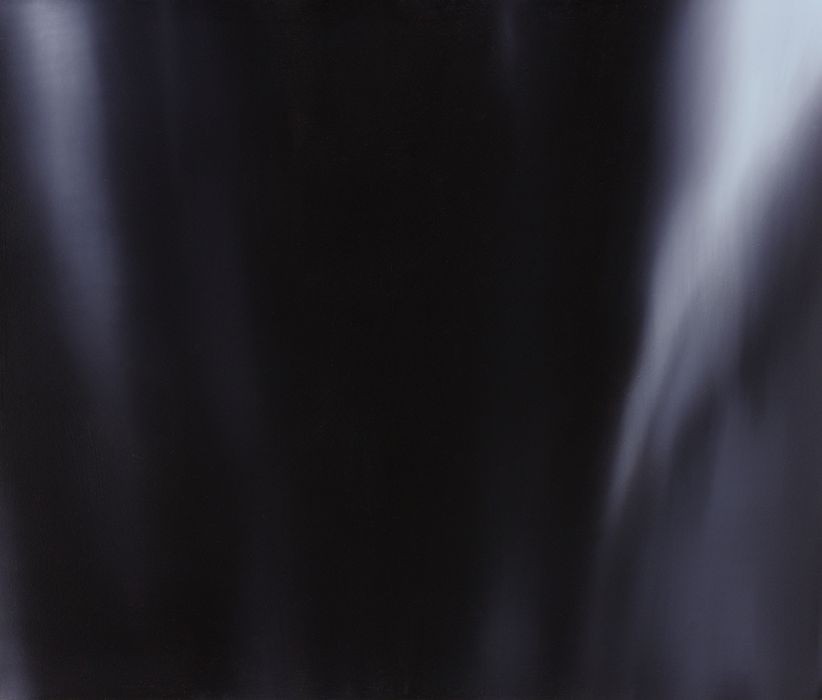
A cappella, Exhibition view, Noga Gallery of Contemporary Art, 2016
A cappella, oil on canvas, 140x120cm, 2016
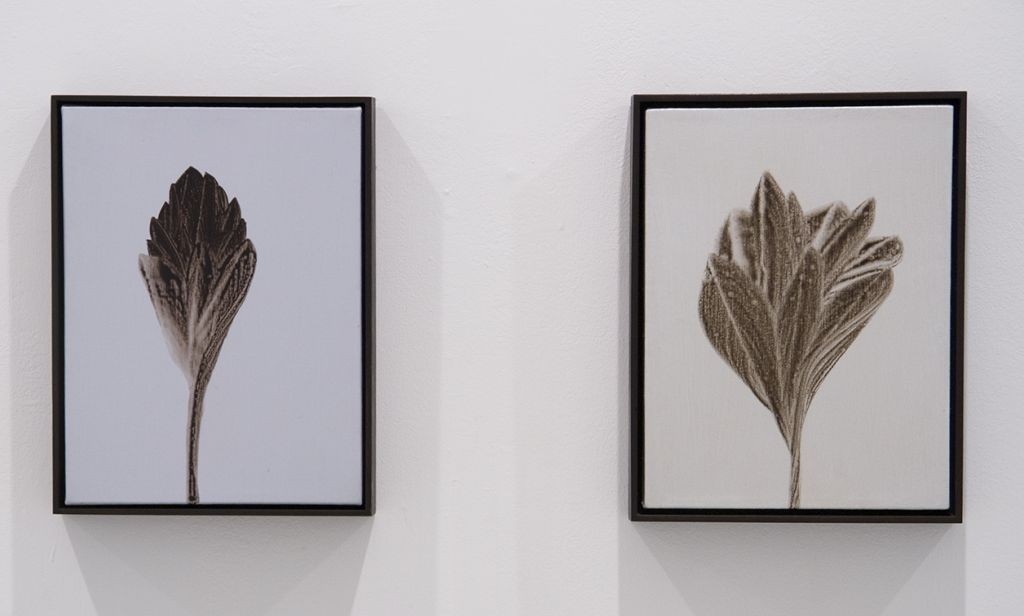
ASH FLORA, oil on canvas, 60x40cm, 2016
ASH FLORA, oil on canvas, 55x75cm 2016
ASH FLORA, oil on canvas 40x30cm, 2016
ASH FLORA oil on canvas, 70x70cm 2016
ASH FLORA oil on canvas, 40x30cm, 2016
ASH FLORA, oil on canvas, 40x30cm, 2016
ASH FLORA, oil on canvas, 80x80cm,2016

The surfaces of Mosh Kashi’s paintings seem as though they are made of silver foil stretched over the frame, and only the traces of the brushstrokes divulge the trail of the brush on the canvas. On these surfaces, drawings appear as if from nowhere, while the traces of the brush movement as it forms the image attest to the essence of the body language contained in the drawing hand. Until now, this language has been encapsulated in Kashi’s painting between the layers of paint and the polished surface. Kashi harnesses the quality of drawing in order to give shape to the birth of the first line, and at the same time, to its demise.


These drawings mark a turning point in Kashi’s painting, which up until now has been hermetic and meticulous. They present unraveled drawing, exposed by its skeletal appearance, which is sometimes present as a poignant image and at times dissolves into the emptiness that envelops it. The canvases painted with silver or gold generate an intentional alienation to the possibility that this is the habitat of a plant of some sort, while simultaneously giving the feeling that the drawing is pushed to the front of the painting, as though the background and the image are separate entities. Like they were portraits distinguished from the sphere that surrounds them.


The series of drawings Ash Flora echoes the exploration of botanical encyclopedias illustrators throughout the years, rooted in drawing and etching. However, in some of the works, the shift that Kashi introduces by merging the two disciplines (drawing and etching) points to a different direction: the world of photography, where photographed images materialize only in a hermetic, closed world, like a darkroom. The luminescent metallic surface that serves as the drawing’s background is evocative of the photo paper, the gelatin silver print, in the literal sense, but also in the sense that reveals the gap between it and the world of painting, which takes shape and forms from gaze to gaze. The drawings have volume and tones, yet their shadow is contained within, and does not exist outside the bounds of the image. These drawings often look like a flattened shadow of the image that was ostensibly left outside the canvas – a feeling enhanced by the mirror-like silver paint in the painting’s background, with subtle reflections of the surrounding space it encloses.


The body of works Ash Flora was created concurrently with the series of panoramic paintings A Cappella – the studio serving as a shared living environment of two distinct disciplines that have been assimilated in one another: drawing and painting. The supposedly different modes of operation bring forth questions that explore representations and possibilities for giving form to the action, to the gesture of painting, as images that carry meaning, so that the painting functions as a drawing and the drawing as a painting.


The large dimensions of the paintings in relation to the drawings further stress the private scale of both worlds: the drawing, smaller and exploratory, while the painting is like a materialization of a panoramic space with mass and color from end to end; expansive landscapes converted into a heavenly universe with no beginning or end – a universe in which the glimpses of light measure a false infinity.


These paintings and drawings are another chapter in Kashi’s exploration of questions of painting in recent years, at the center of which lies an examination of the distinction but also the affinity between the sublime and the trivial through a profound painterly research that could be compared to the discovery of the tension between vocal sound and absolute silence.


Mosh Kashi was born in Jerusalem in 1966. He graduated from HaMidrasha Art School (1987) and holds a master’s degree in Art from Bretton Hall University, Leeds, UK (2000). Kashi is a senior lecturer in Bezalel Academy of Arts and Design and head of the sculpting track in the Department of Ceramics and Glass Design.  He exhibited 10 solo shows and participated in dozens of group shows in Israeli and international museums and galleries. His works are included in prominent private and public collections, including the Israel Museum, Jerusalem, Haifa Museum, Tefen Museum, Recanati and more.  A comprehensive retrospective show of Kashi’s works was held for six months in 2012 at Stef Wertheimer’s Tefen Museum. The exhibition featured almost 100 works and was accompanied by an extensive artist’s book. At 2014 Mosh Kashi exhibited a solo exhibition ASH DREAMER at Noga Gallery of Contemporary Art, and at 2016 exhibited a solo exhibition A cappella also in Noga Gallery of Contemporary Art


Major prizes: Young Artist Award (1994); Artistic Encouragement Award (1997); The Minister of Education and Culture Award (2004).

Drawings

Group Exhibition / Drawings

Opening: 15/01/2016   Closing: 12/02/2016

Drawings, Exhibition View, Noga Gallery of Contemporary Art, 2016
Michael Halak, Untitled, pencil on paper, 60x45cm, 2015
Jossef krispel, Untitled, Archive print on paper, 50x50cm, 2011
Alexandra Zuckreman, house number seven,pencil on paper 59.4x42 cm, 2012
Hilla Toony Navok, Untitled #1, Colored penclis drawing and papers, 50x35cm, 2015
Lea Avital - From the Water Pump series, Silk Screen, 70x100
Nogah Engler, Hanging Hall, pencil on paper, 50x35cm,2005-2006
Shahar Yahalom, Glowing Lilies, monoprint, 50x35cm,2015
Orly Maiberg, Untitled, water color on paper, 50x35cm, 2015
Keren Cytter, Right, ink on paper, 29.5X21cm, 2007
Talia Keinan, The Cooler, ink and oil on paper,2010, 65x50cm

Group  exhibition by the gallery artists- Drawings
Artists participating: Lea Avital, Nogha Engler, Michael Halak, Shahar Yahalom, Orly Maiberg, Hilla Toony Navok, Alexandra Zuckerman, Talia Keinan, Jossef Krispel and Keren Cytter.

“Now are the Woods all Black, But still the Sky is Blue”

Chanan de Lange / “Now are the Woods all Black, But still the Sky is Blue”

Opening: 12/11/2015   Closing: 02/01/2016

White Night, mixed media, 260x210cm, 2015
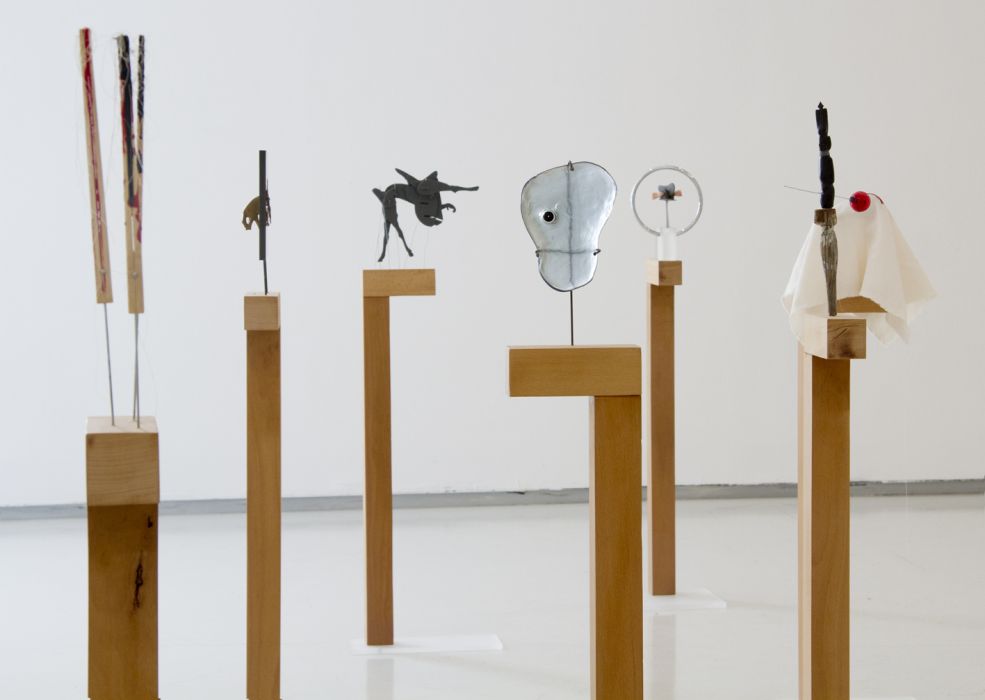
column no. 5, beech wood, concave mirror and figure, 25x20x110cm, 2015
Liminal time, mixed media, 140x210cm, 2013-2015
Column no.3, beech wood, painted plywood and sponge, 30x20x110cm, 2015
Brief Night, Mixed media, 120x210cm, 2015
column no.2, beech wood, glass and metal, 25x20x110cm, 2015
column no. 10, beech wood, rusty metal, 50x15x120cm, 2015
Mr & Mrs Bones, Mixed media, 130x120cm each, 2013-2015
column no. 22, beech wood, water float, bulb holder, wires, 25x20x120cm, 2015
column no. 1, beech wood, aluminum, steel, 30x20x110cm, 2015
"Now are the Woods all Black, But still the Sky is Blue", Installation view. noga gallery of contemporary art, 2015
"Now are the Woods all Black, But still the Sky is Blue", Installation view, noga gallery of contemporary art, 2015
"Now are the Woods all Black, But still the Sky is Blue", Installation view. noga gallery of contemporary art, 2015

Noga Gallery is delighted to present sculptures and paintings by Chanan de Lange created in 2013-2015.


The exhibition’s title alludes to an in-between state, the elusive moment between darkness and light, when the sky is still blue but the landscape is getting darker, like the in-between that exists in de Lange’s artworks throughout his artistic career. Since his graduation and throughout his work as a designer, planner, architect, de Lange engages in a profound dialogue with visual art.


Marcel Duchamp created a distinction between the “ready-made” and “objet trouvé” (found object), which the artist discovers and chooses due to its singular qualities. The ready-made is usually one object of many, produced in mass assembly line, a nondescript object. Andre Breton defined the ready-made as “an industrial object elevated to the dignity of a work of art by the mere choice of an artist”.


Chanan de Lange’s studio houses hundreds or thousands of ready-made parts alongside items collected over the years with love and care, objects with past and history, with cultural values of their own and very specific associations to the life of de Lange, which serve as a reservoir of memories, or as the painter’s palette.


Chanan de Lange is a Dadaist artist, the spirit and freedom of Dada artist is blowing between his works, characterized by a playful and tongue in cheek tone. Marcel Duchamp had said: “I enjoy looking at the bicycle wheel, it has a pleasing and comforting aspect”. De Lange’s pleasure in the creation process, the freedom with which he operates, breathes life, forms relationships, re-creates, creates two and three dimensional works, full of humor, movement, and imagination. The connection between the different elements forms a new syntax that imbues them with fresh, personal and universal meanings.


The exhibition also includes works on canvas originating in curtains, in some of the canvases there is a use of light. The works on canvas, like the sculptures, stress the engagement with liminal moments, and correspond in a different manner with that hinted in-between.


Professor Chanan de Lange graduated with honors from Bezalel Department of Industrial Design. He has been an active designer since 1985 and a teacher at Bezalel since 1988. He served in the past as head of Bezalel Industrial Design Bachelor’s Degree program and (1992-1995) and Bezalel Industrial Design Master’s Degree program (2006-2007). An associate professor since 2003 and a professor since 2008.


De Lange has had two solo exhibitions at Tel Aviv Museum of Art (2012 and 1994), as well as a solo exhibition at Novalis Gallery in Turin, and Haifa Museum, and his works were featured in many group exhibitions at Tel Aviv Museum of Art, The Israel Museum, Jerusalem, The Tel Aviv University Gallery, The Artists’ Studios, Holon Design Museum and more.

The Young Mariner

Matan Ben Tolila / The Young Mariner

Opening: 10/09/2015   Closing: 31/10/2015

Gallery Talk: 16/10/2015 at 12:00 pm

the young mariner, exhibition view, noga gallery of contemporary art, 2015
The Great Run, oil on canvas, 210x130cm, 2015
Young Lucian, oil on canvas, 170x106cm, 2015
Acrobats, oil on canvas, 164x144cm, 2015
Silver moon, oil on canvas, 97x60cm, 2015
Indie-Indie, oil on canvas, 210x130cm, 2015
Archer, oil on canvas, 133x166cm, 2015
Puzzle, oil on canvas, 166x133cm, 2015

About Matan Ben Tolila’s exhibition The Young Mariner / Nurit David


The archer aims his arrow into the empty cerulean sky over the Land of Israel, hunting for a painting. The empty cerulean sky craves expansion, pressing the painting down, leaving it nothing but a narrow strip at the bottom. Could the hunter – a well built, adept man with precise aim, who skillfully draws his bow – also be a painter? Will the scorched and arid cerulean sky acquiesce and agree to yield its harvest?


The antipode of the chiseled Aryan hunter and his weapon is Honi HaM’agel, a Jewish miracle worker who lived before the age of the Tannaim. Nevertheless, their purpose and resolve appear to be similar, as the latter draws a circle around himself, and vows not to step outside it until the rain of painting starts to shower.  Here the claim for painting is rooted in ancestral heritage as well, since the painting quotes, you could say verbatim, a painting by Matan Ben Tolila’s grandmother, who was also a painter.


An archer, a soldier, an acrobat, a mariner – these are some of the incarnations of “The Man” in the paintings. Matan recounts that he had to drop out from an elite unit at an early stage of his military service due to health problems; at first a source of anguish, this later brought about a transformation in his self-perception, for which he is now grateful, and which put him on the path to art. Matan attended my painting class at Bezalel for three years, and I can attest that I have never met a student who applied military discipline (in the best sense of the term) to art in the same way. I also used to say that I am a soldier in art. It seems that at least in that respect we are brothers in arms.


Little surprise, then, that one of Matan’s models is a painter like Lucian Freud (on this point I find it hard to go along with him), and the exhibition took its title from one of the paintings, in which a large portion of the surface is occupied by a painting of a photograph of Freud as a child, playing the lead role in a school play based on Coleridge’s poem The Rime of the Ancient Mariner. Furthermore, while he was working on the series, Matan read and loved the book Man with a Blue Scarf, written by one of Freud’s models about their sittings. In the book, Martin Gayford describes the painter in action, leaning forward, “shading his eyes like a sailor in search of land.”  His demeanor while painting is also compared to that of “an explorer or hunter in some dark forest,” his brushes “protruding like arrows in a quiver.” I believe that Freud could not have come to terms with his profession had he not attached to it ultra-masculine attributes.  Painting is described as a long struggle – Freud worked several months on each painting – of risk taking. The presence of a model, the conversations while working on the process of conquering the model, about colleagues from all periods (when Freud is presented shoulder to shoulder with the Old Masters), about Freud’s navy and underworld buddies, about horses and about wine and food (naturally, he prefers game meat, which he finds to have wild taste) – all these give the sense that there, in the dark studio soaked with the smell of turpentine, with the piles of tubes and brushes, and the famous heaps of rags, with the work stations awaiting their models, that is where the real thing takes place, that is where weighty decisions are taken; not, god forbid, on their purely intellectual level – what is at stake there is the flesh of life itself, with its process of aging and withering, with the force of gravity weighing it down. There a living thing is created from paint, by way of a painstaking patchwork, as the metaphor of Frankenstein turns into a metonymy, the paint being the direct and immediate reincarnation of the flesh.


Freud’s method is echoed in Matan’s multicolored patchwork which he shifts from Body to Landscape, and which reoccurs in his works in different portions. Only here, there are no layers, the execution of the painting is short, there is no model and therefore no struggle in the fraught gap between reality and painting, as though there was some pure and correct way of representation, and as though the act of painting is a fatal pursuit of a deceptive elf whose trickery must be exposed. Most of the works in the exhibition share a similar composition and recurring components, to which I will give monikers. So far I have mentioned “The Man” and the high and empty blue sky which in the opening of this article I referred to as “the sky over the Land of Israel,” and so these sections of landscape will be named “Freud wallpaper.” “Freud wallpaper” is of course the opposite of style and looks as though it was cut from a fabric sheet (camouflage patterned?) as needed.


Freud, the painter, stands as a distant and unattainable pole, a painter who lives and works in a place where the sky is not empty, a place of a time-honored tradition of painting, for which temples were set up in marvelous museums. On the one hand Matan’s paintings painfully mourn the gap and the difficulty to reach that place where the real world is in operation inside painting, not just a world of toys, and stickers, and quotes, a place where art is not in the margins and is not a game, but a real battle that reconciles the act of painting with masculinity. On the other hand there is an air of soberness about them, which gives up in advance on the option of truth and makes do with dare.


An early reincarnation of “The Man” is taken from a drawing of acrobats practicing on a simple contraption made of poles and a wire, by the 17th century Spanish painter Jusepe de Ribera. The contraption, which already in the original drawing looks a bit like a toy and not particularly dangerous, will later serve in Matan’s paintings as a support for screens placed in the landscape, creating a composition of a painting within a painting. From actual wooden poles in the painting The Acrobats, in the other paintings it turns into an arrangement of thin lines, which I will call “quotation marks,” because of the unnatural way they are presented in the middle of the landscape as a sign, and also because in all of the paintings that share this structure, their appearance indicates a quote.


In the painting Jigsaw Puzzle, the quotation marks become somewhat menacing and look like an obstructing border fence. They protrude behind what at first glance looks like a black charred tank, but turns out to be an enlarged jigsaw puzzle for toddlers, from which the shapes have been cut out. Toys and war are juxtaposed again in the painting On the Run. Matan is a father of three, and it stands to reason that fatherhood and painting fight for his time, one is always at the expense of the other. The children “cut holes” in the studio’s precious time, where the painter faces the grand and fascinating puzzles in which he would like to immerse himself.


In the painting The Young Mariner, “the sky over the Land of Israel” has turned dark, it seems to be twilight time. In the low landscape comprised of “Freud wallpaper,” an orange strip of murky river and khaki soil – stand the “quotation marks” that support the painting within the painting that depicts a theater stage, thus generating double and quadruple quotation marks. The play The Rime of the Ancient Mariner, similarly contains several stories within stories: first there is the frame tale of the wedding, which serves as the backdrop against which the ancient mariner appears and stops one of the three guests who come to the service and tells him his story, as well as the backdrop to the play’s ending; there is the actual story in which the ancient mariner recounts the tales of the young mariner he once was and on stage there are times in which we see both ages together; in the latter are embedded several scenes that bring to mind a very detailed painting,figments of the parched sailors’ deceptive imagination.


It is interesting to note that Matan chose to represent Freud “The Man” in the form of a slender and delicate boy, in the humble gesture of bowing. In the play, the young sailor is doomed to the fate of “death in life” after he shot the albatross, a bird considered by sailors to be their companion and guide.  As a punishment, the ship’s sailors tie the carcass of the albatross around his neck, coining the idiom that denotes a heavy burden of guilt that serves as an obstacle in one’s life. And here, like the young mariner who returns to his home at the end of the play, after countless upheavals, perhaps we too return home to the thorny essays of young men in these parts.


In the title of his poem, Coleridge chose to use “rime,” a rare spelling of the word “rhyme,” presumably due to its other meaning – “frost,” which refers to the fact that most of the play takes place in the frozen landscape of the Arctic, but also concerns the mariner himself who is described as frozen (his beard is depicted as covered with frost, for instance). For a person who killed a magnificent creature such as the albatross undoubtedly has an ice-covered heart.


Two small paintings, which are among the best in the exhibition, are titled One Centimeter from the Heart, and allude to Matan’s brother’s severe injury during his military service, which left him paraplegic. Here, with the return home, when the soldier and the painter reunite on a theme that is close to heart, painting is no longer put at a distance, it resurfaces, and is placed right under the viewer’s nose.

Hayot

Shahar Yahalom / Hayot

Opening: 11/06/2015   Closing: 31/07/2015

Hayot, Installation view, Noga Gallery of Contemporary Art, 2015
Neri & I, monotype on Blue paper, 70x63cm, 2015
Scalper, Ink & Spray on Blue paper, 190x130cm, 2015
Hayot, monotype, 60x53 cm, 2015
Canibals, woodcut print (monotype), 50x50cm, 2015
Garden, Plaster Headstone, 110x60x37cm, 2015
Blind owl, monotype, 90x85 cm, 2015

The Other Side of Drawing


C’est toujours les autres qui meurent… (it is always other people who die)- so writes Marcel Duchamp on his tombstone in Rouen. Is this simply just the last witticism, from an array of witty sayings of this 20th century artist? Years later, in a television interview, Yeshayahu Leibowitz would say things of a similar nature, but not necessarily to amuse: death, he would argue, cannot be placed on the continuum of human experience which transpires on the timeline of our existence. Consequently, a reality which is called death does not exist, there is only lack of life. Kant, so it seems, also shared this way of thinking. Two hundred years prior, in his lecture on anthropology, he related to the linguistic aspect of these insights. According to Kant, since no one can experience his or her death, the thought “I no longer exist” cannot exist; nothing can be thought if I don’t exist. He thus claims it would be a contradiction to assume a subject that negates his or her existence while speaking in the first person.


The English word scalper sounds similar to the word sculptor. Among the archaic actions done to the human head, like turning the skull into a vessel or the use of it for the performance of various rituals, the action of scalping is the only action which does not necessarily kill. It is an action performed on the other side of the head, not the face which is so identified with the human presence. The action of scalping like turning the entire body into a vessel, removes the cover of this organ enabling a chilling look into the interior of a living head.


In an article that  he wrote at the beginning of his specialized training in neurology at a Viennese hospital, Sigmund Freud describes how in lab conditions one can see the nervous system in the brain completely and concretely by dipping tissues from the grey matter into a certain solution. Later, on the way towards the formulation of psychoanalysis, in attempts to trace conceptual imprints in the psychological system, Freud abandons this concrete way of thinking in favor of thought which has no chemical reaction, and examines the ways of imprinting the conceptual in the human consciousness in a completely different way. Thus, while at the outset Freud was interested in physical manifestations of the nervous system, he will later go in a different direction that in essence does not deal with physical recordings that can be observed in lab conditions but rather the imprints of the activities in the psychological system. He shows how external understanding of the system penetrates internally through sensory perception.


Some of these perceptions will not leave a trace in the system but some will leave imprints, like traces slit onto a wondrous writing pad. These are unconscious imprints, traces of unconscious memory that don’t have anything in common with conscious memory. Freud shows how, despite the fact that they were seemingly erased, the traces in these wondrous writing pads can be seen if observed from a certain angle and with proper lighting. In a similar way, something from the traces of unconscious memory can be established through the speech of a subject during analysis or through formations of the unconscious. In other words, things imprinted in the psychological system are not available for direct observation but will appear in coded manners. The way to interpret these formations, for example, a dream or a joke, will be through unraveling the handicraft of the joke or the dream in order to get to its roots, to observe it from the other side.


Monotype printing is a strange kind of printing: you spread paint on a hard plate, like glass, for example. You then attach a sheet of paper to it and draw on its reverse side. The resulting print is of course a mirror image of the original engraved drawing. This is different than the common printing technique whose goal is to duplicate and distribute, here the print is unique and cannot be reconstructed. Besides the unique quality which characterizes the monotype, it has another advantage: the slits which were engraved may appear on additional prints  created from the same plate, thus the plate preserves something  from everything that is imprinted on it.


Casting is a three dimensional equivalent of printing. Here too, the outcome, in this case the sculpture, is an inversion of the mold which produces it. But in this present exhibition, the mold doesn’t just produce the shape of the mass which congeals inside of it; wood cuts, which are on the interior sides of the mold,  are saturated with ink and imprint figures on the surface of the sculpture, figures that are engraved on the plaster while it is still in liquid form and appear on the surface of the final outcome.


“The human language constitutes a kind of communication in which the sender receives his or her message back from the recipient in an inverse form.” Thus, argued one of the participants in one of Lacan’s seminars. Lacan warmly adopted this claim and repeated it several times in his writing. The claim refers to the way the truth of a subject arises from speech in analysis, but in a different way than the things that were thought to have been said. The unconscious, said Lacan, in one of his famous sayings, is understood like language. It can be found on the surface at all times but it is coded, and analytic knowledge allows us to listen to the words which arise from a subject’s speech, despite his or her intention to say something completely different. A subject who is split between ego and the unconscious is the one who is present in the gap between what is said and what he or she thinks has been said. An awareness of this gap enables us to understand speech which is seemingly not possible: for example, I am a speaker who speaks of the absence of existence. While a negation like this creates for Kant a contradiction which cannot be, Lacan shows how this negation presents exactly the opposite, the appearance of the subject of the unconscious in language.


The word “hayot” in Hebrew is ambiguous: it is both the word for animals and also the present tense of the word to live in its feminine, plural conjugation. Both meanings exist simultaneously;  women who live are animals, or are situated on the boundary between human existence and some other existence. It is interesting to note that the letters which form the English word-HAYOT, are not influenced at all by their mirror image, so this word has no other unreadable side. Now a new meaning can be added to the word when it reverts back to Hebrew as heyot and thus assumes the meaning- being.


Efrat Biberman, June 2015