Erotic Salon-Group Exhibition

Erotic Salon /Group Exhibition

Opening: 2/8/2018   Closing: 25/8/2018      Editor: Jossef Krispel

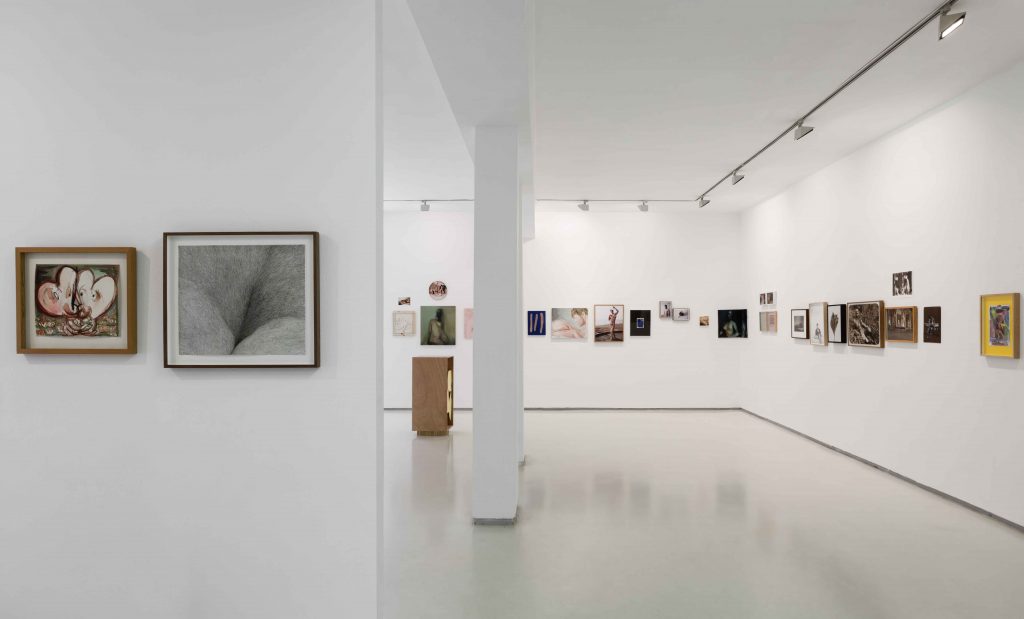
Erotic Salon, Installation View, Noga Gallery, 2018
aline alalgem , looking back, 2018, oil on canvas, 40x50cm S
Royal Couple, 2015, ink on paper, A4, Gili Avissar
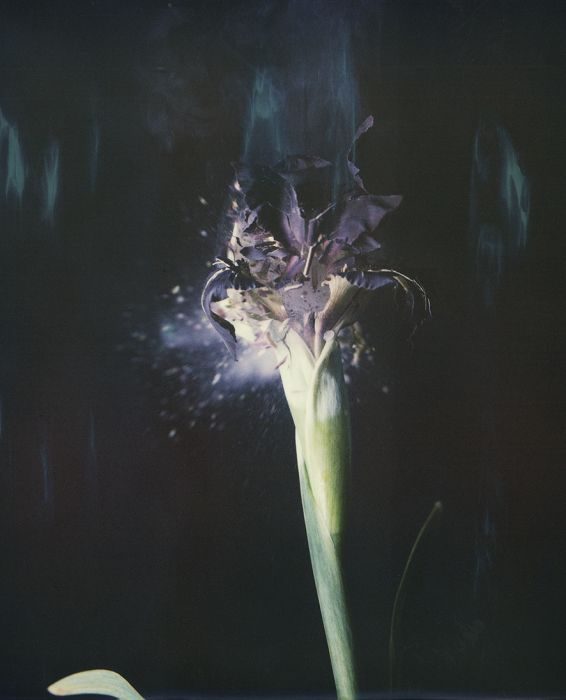
Dana Darvish_André Kertész, Still Life (Melancholic Tulip), 1939, 2014
double L- mirroring (detail)-30-40 cm kobi assaf
ofir dor, Couple in the Park, 2015 33 x 46
Rami Maymon_2
Tom Kneller, Untitled, 2017
מופע, 24 על 30 סמ, שמן על בד, 2015 גליה פסטרנק
Adi Nes, Untitled, 1992, color print, 62x49 cm

NUT CASE

Shahar Yahalom / NUT CASE

Opening: 22/6/2018  Closing: 27/7/2018      Curator: Tali Ben-Nun

Nut Case, Installation View, Noga Gallery, 2018
Someones Dead Baby, 2016, 70x100 cm

The exhibition takes its title from one of the drawings featured in it – Nut Case. The hermetic, intact image of the coconut is not just a metaphor for a hard, fuzzy shell that does not crack easily and protects what is inside it (“a tough nut”), but also a symbolic play on words charged with a flash of madness, a borderline state, or instability.
The hollow knocking sound on the coconut husk (“Knock knock, who’s there?”) sent me to T.S. Eliot’s poem, The Hollow Men: “We are the hollow men / We are the stuffed men / Leaning together / Headpiece filled with straw. / Alas! / … Shape without form, shade without colour / Paralysed force, gesture without motion.” Doubt, absurdity, death, and alienation seep into Eliot’s poem. With a visual and poetic language, he depicts the hollowness of the human experience and the people who inhabit it – scarecrows, empty “vessels” stuffed with questionable materials, lonely and lost people whose skulls are like hollow headpieces. A mass without a backbone.
Shahar Yahalom’s private mythology meanders between the Gothic and Mesopotamian mythology to memories and dreams. Sleeping/dead heads, conjoined heads, hands, a lifeless bird, a lizard, a black cat, tropical vegetation. Flora, fauna, and human are intermingled, hunter or prey, a concoction of inanimate living beings. The images embrace the material from its front, back, or side, without drawing any clear distinction between the “right” side and the back side.
Her work processes are fundamentally physical, manual, and material, but they also hold a human, personal, and emotional dimension that permeates the sculptures themselves. The images break through the surface of the material from a vast, abstract mass or a liquid that solidified in a mold, like an embryo in advanced stages of development, curled up in its mother’s womb, moving, flipping, stretching, and kicking, trying to stretch the abdominal skin and emerge.
The coarseness and smoothness of the calcic plaster, the transparency and opacity of the glass, the black charred lead of the cement, the metallic conductivity of the aluminum. An alchemy of materials that inflate and shrink, expand or warp with the energy that erupts in the encounter between body and material, steeped in mythical and contemporary time, presenting themselves to the viewer who looks at them as though they were singular, accidental, fragile. Yahalom organically interweaves the various techniques – extracts drawing qualities from the sculpture, layers sculptural gestures in drawing, and fuses drawing, sculpting, and etching into the stained-glass pieces, where the light breaks through the green glass and renders the metaphysical physical.
The transformation from a state of liquid into solid mass does not erase the traces left by sharp tools that probed and incised the material or the movements of the artist’s fingers. Features, noses, sunken eyes, openings, depressions, and bulges make the inanimate human, and underscore the paradox of the living-dead object, whose very presence stands for its absence.
The sculptural space is charged with the tension between sight and touch. We are looking at the sculptures, the sculptures look at us. They are static, we are moving – wandering between them, circling them. They eschew self-presentation as sculptural monuments and wish to be read as sentimental, domestic artifacts on a cupboard or a table in the living space, becoming enchanting artefacts that unfold their – and our – stream of consciousness. Their presence, or being in their presence, brings to the fore a raw, pulsating human emotion, as though life is encased in them. The longer we spend in their presence, the more they take on human qualities, communicating not only the dense accumulation of the material in its untreated state, but also an intimate, physical, and mental human experience, which comes to life in the triangle formed between living body (sculptor), inanimate body (sculpture), and living body (viewer). The desire to touch them, feel, grab, hold in the palm of our hand or nestle in our lap, as though they are a physical and natural extension of our body, stems from the sculptures’ human proportions.
The body/sculpture/space relationship is also manifested in the marriage between the sculpture and the pedestal that carries it. The choice of (read-made) pieces of furniture as a temporary or permanent “understudy” for the museal plinth mitigates the sculptures’ material presence, mass, and scale, shrouding them with intimacy and presenting them as though they were “decorative artifacts.” This juxtaposition – organic yet unnatural on the one hand, and functional on the other hand – frees the sculpture from its dependency on the representative, formal, and unapproachable art space and bestows it with a human, domestic, and familiar dimension.
The space of the exhibition becomes an active mineral crystal that weaves a web of perspectives and focus points. Each piece is a zenith in the exhibition as a whole, but also an independent body that holds a substantial specific weight, magnetic, dense, and concise. The viewer walks in the space and becomes a part of this landscape of a living-still nature.

Tali Ben-Nun

From Hebrew: Maya Shimony

REPRODUCTIONS

Amikam Toren / REPRODUCTIONS

Opening: 17/5/2018   Closing: 16/6/2018

Reproductions, Installation View, Noga Gallery, 2018
Amikam Toren, Dickens Inn Remembered, 2016, mixed media, 110x120 cm.
Amikam Toren, Falmouth Port Forgotten, 2016, mixed media, 91x100 cm.
Amikam Toren, Victoria Park Remembered, 2015, mixed media, 67x101 cm.

Text: John Slyce


Amikam Toren is a self professed “maker thinker” , in part this proposes that a given materiality and physical engagement with those materials and their making and even unmaking , sits the fore and thought and thinking then operates intimately in dialogue with what is made . The relation of idea to materiality or indeed content to form flows through Toren’s rich and historically significant practice with representation as a central concern and irrepressible subject. Amikam Toren often works in series in Reproductions he gathers together and crystallizes much of the making and thinking he has explored in some fourty years of work. these are deceptively straightforward works and seemingly easy to describe, until one attempts to relate their making to the conceptual frame they operate in .Take a readymade painting, remove the painting from its streacher and flatten, revealing the corners and folds then cut two or four corners away, or the columns of canvas that demarcate the side edges and or the top and bottom edges of the painting. Stick the cut out fragments on a newly stretched canvas. The attached fragments will become the frame that will contain the reproduction. Pulp the reminder of the isolated oil painting to remove all pigment, mix this pigment with colorless acrylic to form paint .return the paint to the new supporting canvas in an equalized and complete re – presentation of the pigments and pallets used in the original painting. The complete work refers back to the original through a descriptive title, a storm, a still life or landscape, each either remembered or forgotten. the range of what at first sight announce themselves as monochromes , on closer inspection reveal the diversity of the entire palette first used and is still present – it is determined by each original painting . a complex and powerful act is carried out – a flattening of the flat . The inherent flatness of the picture plane, here accentuated and magnified. all is present in Toren’s reproductions, the painting and the act of making a painting is framed and reframed, the old is made new and the condition of representation over which all meaningful art lingers is not only reproduced but stripped bare, even part X-ray part dissection, these works are also a discourse on if not indeed a critique of the family relations of the photograph to both painting and its reproduction. Amikam Toren’s reproductions are archeology of the act, the medium and practice that explores painting and its object with a rigour unlike any other.

Barbarian in the Garden

Nogah Engler / Barbarian in the Garden

Opening: 22/3/2018   Closing: 12/5/2018

Barbarian in the Garden, 2018, installation view, Noga Gallery
Nogah Engler, Gap, oil on canvas, 30x40 cm, 2018
Nogah Engler, 2018, Leaning 1, oil on canvas, 40x55 cm, 2018
Nogah Engler, 2018, embroidered in marble 2, oil on canvas, 40x50cm
Nogah Engler, Feast, 30x55 cm, 2018

Text: Hava Aldouby


Nogah Engler has chosen to borrow the title that Polish poet and essayist, Zbigniew Herbert, gave to his first, euphoric, journey to Western Europe in 1958. According to its author, Barbarian in the Garden is “a collection of sketches, travel notes … along the trails of cities, museums, ruins.” In his first excursion beyond the Iron Curtain, Herbert pursues and documents the cornerstones of canonical European art with eager diligence. Recounted through the longing eyes of the man of the periphery who finds himself in (yet not necessarily invited into) the Garden – the heart of hegemonic culture he was raised on, his sensual, tactile descriptions lead the reader deep into the experience. Like an outsider who enters the Garden for the first time, armed with historical and critical knowledge acquired from afar, he takes pleasure in the flavors and sights. At the same time, Herbert’s Europe is inscribed with the memory of a dark history. While the poet harks back to the distant Middle Ages, dryly detailing the cruelty of the Inquisition, a more immediate historical memory reverberates through his words – the atrocities of 1940s Europe. Undoubtedly the descriptions of the catholic church burning heretics at the stake in 13th century France, will also resonate with the contemporary reader, echoing current events in the Middle East.

In the exhibition Barbarian in the Garden, Nogah Engler wanders through canonical European culture via imagined scenes based, among other sources, on photographs she has taken in her travels. She steps into lofty opera houses, sneaks a glance at the awe-inspiring museum halls, dominated by centuries long silence. With the care of a foreigner allowed into the Garden, her brush caresses the surface of ancient vases, lingers on the “oil on canvas” texture of Old Master paintings, records with longing meticulousness the stone reliefs and rich tapestry that adorn the vaulted halls. Like Herbert, she goes into elaborate and fine detail, charts the foreign and coveted territory inch by inch, yearning to appropriate it, to “know” it in the biblical sense. In Leaning #1, a figure leans over a porcelain swan, wistfully. The light regal swans contrast with the dark silhouette of the hunched, observing, woman, who has no name or identity. In Leaning #2 the same figure, this time in negative, is an absent/present apparition.

In the second decade of the 21st century, the Garden itself threatens to dissipate, like the celluloid negative of a grand history. Engler documents the crumbling margins and the dwindling time with an air of angst. In Embroidered in Marble (Herbert’s term for Orvieto Cathedral), a stream of sand or dust pours in through a wide crack in the ceiling, threatening to bury the refined furniture and drown the lofty space. The aura that surrounds the Garden has not yet faded, but in Engler’s paintings, the ground is shaking. The painting Embroidered in Marble brings to mind Federico Fellini’s apocalyptic film, Orchestra Rehearsal (1978), filmed in the wake of a political terrorist attack in Italy. At the end of the film, the conductor struggles to create music in the midst of chaos. The ceiling of the hall and the surrounding walls are cracked with the blows of a huge demolition ball, and a cascade of dust and debris threatens to bury the musicians and their instruments.

Engler’s works echo the words with which Herbert concludes his day in Siena: “…before reaching the gate I turn to look again at the Campo. Everything is as it should be: the walls of the Town Hall wedging sharply into the night, its tower as beautiful as yesterday. One can go to bed. Explosions mushroom above the earth, but maybe we shall still manage to make a couple of rotations around the sun – with this cathedral, this palace, this painting.”


*Zbigniew Herbert, Barbarian in the Garden.

Bat Kol

Matan Ben-Tolila / Bat Kol

Opening: 11/1/2018   Closing: 15/3/2018

Bat Kol, installation view, noga gallery, 2018
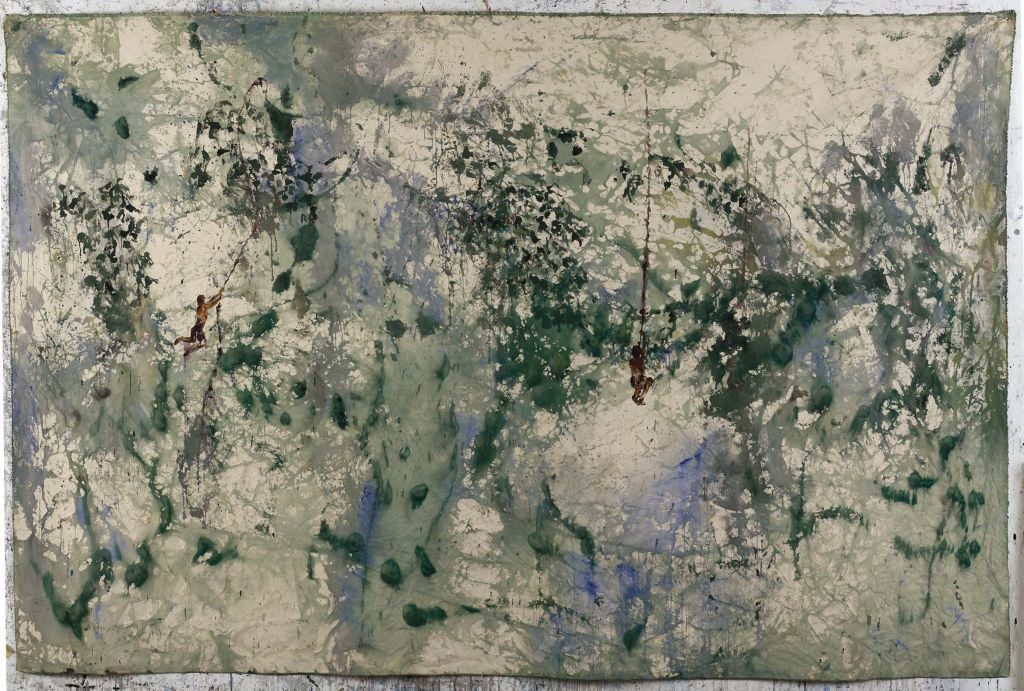
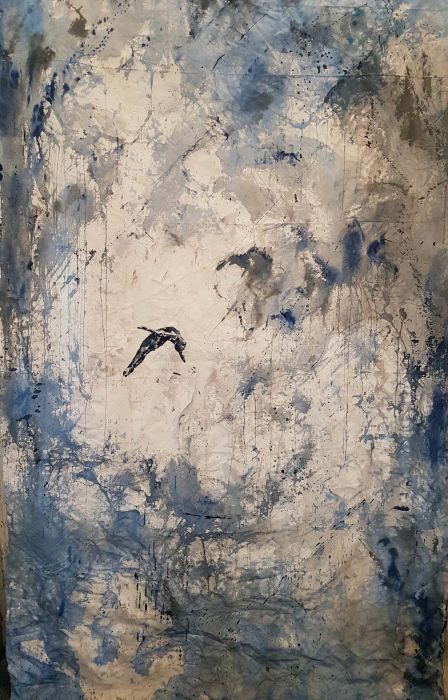
Matan Ben-Tolila, Confrontation #2, oil on canvas, 165x180 cm, 2017
Matan Ben-Tolila, Floating, oil on canvas, 148x177 cm, 2017
Matan Ben-Tolila, Confrontation #1, oil on canvas, 195x155 cm, 2017
Matan Ben-Tolila, Look, oil on canvas, 160x100 cm, 2017
Matan Ben-Tolila, Kite #1, oil on canvas, 200x280 cm, 2017
Matan Ben-Tolila, Signs, oil on canvas, 160x145 cm, 2017

Bat Kol | Matan Ben Tolila


Standing in his studio, he lays a blank canvas down on the floor. It is the end of the day, soon he will go home to his family. He pours diluted paint and turpentine on the canvas, allowing the mixture to spread across it. In a couple of days, he will return to the studio and discover the stain that was created and its boundaries, from which he will build a place – a cave, a lake, a mountain.

The stain is a piece of information or a message without clear guidelines, like a divine voice (Bath ḳōl) of sorts, which appears before the painter and asks him to give it shape and essence. It is the one that prescribes where the entrance to the cave will be, the direction of the light, the dark areas, the water reservoir, and at some stage, after the place has been created and materialized on the canvas, also how it will be populated.

In the seven preceding years, the painter Matan Ben Tolila followed a different work method. He would go to the studio and create preparatory sketches, stretch a canvas and transfer the grid onto it, choose a color palette and create the predetermined image. His works featured imaginary landscapes and delineated structures, bold and phosphoric hues against the emptiness of the blank canvas, and they were created by an aware and meticulous painter, an artist who feels responsible for the vibrancy of his works and does not compromise its relation to the painting’s past, present, and future.  But over time, the advance planning that gave him control over the work process and confidence in the finish point, has run its course, and was replaced by a desire to exist in painting’s other places, those that search for not knowing, wondering, and hesitating.

As a painter, he always felt that he has a responsibility to be clear, unequivocal, impeccable and known, to instill confidence in the images and the words, and now he created a series of works of an abstract origin. The painted expanses and the presence that belongs in them emerge from the paint that spread across the canvas, and he understands the painting while working, as he lays down paint on the canvas. As part of the new practice, he parted ways with the other artist who shared the studio, emptied it of previous works and started working on the new series without preparatory sketches and grid. Each painting starts with the arbitrary action of the paint and turpentine stain. And when he allowed himself to follow the unfathomable stain, he was engulfed by sweet sense of disorientation.

Upon first encountering the new series of works, I find myself in a world I recognize from Matan’s previous series of painting. Like in the series Moonwalks (2013) or The Young Mariner (2015), I am facing melting mountains and fantastic landscapes in phosphoric and pastel colors. However, as I spend more time in their presence, I realize that this time I am entering this world from a different place. The landscapes that were always there, as settings to be filled by a certain presence, have now moved center stage, becoming the main event.

In this series, I feel that the line Matan walks is finer than ever. The fantastical worlds, full of colors, textures, and figures whose faces and eyes are hidden from the viewer, demand precision– any deviation may push the painting further away from its meaning. More than these, it is dangerous, certainly for the more organized and methodical among us, to lose control, to summon unknown voices into our room, and hand our brushes over to disorientation. But, just like the figures’ hidden eyes, the paintings in this series wish to say that there is more than meets the eye. Disorientation asks of us to trust the other order it holds, listen to the divine voice (Bath ḳōl), and let it guide us. If in Matan’s previous series I could hold on to the image of the transient house, the structure that promises stability but does not deliver it, in this series there are no walls or roof, no structure to give us shelter. The closest things to an anchor are a kite, a billboard, or fence fragments. The unnatural, saccharine colors offer me no comfort, but rather trigger unease, bringing to mind acids and corrosive compounds. The figures in the paintings do not belong to the caves and unfolding landscapes – how did they get there? Are they abandoned in a world which, in the absence of order or grid, allowed itself to expand, grow, and take over the space of the painting?

Two main figures in the painting are the painter’s best friend, a free spirit who found his death at a young age several years ago, and Matan himself. The encounter between the two, which could not take physical shape in our world, can take place in the expanses born from the expanding shapes. For the first time, the painter brings his figure into this world. More than a self-portrait, I see a man who tries to situate himself in the spaces that exist inside him, in an attempt to fathom them. As though until now the landscapes created by his own brush were foreign to him just as they are to the viewer, and only now he dares to be present.

Picasso suggested that “the purpose of art is washing the dust of daily life off our souls.” It seems that in the new decisions he has made, Matan transformed the action that is so known and familiar to him from years of painting into a new action. Surrounded by his largescale works, the eye and mind trace a line between the flying kite, the figures in the cave, and the floating man, and in an instant, they all exist in a shared space, which is different and other from our world. A place like this, whose realness is only possible in Matan’s painting, recounts a story through which I can part with the quotidian and give myself to the new action, to the echo that reverberates from the mountains, that fills the caves, that dives into the water.  I can sail and float in a place I do not know but does not threaten me, wander through disorientation, without losing touch with reality, wash the dust of everyday life off my soul.


Gil Cohen

Gil Cohen has initiated, curated, and produced art and culture projects since 2007. She is a graduate student in the interdisciplinary program of the Faculty of the Arts, Tel Aviv University, where she explores the connection between objects and memory.

Pending View

Orly Maiberg / Pending View

Opening: 23/11/2017   Closing: 5/1/2018

Pending View, Installation view, noga gallery, 2018
  ink and acrylic on canvas, 177x198 cm ,2017
 ink and acrylic on canvas, 121x101 cm ,2017
 ink and acrylic on canvas, 173x93 cm, 2017
ink and acrylic on canvas, 196x254 cm,2017
ink and acrylic on canvas, 81x183 cm, 2017
ink and acrylic on canvas, 270x181 cm, 2017
ink and acrylic on canvas, 169x207 cm, 2017
ink and acrylic on canvas, 180x120 cm, 2017

The paintings composing “Pending View” reveal a floating world, which, alongside the ephemeral installation, might gain an apocalyptic air. However, through the destabilization of the existing order, a new state emerges, one in which construction and destruction, or extinction and continuity, exist side by side. The figures seem to possess a twofold relationship with their fluid environment.


The installation stresses the paintings’ unified continuity. They hang from the ceiling, while creating an inner, circular structure in the middle of the gallery – a makeshift construction into which the viewer is welcomed to enter. There, surrounded by the large canvases, the viewer might find what he wished for – a balance, a focal point. This constellation is reminiscent of Edmund Husserl’s phenomenological definition of the horizon. Husserl distinguishes between an “internal horizon” and an “external horizon”. The first includes the visible aspects of a given object – in this case, the inner sides of the canvases – the carriers of the image. The latter refers to the invisible aspects of the object – the outer sides of the canvases.


Through this installation, a shared horizon is formed: a mountain, a rope and a water body join together into a new panoramic landscape. Thus, the exhibition as a whole is an experiment in horizontality – the horizon might be missing in the works themselves, but is formed from their joint presentation. For the viewer, it is a paradoxical horizon – a round horizon, encircling him all around


A freedom, which is both terrifying and liberating, is the one taken by Maiberg in this series. The horizon allows fluidity and flexibility not just in terms of color and matter, but as a possible subjective movement in space. In this manner, the viewer, like the figures, finds himself hanging between above and below, here and there, past and future. The unreachable circular horizon allows a new and different linear perspective – a time pending

view.


Keren Goldberg, from “free fall ” the exhibition catalogue

OPERART

OPERART / GROUP EXHIBITION

participating artists :David Adika | Adi Brande | Michal Chelbin | Ori Gersht | Gilad Ophir | Pavel Wolberg | Naomi Leshem 

Curator:  Nechami Gottlib

Opening: 02/11/2017   Closing: 19/11/2017

opereart, Installation view, Noga gallery, 2018
michal chelbin ,carmen,130X100cm, 2017
naomi leshem, dido and anias, 120x120cm, 2017
David Adika, Don Carlo, 150x120cm, 2017
gilad ophir, Don Giovanni ,130X130cm, 2017
adi brade, la bohem, 130X100cm, 2017
pavel wolberg,tsar saltan, 120x100cm, 2017
ori gersht, a midsummer night's dream, still from video, 2017

The Israeli Opera pushes the boundaries of the medium of opera with a unique and groundbreaking project marking the opera season opening: OPERART – an exhibition of artistic photography in which seven Israeli artists present their personal interpretation to seven operas that will be performed by the Israeli Opera in the 2017-2018 season.

The exhibition will open on Thursday, November 2nd at 20:00, at Noga Gallery of Contemporary Art, where it will be presented through 12.11.17, after which the artworks will be on display in the foyer of the Shlomo Lahat Opera House throughout the opera season.

At the basis of the collaborative project stands the desire to offer another layer of interpretation to the medium of opera through the eyes of contemporary photographers, and with that, add another tier of observation on the genre, one that is independent from the interpretations of the director and the conductor that will be presented on stage.

The participating artists – David Adika, Ori Gersht, Gilad Ophir, Pavel Wolberg, Naomi Leshem, Adi Brande, and Michal Chelbin – were selected in a curatorial process by the curator Nechami Gottlib  in collaboration with the Israeli Opera.

After selecting the opera that they were most drawn to from the seven operas that will be presented by the Israeli Opera this upcoming season, delving into its libretto and music, and meeting with the opera’s artistic team, each artist set off to formulate and offer his or her personal interpretation to the opera, in their unique artistic practice and language.

***

Adi Brande chose to take on Giacomo Puccini’s opera La Boehme (November-December 2017).

At the center of the opera – love at first sight, reunion, and premature death. Brande draws a link between Mimi, the female protagonist of the opera, and the legendary figure of Maria Callas, the ultimate opera diva who ended her life in solitude in Paris, and some say she died of a broken heart. Her artistic career was one of the most glamourous careers in the world of opera, shining with a dazzling light that emanated from her extraordinary stage presence.

Brande’s works summons a charged and fragile encounter between demise and surprising poignant appearance and the disintegration of the figure into the perforated surface, which acts as a camera shutter that exposes and at the same time limits the surface. This situation engenders a pause that allows the viewer to see what is there and understand the absence. The work also manages to resonate and drown Callas’s dark and haunting vocal range with the gray and black tonality of the photograph.

In his work, Ori Gersht addresses A Midsummer Night’s Dream by the 20th century British composer Benjamin Britten based on William Shakespeare’s play (January 2018).

The core of Gersht’s video work is inspired by the events that took place in the enchanted forest: the moment when Oberon the king of fairies puts magical nectar in the eyes of Titania the queen of fairies. One small drop causes change in memory, perception, and vision. The order and history that existed up to that point suddenly render “reality” chaotic.

In the video, we see one drop of water in which the face of a young women is reflect. As the drop falls, it sets in motion a chain reaction of sorts: the figure becomes animated and gains a new life. The drop functions as a crystal prism that moves towards the inevitable crash. After it disappears in the water, it then resurfaces, as though defying gravity, trying to escape its destiny.

The video offers an exploration and meditative reflection on time, in which the past and the present merge into a moment that is simultaneously transient and timeless.

Gilad Ophir chose the opera Don Giovanni by Mozart (February 2018).

Ophir’s work deconstructs the figure of Don Giovanni. As a man in the course of a downward spiral, Don Giovanni fails to record even one conquest during the opera. His lists of conquests are a thing of the past. He lives for his desire; his entire existence is driven by his libido. In his unceasing pursuit of women, he does not look for the thrill of the chase, but for a validation of his masculinity. He spends his live oblivious to the fact that he is devoid of any emotion and no achievement or conquest can ever satisfy him. The only moment he feels something is the moment before his death. For the first time, his heart is filled with emotion – fear. Fear of death. This is the moment of breakdown. The downfall of the seemingly strong man. Here, for the first time he achieves a connection with reality and self-insight. The coldness of death and the flames of the inferno merge in the moment of death, which is also the moment that ends the opera.

David Adika chose Verdi’s opera Don Carlos (March 2018).

Adika’s work draws on the opera’s first act, set in the Forest of Fontainebleau in Paris. Elisabeth, daughter of the King of France, arrives in the forest and reassures the people that her impending marriage to Don Carlos, Infante and son of Philip II, King of Spain, will bring the war to an end. At that moment, Carlos comes out from hiding, sees Elisabeth and falls in love with her. A cannon shot in the distance signifies that peace has been declared between Spain and France. However, moments later, a messenger arrives and tells Elisabeth the news: her hand is to be claimed not by Carlos but by his father, Philip II. Elisabeth has no choice but to agree to the marriage, leaving Carlos devastated.

Adika’s piece is comprised of a double portrait of a man. Both his shoulders are tattooed: on his left shoulder, he has a portrait of Umm Kulthum, and on the right shoulder a portrait of Fairuz. Umm Kulthum and Fairuz are the unchallenged queens of Arabic music. The first is classical, symbolizing loyalty to the state and the government, and the second is identified with protest, standing for social struggle. In the background, a photo of forest vegetation serves as a backdrop to the event, as a political landscape. At the basis of the work, the classical European opera is converted into a local image, featuring, among other things, symbols and representations of classical Arabic music.

Pavel Wolberg’s piece addresses the opera The Tale of Tsar Saltan by Nikolai Rimsky-Korsakov, based on a poem by Pushkin (May 2018).

The opera recounts a tale of envy between three sisters and the tale of the swan queen’s release from a spell. Born in the USSR, Wolberg is a documentary photographer. In his travels he captures everyday life and political situations. He searches for traces of the past, historical site, and cultural symbols. His works become iconic photographs, imbued with emotion and conflict that capture the spirit of the place. The photograph was shot in Marianka in Ukraine, where Wolberg came across a sculpture of a swan with a crown on its head, created by an amateur sculptor. The motif of the swan sculpture is drawn from Puskin’s poem – which was adapted into an opera – that Wolberg had known since childhood. Comprised of car tires, the sculpture stands in front of a house that had been demolished and abandoned.

Naomi Leshem takes on the opera Dido and Aeneas by the English composer Henry Purcell (June 2018).

The opera recounts the story of the Trojan hero Aeneas – the son of the goddess Venus and a human man, who escaped to Carthage after the fall of Troy. In Carthage, he meets Queen Dido who falls in love with him. Once she decides to give in to love, she is left in destitute, since Aeneas has to fulfill his fate and the order of the gods, and establish the Roman kingdom. Unable to bear life without the man she loved and abandoned her, she has no choice but to take her own life.

Naomi Leshem’s photo feature a female figure and a wolf. The female figure embodies three women: Venus – Aeneas‘s mother who made him fall in love with Dido so that he will abandon his perilous journey; Queen Dido, with whom he falls in love and decides to stay; and the witch-goddess who makes him continue on his journey. The wolf symbolizes the main male protagonist – Aeneas. Aeneas is ancestor of Romulus and Remus who founded Rome. The key figure in the story is the she-wolf that nursed and sheltered the twins. The interaction between the two figures is also multifaceted. The connection between them is one of farewell, particularly resignation to one’s fate: the female figure seems to welcome the wolf, while the wolf – despite being a wild beast, gives in to her touch, almost becoming domesticated before it moves on.

Michal Chelbin chose to respond to the opera Carmen by Bizet.

Carmen is a character who challenges both life and death. Since she cannot live shackled by norms that she did not choose, she prefers to die free than be with a man she no longer loves. Michal Chelbin chose the figure of the toreador – which on the one hand is a strong and dominant figure, and on the other hand, loses his power when he faces carmen. Wishing to transport Don José into our times, Chelvin decided to photograph a Sudanese refugee from the Central Station, wearing the elegant clothes of a toreador, when the contrast between the elegant outfit and the volubility and fear in his eyes, also symbolizes the contrast and contradictions in Carmen’s character.

Memories from the Future

Michael Halak / Memories from the Future

Opening: 07/09/2017   Closing: 29/10/2017

Memories from the Future, installation view, Noga Gallery, 2017
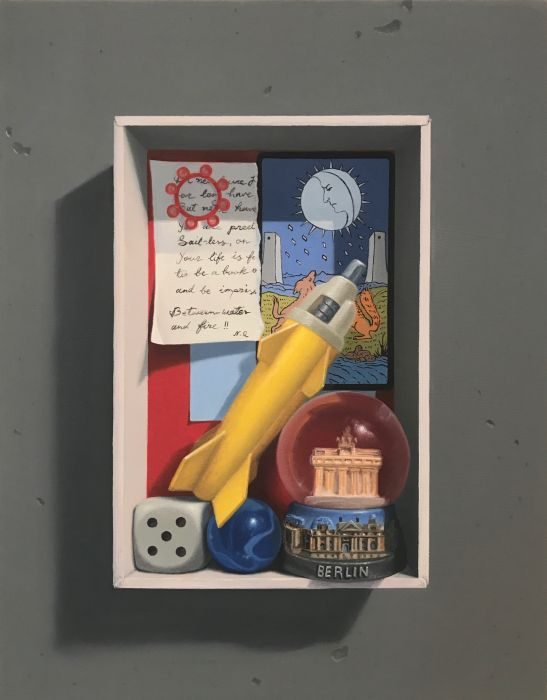
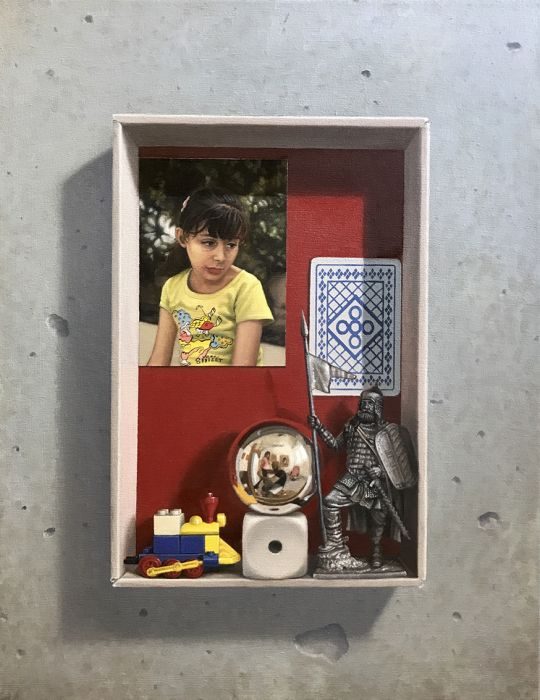
Memory box #1, oil on canvas, 43x35 cm, 2017
Memory box #4, oil on canvas, 43x35 cm, 2017
Memory box #5, oil on canvas, 43x35 cm, 2017
Memory box #6, oil on canvas, 43x35 cm, 2017
Memory box #3, oil on canvas, 43x35 cm, 2017
Memory box #2, oil on canvas, 43x35 cm, 2017
untitled, oil on canvas, 180x140 cm, 2017

Memories from the Future

About Michael Halak Solo  Exhibition


Michael Halak was born in Fassuta Village in the Galilee. He earned his Bachelor’s and Master’s Degrees from the Fine Art Department at the University of Haifa, and a certificate of studies from the Florence Academy of Art 2005. Halak received the 2016 Ministry of Culture and Sport Prize, the 2012 Rappaport Prize for Young Artist from Tel Aviv Museum of Art, and the 2010 Young Artist Prize from the Ministry of Culture and Sport.


Michael Halak’s exhibition, Memories of the Future, features five new small-scale paintings, “memory boxes” of sorts, larges scale work comprised of nine paintings of cut cardboard boxes, and a large-scale portrait of a girl.

The paintings of memory boxes, painted in an impressive realistic technique, interweave objects, toys, still life, landscape views, portraits, and at times text. At first glance, the collection of objects seems random. A more careful look reveals that the virtuously painted items serve as a lure aimed to trap the viewer’s gaze, directing it towards the artist’s biography and the past as a decisive moment in his art, one that is inseparable from the present and the future. The illusion of reality that takes shape on the canvas is seductively beautiful, yet fraught and fragmented, engendering confusion and unease.

The duality of the past and the present is particularly prominent in the reflection of the artist in a glass ball, his figure documenting reality (the artist in the studio next to his assistant), tying him to the past through the connection to the collection of childhood items.

The paintings of cut cardboard boxes symbolize a state of passage and transience, a precarious situation that may collapse with one gust of wind. This experience has been accompanying Halak for years, as well as the connection between man and the place, presence and absence, belonging and alienation, identity and the lack of identity, testament and silencing.

The cropped painting of a girl is seductive in its beauty and at the same time evokes feelings of disintegration, fragmentation, and disruption, held together by pieces of tape that prevent it from falling apart. In this painting too, the skillful painting creates vitality, the composition, the gaze turned towards the viewer, even the emphasis on the earring – bring to mind Vermeer’s renowned painting Girl with a Pearl Earring. Halak paints the background in yellow-ocher – the colors of the girl’s dress in Vermeer’s painting – in an unknown space. The reference to such a prominent painting from the history of art strives to expand the image beyond the local to the universal.

Halak’s painting holds biographical, universal, and historical layers. His paintings are imbued with the tension that accompanies him in his life and art, demonstrating the dichotomy and split between distinct yet inseparable worlds.

Deep Feelings

Oren Ben Moreh / Deep Feelings

Opening: 04/05/2017   Closing: 09/06/2017

Deep Feelings, Installation view, Noga Gallery, 2017
juliette #1, Oil on canvas, 65x50cm
breakfast, Oil on canvas,100x150cm
The red room,Oil on canvas, 70x100cm
Untiteld, Oil on canvas, 50x65 cm
before dark, Oil on canvas, 100x150 cm

Deep Feelings

About Oren Ben Moreh’s New Paintings

Fragments

Naomi Siman-Tov


  1. Painting from movies: Oren Ben Moreh’s raw materials or subjects of observation are movies. She watches movies and then paints from them (although, not all the movies that she watches become painting). She photographs frames from the movie, capturing fleeting moments with her smartphone – a relatively low quality camera, and then paints from the photos.
  2. House interior as a backdrop: in her latest series of paintings from the last two years, Deep Feelings, she paints predominately with oils, sometimes dry pastels, places, the inside of houses, or interior architecture. Different rooms – a dining room, bedroom, passages between rooms, staircases, openings and doors, a fireplace, floral wallpaper; as well as furniture – a table with a bowl of fruit, bread, ceramic pitcher and glasses; chairs; beds; chests of drawers; pictures on the wall and ornaments on a shelf. Bourgeoise and European looking rooms. Chandeliers and standing lamps sometimes cast a dramatic light on the room. The general atmosphere is that of a telenovela set design.
  3. And God Created Woman: the new paintings are based on frames from Roger Vadim’s 1956 movie. The movie that invented Brigitte Bardot as a sex goddess and made her an international star. Oren Ben Moreh paints these cinematic scenes in a way that does not quite allow us to identify the actors, as famous as they are, or the actual movie. Although at one point in the exhibition, Bardot and her honey-colored tresses do make an appearance in the portraits.
  4. The bride and her bachelors: the plot of the movie – which is indeed reminiscent of a telenovela – has an elusive presence in the exhibition. The figures, one woman and several (probably three) men, change places and maybe roles. Inside the closed rooms, they are trapped in frames within frames: flanked by the doorframe; blending into the wall behind them; belonging to a chair or an extension of a written letter; residing in the gaps between a chest of drawers and a desk, and between a color field and the frame that cuts the painting; engulfed by the space of the opening but also shaped from it – like a butterfly born from the cocoon, antennae and wings hatching from a shapeless mass; in one painting, a female figure emerges from the bed linen, the bed and her body forming a landscape; the room is not the backdrop for the figures, but rather the men and woman emanate from the interior setting and are a part of it.
  5. Untitled (Breakfast): a painting that evokes Matisse’s Red Room, not just because of the use of color. In Oren Ben Moreh’s “breakfast” – a female figure, cut from the flat red wall, wears a light blue blouse, and is depicted in an architectural composition. On the one hand, sitting on the bottom stair of a wooden staircase, she rises from the horizontal (we may even say feminine) arrangement of still life on the table at the bottom of the painting. On the other hand: the pose in which she was frozen – her arms raised to arrange her hair, forming a diamond shape – turn her into an African figurine, an ornament decorating (bourgeois European) homes, or their European Modernist versions, like Henry Moore’s sculptures of women. Above her, vertical (in contrast with the horizontal layout on the table) semi abstract phallic objects are arranged in a row.
  6. Oren Ben Moreh’s paintings do not offer a stable image to hold on to. The back of a woman’s blouse and torso dissolve into the opening, the black trousers of a man standing at the door merge to form a base, turning him into a lamp stand or a coat hanger; the brown door is an extension of the brown blazer. “You cannot distinguish a flare of light from a light fixture” wrote Matan Daube on Ben Moreh’s previous paintings.

The figures, furniture, and rooms are all treated the same: between flatness and hints of three-dimensionality. They are a part of the color surfaces (blues and reds are dominant in the new series, but there is also and mostly a lot of brown, the color of the mixture, the color that blurs the differences). The figures relinquish tangibility, plasticity, and volume, at times oozing and slipping, like in a dream, some would say like in the subconscious. But also like in Dali’s 1930 painting Paranoiac Woman-Horse (Invisible Sleeping Woman, Lion, Horse). And even his famous melting clocks come to mind. At times, the objects – coffee cups, a bowl of fruit, different artifacts in arrangements that allude to or quote still life paintings – are the only ones that preserve their solidness.

  1. The colors: blue and red, are considered primary colors. Basic colors that cannot be mixed from any other color. The blue and the red – two of the three Modernist primary colors (the third being yellow, which glimpses in the paintings occasionally) – stand out in Ben Moreh’s paintings against a brown background, which is the color of mixture, the mixture of the three primary colors. In the symbolist tradition of Modernism, red and blue are identified with the masculine and the feminine. Red, it almost goes without saying, although this was not always the case – is synonymous with the feminine, the bloody, and the fleshy; and blue with the masculine and the spiritual (a pink plastic hospital wristband for newborn girls and a light blue one for boys). Incidentally, in the history of culture, the gender identity of colors changes and alternates. Vis-à-vis the color red, I recalled David Ginton’s essay about Aryeh Aroch in HaMidrasha Magazine (issue no. 3, which I edited), in which he offered a profound and illuminating exploration of red and blue, which symbolize royalty but also the union between the sexes, when they appear together in a painting. In Ginton’s essay, I found two quotes concerning the color red, which can shed a certain light on Ben Moreh’s current series of works:

This is for instance how the author, philosopher, art critic, and cinema theoretician, Jean-Louis Schefer, writes in the essay “What Are Red Things,” printed in the book The Enigmatic Body:

Red is the last protected substance, and is in fact a mythical material. A subject of admiration and fear (from the red of regal robes, to the slippers of the byzantine virgin, to blood-soaked rags). This color is in itself the subject of legends – like that on the circularity of life-giving blood; the only human substance that can dye materials and from which Heliogabalus created his flags: “red, the flag of all women.”

The essay was written for an art magazine in 1990, as an invitation to discuss monochrome in contemporary art. In it, Schefer in fact turned to Uccello’s paintings in order to declare unequivocally that red was a feminine color or the color of the woman. He continues:

…red is almost always the color of the arbitrary – and in two senses of the word: the color of power and protection […] but an arbitrary color in that its use is encoded (or as linguists would prefer, relatively reasoned) without a signified. Meaning, without a reference to the natural and without legitimization as part of it: red things do not exist [emphasis in the original].

The last sentence of course resonates Lacan’s statement “the woman does not exist and does not signify anything.” During an early visit to Ben Moreh’s studio, before Bardot’s three portraits appeared, I searched (partly due to the title of the movie) for the woman in her paintings.

  1. Brigitte Bardot: as mentioned earlier, the star of the movie does not appear in most of the paintings featured in this show. And when she is depicted in the various rooms, along with other characters, she is seen from the back or is smeared and blurry. Unidentifiable. But she does appear in the exhibition – on her own – in three bright and cinematic portrait paintings, on the backdrop of natural landscapes. The only outdoor scenery depicted in the paintings. Her wheat-colored hair blowing in the wind. When Vadim’s movie was released in the U.S. in 1957, it, and mostly Bardot, caused a sensation. The New York Times film critic, Bosley Crowther, wrote about the movie: “She [Brigitte Bardot] is undeniably a creation of superlative craftsmanship. But that’s the extent of the transcendence, for there is nothing sublime about the script of this completely single-minded little picture… and its sole hint of divine inspiration is in the resemblance of its story to that of Eve.” I thought, among other things in the wake of Crowther, who searches for the sublime that is missing from the movie (and instead finds Bardot’s round and voluptuous curves, as he described her in the same column), about the brown in Ben Moreh’s paintings, the color that does not represent spirituality, and was born from mixing. The color of the earth.
  2. Simone de Beauvoir: we cannot not mention Beauvoir here; the counter heroine, Bardot’s counterpart in philosophy. In August 1959, Esquire magazine printed Beauvoir’s article “Brigitte Bardot and The Lolita Syndrome,” which was her favorite article, so she used to say. Bardot, whose image, particularly as it was invented on screen by Vadim, is presented in the article written by (the adoring, not to mention smitten) de Beauvoir as the harbinger of the sexual revolution, a modern contemporary incarnation of (sexual) liberty, breaking taboos, and leading the hordes of young people to sexual freedom and equality.

Among all the compliments she gives Vadim’s movie, she has one reservation. The next paragraph seems to describe Oren Ben Moreh’s paintings:

Nevertheless, there is one thing for which I blame him [Vadim], and that is for having gone so far as to de-humanize it. The human factor has lost some of its importance in many spheres. Technical progress has relegated it to a subordinate and at times insignificant positions. The implements that man uses – his dwellings, his clothes, etc. – tend towards functional rationalization. He himself is regarded by politicians, brain-trusters, publicity agents, military men and even educators, but the entire “organization world,” as an object to be manipulated. In France, there is a literary school that reflects this tendency. The “young novel” – as it calls itself – is bent on creating a universe as devoid as possible from human meanings, a universe reduced to shiftings of volumes and surfaces, of light and shade, to the place of space and time; the characters and their relationships are left in the background or even dropped entirely.

I would say that in Oren Ben Moreh’s paintings – the same universe that deals with “shiftings of volumes and surfaces, of light and shade, to the place of space and time; the characters and their relationships are left in the background or even dropped entirely,” in fact tells a different story. Not one of “rationality” and “functionality” nor necessarily one of de-humanization. We could also think in this context about Edward Hopper, a painter who has influenced Ben Moreh.

  1. Cinema is projected onto a screen. Producing illusions on a flat screen while we are sitting in the dark, motionless, passive, and receptive. The painting is projected from the canvas. Ben Moreh’s paintings, as Joshua Simon had once written about them (in a different exhibition) “love being painted” as though on their own accord, trying to recreate or reinvent the experience of passivity.

A Journey in the Fog

Group Exhibition / A Journey in the Fog

Opening: 17/03/2017   Closing: 30/04/2017

A Journey in the Fog, Installation view, Noga Gallery, 2017
Alexandra Zuckerman, House number seven,Pencil on paper, 59x42cm, 2012
Amikam Toren, From Artchair paintings series,Achtungoil on canvas,80x60cm,2005
Matan Ben Tolila, Bridge,Oil on canvas, 78x71cm, 2016
Tal Mazliach, It keeps growing all the time, oil on wood,45x31cm, 1995
Ori Gersht, Galicia, c-print, 120x150cm, 2005
Keren Cytter, A quoet, marker on paper, 98x115cm, 2007
Talia Keinan, Opera house, collagem black goash and oil paint, 50.5x50.5cm, 2011
Marilou Levin, Omama, Oil on wood,85x70cm,2002
Talia Keinan, Untited,pencil on paper,40x30cm

Group Exhibition: Gilad Efrat | Ori Gersht | Dror Daum | Marilou Levin |  Tal Mazliach | Jossef Krispel | Elinor Carucci | Amikam Toren | Talia Keinan | Alexandra Zuckerman

The exhibition “Journey in the Fog” comprises images in which reality and hallucination mix with one another. Each piece hold a part of the journey’s complexity. The images are restrained and reserved, possessing a quiet inner force, some are shrouded in fog that traps them. Wishing to find meaning and a foothold in enigmatic landscapes that hold a hidden drama, whose presence is nevertheless palpable in every image. The journey itself is a symbolic one into the unknown and the unfamiliar, in which the epic and intimate, harshness and tenderness are intertwined.