Moran Kliger | CAIN

Moran Kliger / CAIN

Opening: 15/05/20   Curator: Sally Haftel Naveh

Moran Kliger, Cain, Installation View
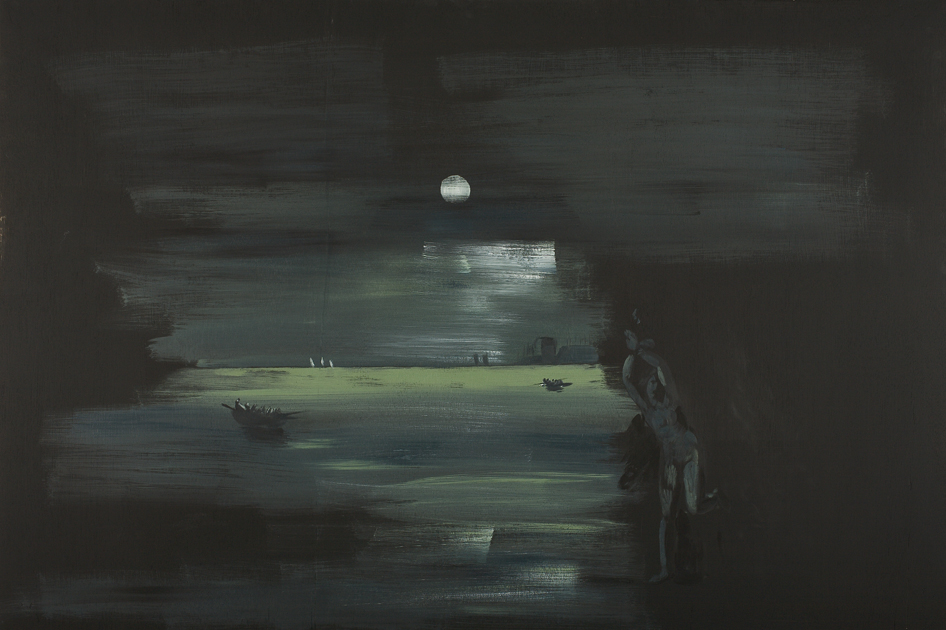
Abel (Nimrod), 2019, Oil & Ink on Paper, 150x110 cm
Cain & Abel Triptych, 2019, Oil & Ink on Paper, 300x450cm
Abel (the good shepherd), 2019, Oil & Ink on Paper, 150x110 cm
Cain, 2019, Oil & Ink on Paper, 150x280cm
Cain (s), 2019, Oil & Ink on Paper, 150x280cm
Cain, 2019, Oil & Ink on Paper, 70x100cm

The mythical story of Cain and Abel is a chronicle of a murder. It is an account of internal conflict, unbridled loss of control, and violently passionate acting out. God’s (the Father) preference of Abel’s sacrifice evokes in Cain scorching feelings of rejection, insult, and jealousy, which drive him to slay his brother. The biblical text is succinct; its three very short acts – the birth, the sacrifice and its rejection, the murder and the punishment – leave wide leeway for commentary as to the motivations of the protagonists: Cain, (present-absentee) Abel, and God.

The event of the murder represents the triumph of evil over morality. Unlike the original sin (the Fall – Genesis 3), which was preceded by explicit divine interdiction, Cain acts within as yet a lawless space. It is only after the presentation of the sacrifice that the Lord vaguely warns him: “If thou doest well, shalt thou not be accepted? and if thou doest not well, sin lieth at the door. And unto thee shall be his desire, and thou shalt rule over him” (Genesis 4:7). Cain has to figure out for himself how to interpret this divine advice, and is almost required to lay down a new law by himself. Besides the notion of free will, the text also contains the accompanying concepts of reward or punishment.

Staging the brothers’ story as a large pictorial cycle, entitled “Cain,” Kliger intertwines it with ideas and visual elements borrowed from other ancient eposes and mythologies. She dissociates herself both from art history’s familiar iconography and from the biblical text, offering to perceive the brothers as a split whole, as two inherently complementary representations of a single entity.

This perception illustrates allegorically the psychomachia, or the primeval conflict within one’s soul between virtues and vices, and also corresponds with Jung’s idea of a “complete man.” The soul, according to Jung, consists simultaneously of inseparable polar elements: the feminine and the masculine, the good and the evil, the strong and the weak, and so on. The self is the intermediary axis between consciousness and the unconscious, and it is forever created and re-created, like a body regenerating its own cells. It provides one’s personality with a balance, functioning as an archetype of order, direction, and meaning, a kind of personal providence, divine voice, and a guide.

The inner layout of the gallery space has undergone a transformation, becoming an intimate, charged and condensed space, a sort of collective subconsciousness, where swarming uncontrollable urges and impulses threaten to erupt and unite in cathartic unification of the ego.

The works’ installation in the space disrupts the linear continuity of the text. The pictorial cycle begins at the peak of the plot, shortly before or after the murder, and ends with a kind of apotheosis scene, in which Cain and Abel are taken to heaven to be united as the “complete one.” The attributes given by Kliger to the protagonists highlight the contrasts between them: Abel, the shepherd, carries a lamb on his shoulders, as he is depicted in Christian iconography, which conceives him as prefiguring Christ, the Good Shepherd (Cain, on the other hand, symbolizes the betrayal of Jesus by Judas Iscariot, or interpreted allegorically as the Eternal Jew). With a falcon perched on his shoulders, Cain, the tiller of the soil, brings to mind Yitzhak Danziger’s Nimrod (which symbolizes both Canaanite rootedness and the biblical hunter, who rebelled against God). The falcon that Kliger gives to Cain has a double role – on the one hand, it is the sign that marks Cain and protects him from those who hunt him, and on the other hand, it also gives him the quality of a hunter (accompanied by a bird of prey). Cain eternal wandering represents a merger of oppositions.

With their blurred genitalia, Kliger’s figures are gender undetermined. Be they crossbreeds between masculinity and femininity or archetypal and mythological figures, they are archaic or futuristic creatures playing symbolic-didactic role as they oscillate between the human and the trans-human, nowhere and everywhere, outside time.

Polarity is also present in the drawings: some are bright, ballpoint drawings, carefully and meticulously drawn with laborious lines and looking like faded sketches or paintings; others are dark and shady drawings made with paint rollers and brushes as well as print-like stamping. Hanging as they do in the gallery’s space, exposed, unframed, mounted on the walls, the drawings seem to both continue and transcend the genre of wall painting as know from chapels, mausoleums, churches, etc.

Thus, layer upon layer, Kliger unfolds and crystalizes the notion of unified dichotomies, bringing together bad and good, feminine and masculine, black and white, hunters and gatherers, the terrestrial and the celestial and gives Cain the whole gamut of oppositions.


Sally Haftel Naveh, March 2020


Talia Keinan | SHAAR

Talia Keinan / S H A A R

Opening: 17/01/2020   Closing: 06/03/2020

SHAAR | Installation View | Noga Gallery | 2020
Untitled 20, 2019, Mixed Media, 40x30cm
Untitled #2, 2019, Mixed Media, 40x30cm
Untitled #4, 2019, Mixed Media, 40x30cm
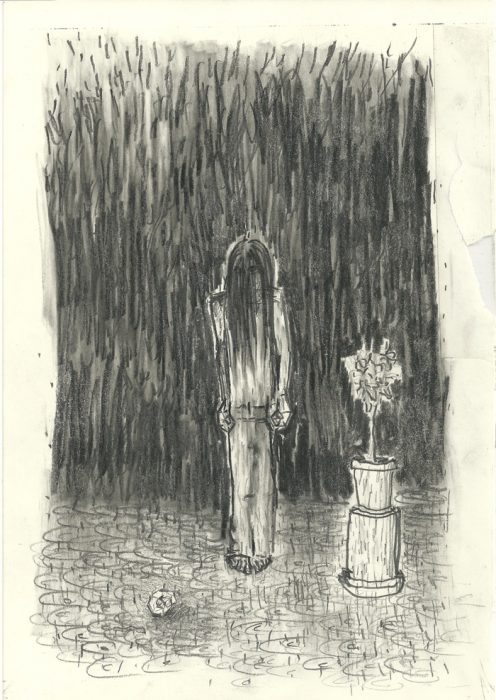
Untitled #9, 2019, Charcoal on paper 100x70cm
Untitled #15, 2019, Charcoal on paper 100x70cm
Untitled #19, 2019, Charcoal on paper 100x70cm

Orly Maiberg | Out of the Blue

Orly Maiberg / Out of the Blue

Opening: 31/10/2019   Closing: 28/12/2019

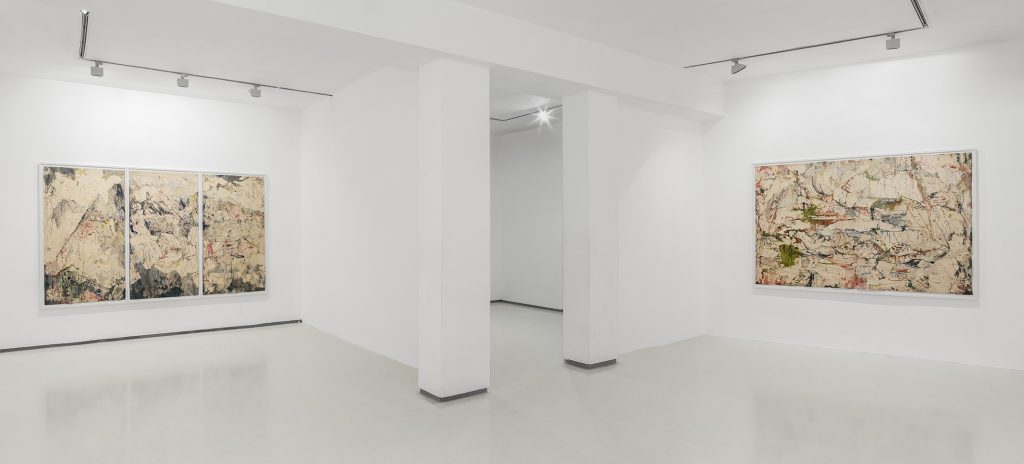
Out of the Blue, Installation view, Noga Gallery, 2019
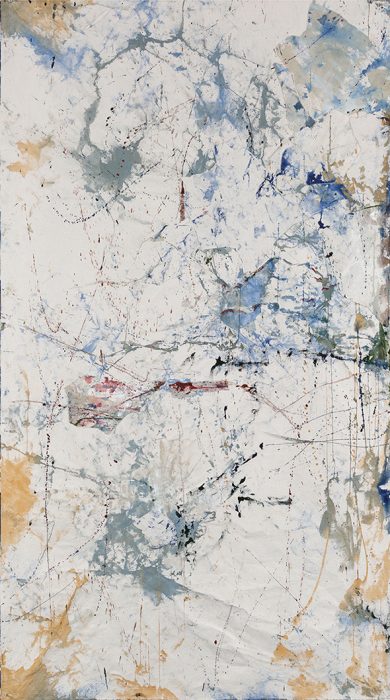
Abstract Sea, 2019, ink & collage on raw canvas, 173x97cm
Throw Net, 2019, ink & collage on raw canvas, 175x191cm
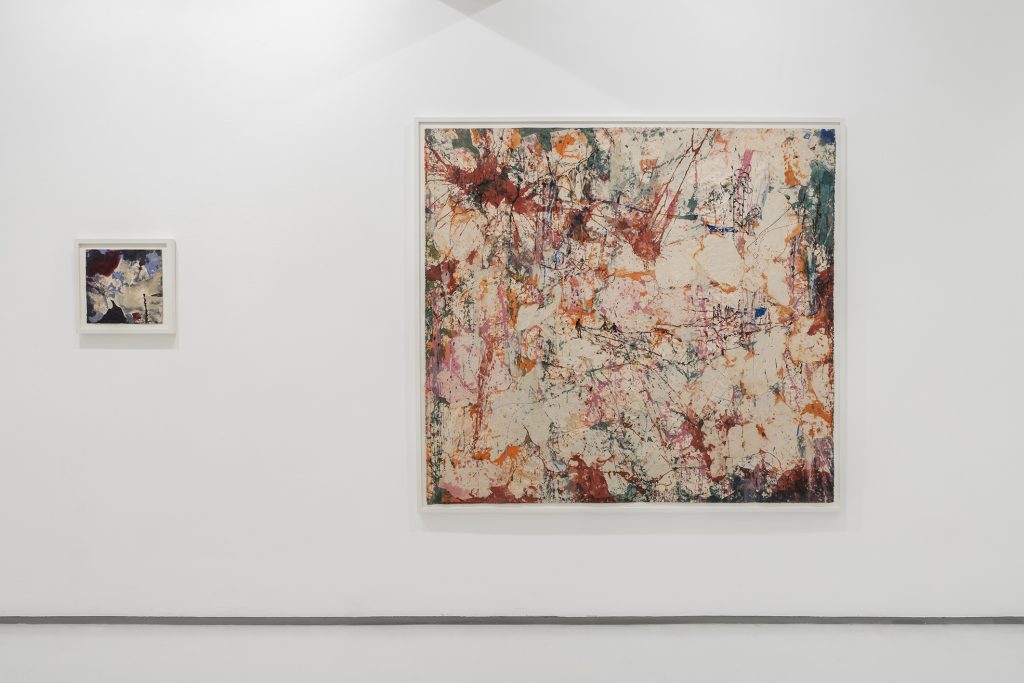
Pink Mountain Tops, 2019, ink & collage on raw canvas, 182x172cm
Spring Fever, 2019, ink & collage on raw canvas, 184x219cm
Delicate Balance, 2019, ink & collage on raw canvas,164x176cm
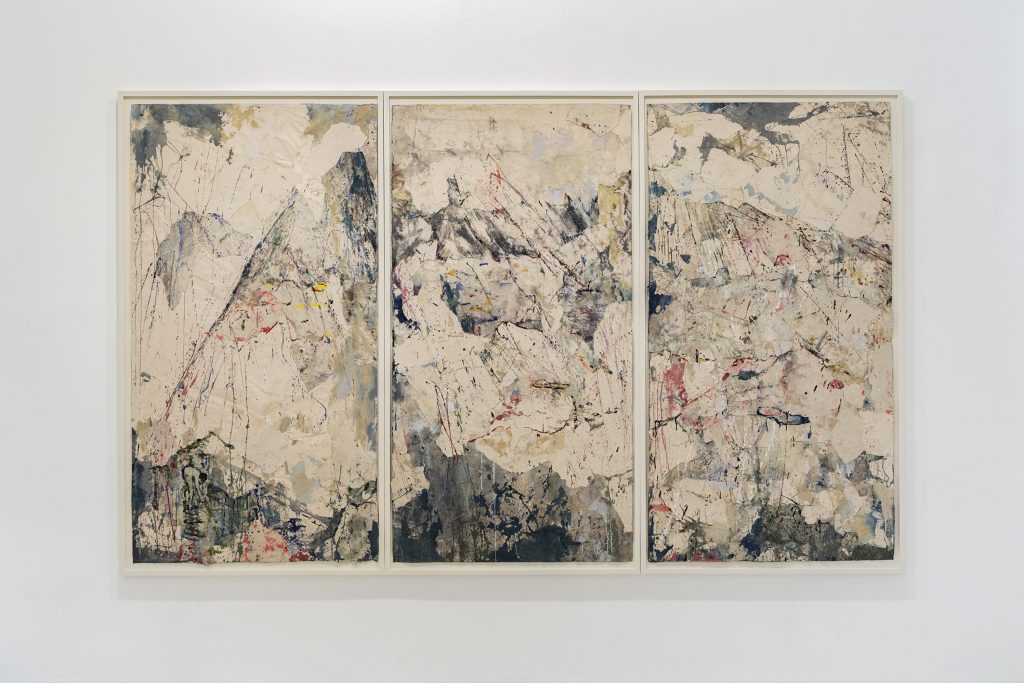
Mountain Triptych, 2019, ink & collage on raw canvas, 179x290cm
Net Throwing, 2019, ink & collage on raw canvas, 42x33cm

At first, the paintings seem abstract – wide shots of diffuse, saturated, or dilutedstains –like an aerial view, satellite images, or perhaps a map that offers an abstract representation of the terrain. At second glance, the abstract space comes into focus and becomes clearer. The eye skips from site to site and starts recognizing figurative images: snowy ridges, steep slopes, serpentine creeks, or possibly tangles of thin capillaries and open cuts of bleeding paint. A more careful look reveals small figures and other concrete images scattered in the torn landscape –figures in action, events that offer a foothold of sorts.

The work process is completely bare and exposed. Washing, squeezing, cutting, pasting, brushwork, drawing. But despite its unplanned nature, it also seems considerably controlled. Further treatment instills meaning in the accidental. Random stains, cracks in the paint, a faded wash – all these serve as the starting point for deliberate interventions. Pieces of canvas cut from one painting are pasted onto another, but also reworked and integrated into the space, elevating it like a topographic map. From a different perspective, these supposed ridges, these strips of canvas, these patches look like bandages meant to heal the wounded, bleeding surface; to mend the blemishes inflicted on the landscape. And in-between there are pauses. Empty, quiet, seemingly “undone” areas, territories formed by their own concealment.

Wandering past the works may generate a sense of disorientation, in the absence of anchoring elements to hold on to. One’s ability to be in uncertainties, mystery, and doubts is a “negative capability,” wrote the Romantic English poet John Keats in one of his most quoted letters. How can a negative be considered a capacity? Keats understood that any good artwork feeds on these “adverse” ingredients. Where there is no silence there is no sound.

merkava

Dina Shenhav / Merkava

Opening: 12/09/2019   Closing: 26/10/2019

merkava, installation view, noga gallery, 2019
Soldier #3, 2018, Acrylic on plastic, 80x120cm
merkava, installation view, noga gallery, 2019
Soldier #2, 2018, Acrylic on plastic, 80x120cm
merkava, installation view, noga gallery, 2019

Dina Shenhav | MERKAVA  


When Paolo Veronese was accused of blasphemy in his paintings, as he appeared before the Holy Tribunal by the Holy Office he said in his defense: “Painters take the same poetic license that poets and madmen take.” A winning argument, and to a large extent, a prophetic and groundbreaking one. Indeed, future generations of artists have increasingly allowed themselves strange, absurd, enigmatic things, while we, the viewers, have learned that we do not necessarily have to solve every conundrum.


For me, Dina Shenhav’s whitish, almost ivory-like, foam sculptures are such unsolved conundrums. Why foam? What does it signify? And actually, why stone, wood, or bronze? Foam is not sacred, that much is clear. And it is not really solid: a brittle rather than hard solid, perforated, airy, maybe even ugly? Touchable or off-putting? Perhaps both. Foam is a modern material, but Shenhav works with it as if it were traditional. She carves the material, whittles, the artist turned craftswoman. Indeed, for years Shenhav has been creating work areas out of foam – kitchen, a shoemaker’s desk, a corner in the home of the hunter, the woodcutter, the caretaker. so many masculine work spaces.


Is the work about gender? Of course, gender too. The facial features of the Soldiers in the paintings could have been of young girls. The masculine tank is “feminized.” The large cannon is softened. Still, it bursts through the wall. Where does this aggressive scene take place? This is an Israeli tank … Is the work political? Of course. The ghost of war. A soft rumor about tough things that go on. Indeed, alongside the white work areas, Shenhav also presents dark apocalyptic environments of sooty ruins and charred desolation. Are these works post-traumatic or pre-traumatic? In this unsolved conundrum of producing foam replicas of familiar objects, there is an absurd stubbornness that we do not need, and perhaps cannot, solve “completely,” a determination that bursts into the mind like a tank. Is the piece a self-portrait of sorts? A great violent force broken down into a diligent “cut and paste” action. Seemingly everything is exposed, yet a lot is concealed.

*Itamar Levy

Art makes us happy- 25 years to noga gallery

Art Make us Happy / 25 years to noga gallery

Opening: 14/06/2019   Closing: 09/08/2019

Ori Gersht, Blow Up, Untitled 12, 2007, 100x100cm
Jossef Krispel, Fabricated, 2016, Acrylic and Oil spray on Canvas, 120x100cm
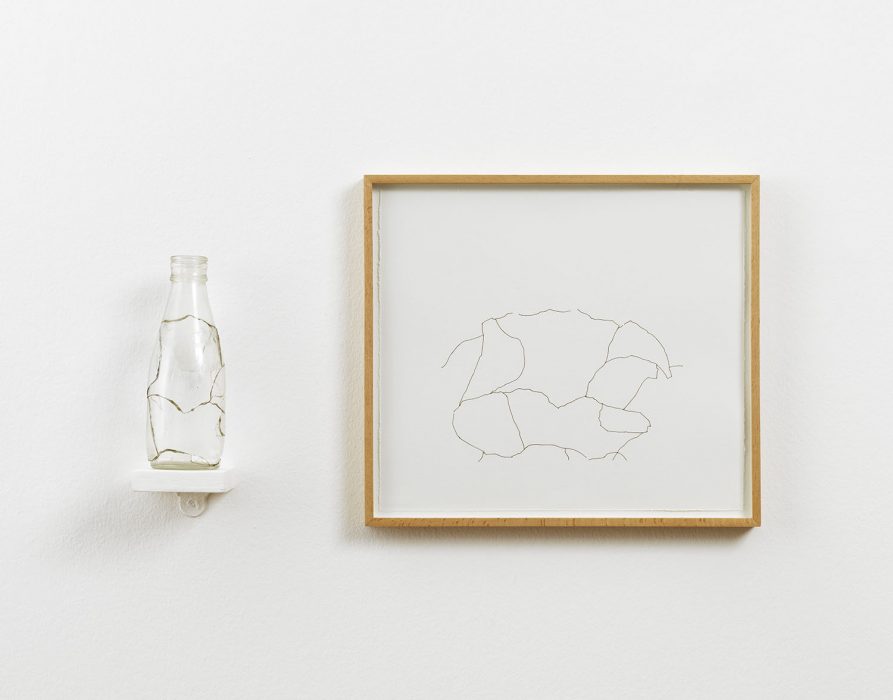
Amikam Toren, Simple Fractions (III), 1975, glass; araldite, shelf, framed drawing; print 36x40.5cm, Glass 22x7x7 cm
Hilla Toony Navok, A Hose, 2013, Mixed Media, 320x220x120cm
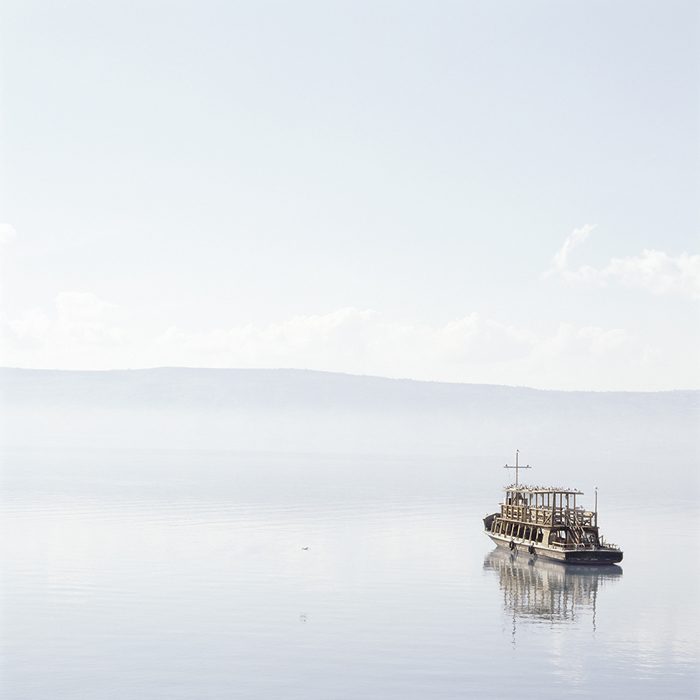
Naomi Leshem, Untitled #2, 2003, Archival Pigment Print, 80x80cm
Keren Cytter, Untitled, 2019, Drawing, 30x30cm
Matan Ben Tolila, Swimmer #1, 2019, Oil on canvas, 160x100cm
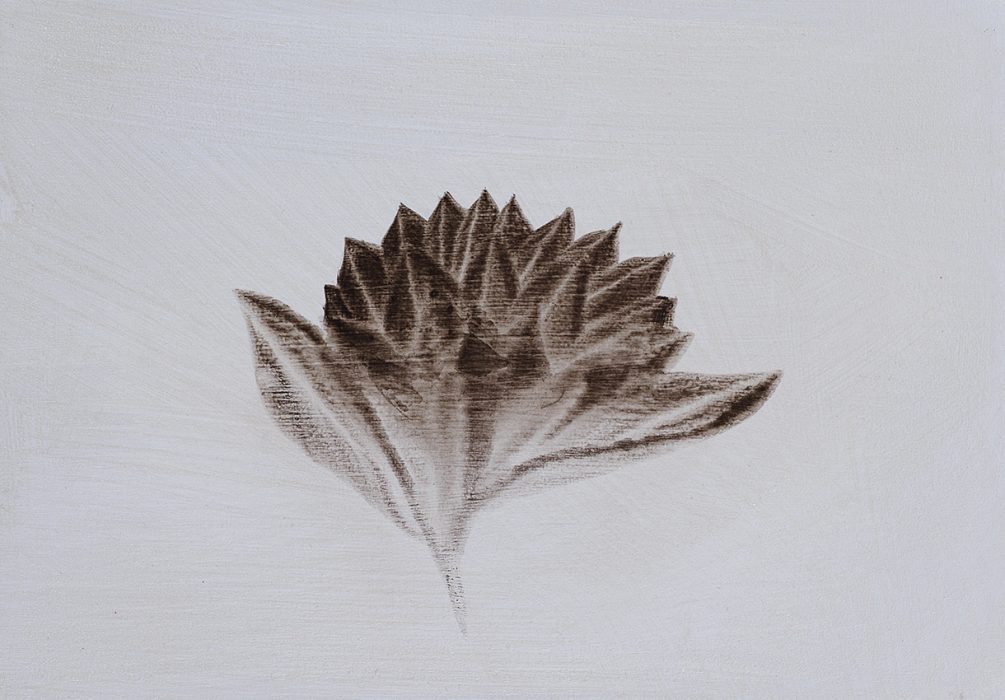
Mosh Kashi, Ash Flora, 2016, Oil on canvas, 35x50cm
Orly Maiberg, Untitled, Mixed Media on raw canvas, 80x120, 2018
Shahar Yahalom, Ghost, 2018, Glass, 36x32x21cm

Noga Gallery marks 25 years of fascinating and challenging activity with the 22 gallery’s artists.

The core of Noga Gallery’s activity and essence has always been presenting Israeli artists, with a focus on emerging women artists, and promoting them in Israel and abroad, as well as exposing the local audience to international artists. The mission of presenting groundbreaking artists whose art combines a range of techniques and controversial themes has been a guiding light for us throughout the years. From the early days of the gallery there was an emphasis on creating an emotional and intellectual aesthetic experience, one that stimulates and undermines issues and sharpens our perception of the world. The gallery maintains a diverse and substantial exhibition program and supports emerging artists as well as artists in the more advanced stages of their career.

***

Noga Contemporary Art Gallery opened in 1994 on 34 Dizengoff Street, Tel Aviv, after a two-and-a-half-year activity from a private house in Herzliya. It was founded by Nechami Gottlib, and with the move to Tel Aviv, Adina Alshech joined the gallery’s management. In 2002 it moved to its current location on 60 Ahad Ha’am street.

The inaugural show in 1994 was accompanied by a special exhibition of 12 billboards on the façade of Habima Theatre and a catalogue. The exhibition was divided into two installments and featured works by the artists Smadar Eliasaf, Tamara Messel, Irit Hemo, Rivka Potchebutzky, Belu Simion Fainaru, Orly Maiberg, Hadar Maor Dgani, Nurit Avidov, Morel Derfler, Michal Heiman, Tito Leguisamo, and Max Friedman.

In its early years, the gallery presented solo shows by Irit Hemo, Tal Mazliach, Galit Eilat and Max Friedman, Smadar Eliasaf, Joshua Neustein, David Ginaton, Marilu Levin, Michal Heiman, Hila Lulu Lin, Nir Hod, Yehudit Sasportas, Miriam Cabessa, Larry Abramson, Orly Maiberg, Mosh Kashi and others. For many of these artists this was their first solo show.

The gallery was ahead of its time and held exhibitions that pushed the envelope, such as Max Friedman and Galit Eilat’s installation that simulated a bordello in the gallery, the work of Hila Lulu Lin who presented a giant nude photograph, Nicole Eisenman’s installation that included a large mural, the works of Talia Keinan that combine drawing and video, Keren Cytter’s provocative films, as well as the display of photography and video works, which was rather rare in the early 1990s and the display of distinctly noncommercial bodies of work. We were the first to exhibit the students of Israel Hershberg’s Jerusalem Studio School in Israel, among them Aram Gershuni, David Nipo, Eldad Farber, and more. This pluralism, which nowadays sounds natural, did not exist in the artistic climate of those years.

The gallery organized and produced a large benefit event whose proceeds were dedicated to Meira Shemesh z”l who needed a heart transplant, but by the time a heart was found it was too late.

The international artist Ori Gersht had his first solo exhibition at Noga Gallery, from which his career catapulted to worldwide recognition.

In 2000 the gallery was invited by the British Council to curate a show of young British artists. The exhibition, curated by Nechami Gottlib, was on view concurrently at Herzliya Museum of Contemporary Art while Noga Gallery featured works by Sam Taylor-Wood, Sarah Lucas, Sarah Jones, Gillian Wearing, and Mat Collishaw – some of the leading artists of the YBA group.

With the move to the space on Ahad Ha’am Street we opened a special projects room, which allowed artists who are not in the gallery’s roster to present unique projects and installations for over a decade.  Another expansion was made possible by using the gallery’s display window facing the street for performances and various installations.

The gallery’s artists have had solo exhibitions and participated in group shows in leading Israeli and international museums and art events, such as the Venice Biennale, Tate Modern and Tate Britain in London, the Guggenheim and the Whitney Museum in New York, Pompidou Center in Paris, Hamburger Banhof in Berlin and more. Their works are included in leading museum, public, and private collections in Israel and around the world. Many have won awards from museums as well as the ministry of culture and sports.

The international artists who exhibited at the gallery include Nicole Eisenman, a San Francisco based artists group, a group of Cuban artists, Felipe Cezar, Gillian Wearing, Sarah Lucas, Kara Walker, Shahzia Sikander, Kader Attia. The artists Nicole Eisenman and Kader Attia, who were invited to show at the gallery in the early stages of their careers, have since gone on to gain wide acclaim, win prestigious awards, and show their works at the world’s leading museums.

The gallery participated and continues to participate in the world’s leading art fairs such as Art Basel, Art Basel Miami, FIAC Paris, Art Forum Berlin, the Armory Show in New York and more.

And on a personal note, art makes us happy, it makes us think, and challenges us.

We came to art with love and with love we will go on.

Ghosts of others

Naomi Leshem / Ghosts of others

Opening: 04/04/2019   Closing: 11/05/2019

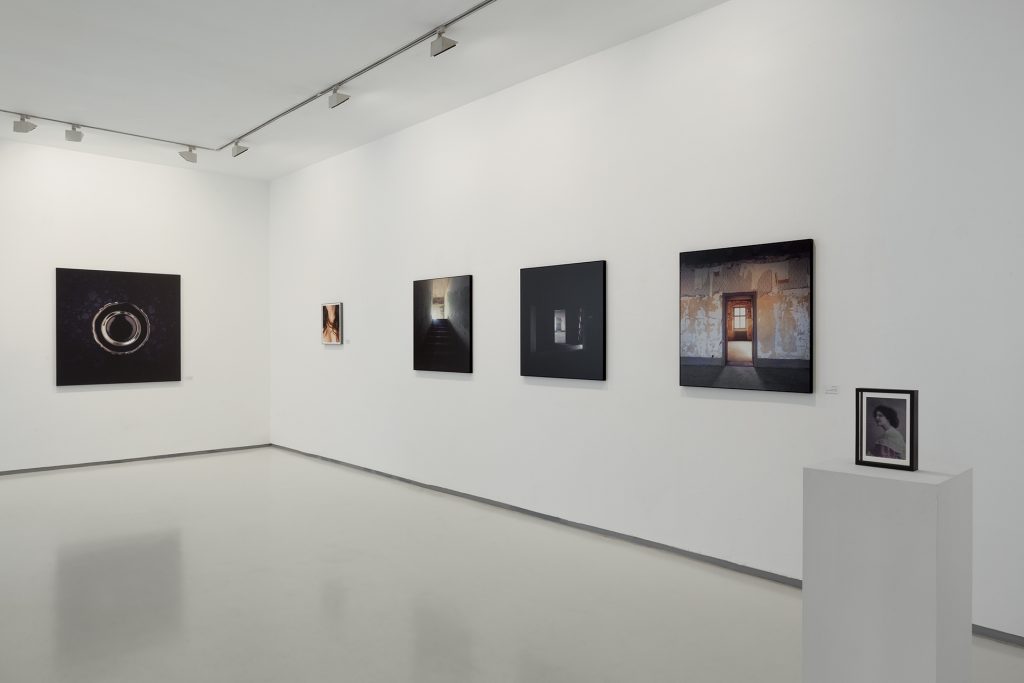
Ghosts of others, installation view, Noga gallery, 2019
Germany. Switzerland, 2018, Archival Pigment Print, 120x120cm
Plate, 2019, Archival UV Print, 120x120cm
Girls Y, 2018, Archival UV Print, 80x80cm
Gisela, 2018, Archival Pigment Print, 80x80cm
Trenches #2 (Triptych), 2018, Archival Pigment Print, 80x80

Naomi Leshem’s new body of work marks a departure from her long-time artistic practice, in which her personal biography served as a starting point. Ostensibly, the photographic subjects in the new works are not associated with her or her personal history, but rather drawn from the history of others – figures, objects and places. She taps into them and turns them into a body of work that while visually eclectic, maintains conceptual coherence.


The visual information presented in the photographs entails human stories, only a fraction of which was known to Leshem. The little she did know was the impetus that drove her to take the picture. The photographs capture a moment of observation, creating a disturbance in the timeless continuum of the serene place and forming a new eternal being that becomes a part of their biography.


Alongside places with a known history like German and French WWI trenches in Alsace or a building in Germany that used to house young Polish girls abducted as Aryan “breeding material,” Leshem also photographed anonymous objects like a 1930s Swedish plate or a Belgian pendant from the 1950s. Without knowing any of the thirty thousand soldiers who perished in the photographed trenches, nor any of the young Polish girls who were imprisoned in the building. Without knowing who were the owners of the objects, without being able to guess who ate off the plate, and whose neck the pendant adorned. The unknown will never come to light. The photographic act freezes a moment in the ongoing history of the place or of the object, and at the same time formulates a new biography. With that, the photograph becomes another link in the historical continuum, recounted through the artist’s transitory perspective and shaped by the influence that the content may bear on her impressions and imagination.


Gizela, the owner of a Zurich hotel housed in a fifteenth-century building, is an inseparable part of the hotel – like a living ghost that wanders through the building. The hotel itself hosts people and stories that will become ghosts with the passing time. Two photographs taken at the Swiss-German border, a historically fraught place with an almost pastoral present, also embody contemporary global dilemmas.


Some of the works were created using photographic ready-mades. Leshem collected postcards from the late 19th and early 20th centuries – taken and hand-painted by unknown photographers and exchanged between relatives or lovers. She chose to change their scale and mode of presentation – thereby instilling a new meaning into them, as they shift from an intimate and private representation to collective representation, immortalizing a human bond that breaks away from the local context.


The artist further used ready-made to compose a picture of six different photographs taken by a cell phone in Thingvellir, Iceland – the seat of the parliament founded in the early 10th where laws were legislated and implemented. In the spirit of Leshem’s current practice, the oldest place in the exhibition was treated with the most contemporary technology – in contrast to her usual technique – analogue photography of slides. With these photograms, Leshem wishes to present a history that is not completely known – neither to her nor to the viewer. The fraction of a second that she captures is a moment from the full past, the elusive present, and events that may come to pass in the future.

crown

Mosh Kashi / CROWN

Opening: 14/02/2019   Closing: 30/03/2019

Gallery Talk: 15/03/2019

Crown, installation view, Noga Gallery, 2019
Crown, 2019, Oil on canvas, 180x220cm
Blue Sepctrum #2, 2019, Oil on canvas, 70x50cm
Crowns #1, 2019, Oil on canvas, 110x112cm
Purple Glowing #1, 2019, Oil on canvas, 200x220cm
Yellow Glowing, 2019, Oil on canvas, 70x50cm

“When I was a child, I used to catch the fish in the river with my hands. I was fascinated by their movement, their speed, how they sparkled, their colors. That was exactly what I wanted to catch in my hands.”

(Constantin Brancusi, “Conversations with Brancusi”, p. 46)

In his new cycle of works, Mosh Kashi expands his pictorial research and explores painting techniques and outlooks in surprising and dynamic large-scale works. The exhibition comprises several series of paintings, each invites the viewer to look from a different point of reference. This time, nature serves as a catalyst for an exploration of cosmic phenomena, while the studio acts as the connecting link in the transformation that they go through before they reach the painted canvas.

The central series in the exhibition is Light Particles. This series serves as an index of Mosh Kashi’s earlier painting processes, which consisted mainly of isolating objects from nature around him and placing them at the center of the canvas, keeping to a minimal color palette, and creating a world that has no place or time. Whereas in this series the gaze turns to look at the celestial sphere, examining the speed and frequency of celestial bodies through pictorial subjects whose visible characteristics are energy and movement, refracted light, and sudden bursts that glimpse fleetingly, following their own routine and structure.

At the same time, a series of panoramic paintings that explore mass and weight through a colorful relationship in paintings of light and darkness complements the sharpness of the Light Particles series. The painting’s appearance is dictated by the misty image, the slow, almost imperceptible heavy movement of the mass of light and darkness.

The third series of works focuses on dense construction of a colorful range as an expression of painting abstraction. The presence of color in this series manifests itself with flashes of color waves, capturing layers of bright light and total darkness, as if they were the essence of the blue sky spectrum.

Each series in the new cycle of paintings is executed in a different method that indicates the totality of phenomena in the universe. At the same time, it also illuminates the possibility that the pictorial tactic in this instance distills natural phenomena and gives them an independent entity, one that is separate from the cosmic space, an action that conjures up the studio as a parallel universe governed by its own orders.

Reality outside the studio and the illusion of painting in the studio underscore the differences between them but at the same time also allow the cosmic moment to take shape through painting as an imaginary existence of a visual formulation.

Oriental Background

Jossef Krispel / Oriental Background

Opening: 20/12/2018   Closing: 08/02/2019

Oriental Background, Installation View, Noga Gallery, 2018
Joseph's Dreams, 2018, Acrylic and spray paint on wood, two panels, 60x48cm Each
Orient Express, 2018, Acrylic and spray paint on canvas, 60x80cm
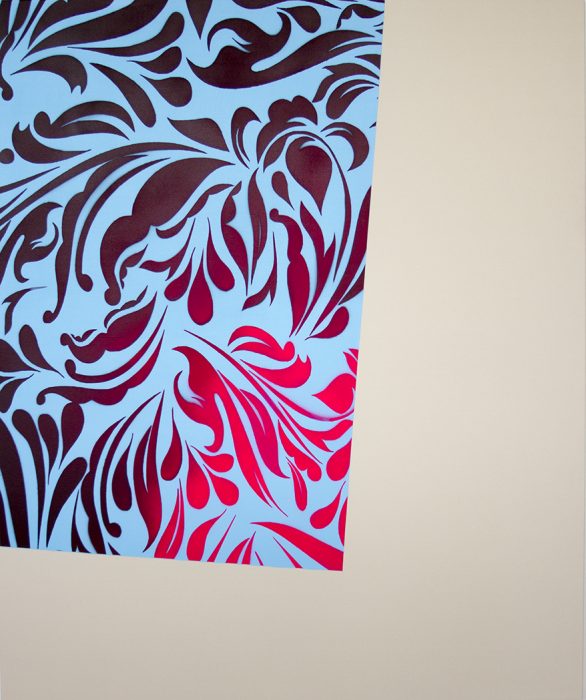
Hashtag Ornament, 2018, spray paint on canvas, 50x40 cm
Orient Express, 2018, Acrylic and Spray on Wood, 48x60cm
Ornament, Reversed Sunsets, 2018, Spray paint on canvas, 70x40cm each
Hunted Lioness on Cardboard, 2018, Spray paint on cardboard, 80x130cm
Dance, 2018, Spray paint on cardboard, 70x50cm
2018, Acrylic and spray paint on wood, 66x50cm

Jossef Krispel’s new solo show centers around the background.

The entire new series of paintings was created by spray paint, while the painting surfaces spread from canvases to sheets of Formica, to shelves, doors, and various pieces of furniture, as well as paper and cardboard. The paintings shift in their definition from tableau images to coatings and backgrounds.

The exhibition’s title refers to backgrounds that function as decorations and coatings covering walls and architectural elements, and to the world of Oriental ornaments and patterns originating in Eastern cultures. It also draws parallels between the act of painting and decorating “empty” spaces that usually serve as the background of an image. However, the painted backgrounds here feature recurring motifs of reliefs and vase paintings from the dawn of civilisation in the Mediterranean (Ancient Greece) and from Assyrian culture (Mesopotamia) – including images of hunted lions or lionesses, hunting scenes, and carnal scenes with a satyr figure.

The paintings are composed in a way that deceives the eye: everything that first appears to be at the front plane of the painting is actually in the lower layers of paint, “buried” in the work process and “unearthed” in the last stage. What usually functions as the foundation layer, as a backdrop, is used in Krispel’s new paintings as the very centre of the painting.


*

Jossef Krispel (b. 1974) is an artist, painter and art lecturer in the Fine Arts Department at Bezalel Academy of Arts and Design in Jerusalem. He has received many awards, including the Rappaport Prize for a Young Israeli Painter, the Minister of Culture Prize, and the Young Artist Prize. His works have been featured in many exhibitions in Israel and abroad, including solo exhibitions at Tel Aviv Museum of Art, Haifa Museum of Art, and Herzliya Museum of Contemporary Art, and Palazzo Medici Riccardi in Florence. His paintings are included in many collections, among others in the Israel Museum in Jerusalem, Tel Aviv Museum of Art, Israeli Knesset, and private collections in Israel and abroad. He received much acclaim for his painting in the National Library of Israel (2013) and the giant mural at Meir Hospital in Kfar Saba (2014).

Fragile Matter

Ivri Lider / Fragile Matter

Opening: 01/11/2018   Closing: 08/12/2018

Gallery Talk: 01/12/2018

Fragile Matter, Installation View, Noga Gallery
Water & Concrete, 2016, Archival Pigment Print, 102x153cm
Waiting for Nick II, 2017, Archival Pigment Print, 57x80cm
Party, 2017, Archival Pigment Print, 151x223cm
Socializer, 2015, Archival Pigment Print, 145x207cm
Dead.Sea, 2017, Archival Pigment Print, 123x158cm
Entertainer, 2017, Archival Pigment Print, 73x102cm

Ivri Lider/Fragile Matter


This is the first solo exhibition of Ivri Lider – one of Israel’s most prominent musicians, who in recent years has expanded his creative practice to photography. Lider began exhibiting about a year ago and since then, his works have been featured in several group shows, including at the International Photography Festival and the Eretz Israel Museum in Tel Aviv and Berlin’s Dittrich & Schlechtriem Gallery.


Lider has been in the public eye as a writer and musical artist for over two decades. In a way, the tension between his maturity as an artist and the fact that he is now taking his first steps as a photographer is the origin of some of the most interesting aspects in his visual art. Unexcepted and surprising, seemingly conflicting combinations, which can be found in his personality as well as in his art – both musical and photographic: strength, confidence, and abundance alongside fragility, hesitancy, and melancholy. For me, these combinations – presented with tenderness, sensitivity to detail, and emotional and aesthetic precision – are what make him a fascinating artist in the various media he chooses to practice.


The exhibition itself is also divided into two complementing parts.


The main, “legitimate” gallery space features photographs chosen from the numerous works Lider has taken in recent years. The pieces capture what looks like random moments, a glimpse into fragments of life – compositions drawn from the jumble of everyday life, which trigger curiosity as to the place and the situation in which they were taken. Lider deliberately does not satisfy this curiosity – neither in the scenes themselves, nor in the works’ titles.


Most of the photographs are executed with technical perfection, with a great emphasis on clean frames and symmetry (and in the few cases that is not so, for instance in the work Happily Ever After, the blurring is clearly intentional). The heightened aestheticization of the works is even more evident given the photographed objects, which in many cases are nondescript or insignificant. In the same way, we are only exposed to the supposedly marginal, hidden parts of the scene, while many of the photographs in fact portray places that can be considered glamorous and prestigious, like luxury hotels or spacious concert venues, exposed in all of their wretchedness.


Another recurring characteristic in the works is texts that appear as part of the scene, imbuing it with another layer of meaning. Naturally, the use of text is associated with Lider the lyricist, underscoring the connection between the different creative disciplines he works with.


The exhibition’s title in Hebrew is Split Second (the Hebrew word for split is also linked with the word for fragile). This is also the title of two central works displayed in this part of the exhibition (which were given the names Socializer and Water and Concrete in English) – each holding both poles between which the entire exhibition unfolds.


Socializer captures an unclear, almost surreal moment: a TV monitor, a sound system, and speakers sitting on a cart besides a floor lamp, on the backdrop of a wall made up of endless golden panels. The decision to display it in the exhibition in such large scale attests to its central role in the story. The grandeur is alluring and intriguing, yet seems forced in the detached situation, leaving a sour sense of confusion and loneliness.


Water and Concrete freezes a moment in time that holds several potential interpretations, which largely depend on the viewer himself and his worldview. The almost abstract photograph captures an encounter between sharp and rigid concrete, water in motion, and another, ambiguous object on the edge of the frame. Alongside the beauty and poetic nature of the work, and the almost meditative feeling it evokes, it seems to represent a journey that shifts between transcendence and harmony to disappointment and despair, which is woven throughout the entire exhibition.


In most of Lider’s works in this part of the exhibition, and in most of his works in general, there are no human figures. The only figures that appear in the works are part of a photograph within a photograph (in Happily Ever After, Change, and Privet Kiska), or in the piece Entertainer, which depicts a peeling painting of Dudu Topaz – the number one entertainer in Israel throughout the 1990s, who spiraled into a mental breakdown following his fall from grace – until his arrest and tragic end. The figure of Topaz appears as part of a multi-object scene, which at first glance looks like a random mixture of items. A second glance reveals that each of these objects imbues the work with another meaning, another warning, almost as if they were symbolic religious objects in Christian iconography.


The moments that Lider documents are cinematic in their nature and aesthetics; While seemingly noneventful, they bring to mind questions about the events that preceded them and those that followed them. Alongside the aesthetics and tenderness of the depicted scenes lurk emptiness and loneliness, the falsity of the “rich and famous” lifestyle, the elusiveness of the everyday, and the fragility of life.


The second part of the exhibition takes place in the upper space of the gallery, an area that is usually closed to visitors. The work presented there is comprised of a projection of photographs with a soundtrack composed by Lider specifically for the piece. Lider “took over” a private part of the gallery, setting up a screen on the storeroom door, on which the work is projected. On the way to the work, viewers pass a sign that points to a private space in the gallery, while the climb up the narrow stairs forces an uncomfortable viewing of the projection. The space at the top of the stairs is not intended for more than one person. The viewing experience is therefore private, or alternatively – crowded and claustrophobic. Accordingly, the projected works unfold a darker, more private world than the works hanging on the walls of the gallery.


An edge of a bed, a view of a ceiling, a fragment of a carpet, a corner and an angle, dark corridors and slivers of light emanating through different cracks. Amongst the corners and objects, for the first time in the exhibition, we see figures – all men, who also do not fully appear: a tattoo on an arm, a back, a neck, feet, a stain on a pair of shorts. There are also faces, some blurry and others distinct and recognizable. The piece evokes many questions, left without a clear answer. In conjunction with its title, Fragile Matter, it echoes the lyrics of Lider’s song, which appear on a fabric on the window of the gallery’s bottom floor.


Curator: Maya Anner

Fragile Land

Ori Gersht / Fragile Land

Opening: 30/08/2018   Closing: 26/10/2018

Fragile Land, Installation View, Noga Gallery, 2018
Cyclamen, P06, 2018, Archival Pigment Print, 65x85cm
Cyclamen, P03, 2018, Archival Pigment Print, 31x25cm
Cyclamen, D01, 2018, Archival Pigment Print, 100x80cm
Cyclamen, D02, 2018, Archival Pigment Print, 85x85cm
Lilium Candidum ,D01, 2018, Archival Pigment Print, 120x100cm
Lilium Candidum ,P01, 2018, Archival Pigment Print, 80x64cm
Iris Atropurpurea, P04, 2018, Archival Pigment Print, 40x30cm
Iris Atropurpurea, D01, 2018, Archival Pigment Print, 120x100cm
New Orders 03, Untitled 02, 2018 , Archival Pigment Print, 26x34 cm
New Orders 03, Untitled 03, 2018 , Archival Pigment Print, 26x34 cm
New Orders 03, Untitled 04, 2018 , Archival Pigment Print, 26x34 cm
Evertime 07, 2018 , Archival Pigment Print, 60x71 cm
Evertime 09, 2018 , Archival Pigment Print, 60x90 cm
Evertime 05, 2018 , Archival Pigment Print, 30x68 cm
Evertime 06, 2018 , Archival Pigment Print, 45x53 cm

Fragile Land
Where the Wild Things Grow


Botany is one of the loudest trumpets of modern nationalism and as such, it is no surprise that the connection between Zionism and the wild flowers of Israel was established in an attempt to tighten the bond between the Jewish settlers and the land of the fathers. Furthermore, the act of giving the plants Hebrew names by Effraim and Hanna Reuveni in the 1920’s was aimed at establishing an irrefutable proof of identity and belonging, as if from these plants the people and the language were sprouting. The flowers help to establish a feeling of belonging, as if uprooting the flowers help to root the people to their native land. The wild flowers establish ties between the people and the habitat, fusing together the botanical with the ideological. However, biological habitat do not overlap national borders.


As a child Yuli Tamir recalled  “reading ‘Our Country’s Flora’, one got the impression that Israel was a unique botanic habitat whose flora and fauna were special and whose borders were natural. One day I came across a nature book published by a Palestinian Israeli. It had the same beautiful sketches of the same flowers and trees, and yet the mere fact that it was written in Arabic made it alien. This was a clear expression of the geographical reality of two nations sharing a land, each pretending it was its sole owner.”


In Fragile Land, Gersht has photographed the endangered flowers of Israel. Flowers that were declared; ‘national treasures’ and therefore must be protected and respected. In each specimen he was attempting to reveal the tragic humility of the living plants that were ripped from the soil reviling the solitary and existential essence of being. His approach was inspired by the history of scientific botanical drawings, which are aiming to rise above the specifity of the model, depicting the timeless, the archetypal specimen isolated from its environmental context. However, his photographs are also inspired by the artistic quest of such Renaissance painters as Leonardo and Durer in their search for idealism and for poetic representation of the divine creations.


For this new body of work, Gersht simultaneously used 10X8 Polaroid’s film and a high-resolution digital camera to photograph and catalogue the endangered flowers of Israel. In his Polaroid photographs he was attempting to meltdown both, medium (film) and subject (flowers). In doing so he has destabilised the Polaroid and at the same time shot the flowers with a rifle capturing them in the critical moment of impact. This process allowed him to integrate the fragile and unstable presence of both flower and film. Unlike digital processes, each Polaroid film is unique and  Unrepeatable, therefore each event becomes a unique ghostly record for the interaction between medium and subject.


In contrast to the sensual and earthly natured polaroid’s, the identical images captured by the high resolution digital camera are super sharp and detailed, revealing a different reality, unfolding a contrasting parallel narrative of the same event. The comparison between the two mediums is incongruous and may allude to the role of technology in defining the perception of reality, the subjective nature of evidence and the elusive phenomenon of truth.


Ori Gersht was born in Tel-Aviv, Israel in 1967. He received his BA from the University of Westminster, London (UK) and his MA in Photography from the Royal College of Art, London (UK). He lives and works in London. He has previously been the subject of solo exhibitions the Museum of Fine Arts, Boston, The Imperial War Museum, London (UK), The Tate Britain, London (UK), The Tel Aviv Museum of Contemporary Art, Jerusalem (Israel), The Santa Barbara Museum, The Hirshhorn Museum and Sculpture Garden, Washington DC, The Jewish Museum, New York, The Yale Centre for British Art, Connecticut, and the Gardner Arts Centre, Brighton (UK).


Gersht is included in the public collections of the British Council, London (UK), Deutsche Bank, Government Art Collection, London (UK), the Hirshhorn Museum and Sculpture Garden, Washington DC, the Imperial War Museum, London (UK), The Museum of Fine Arts, Boston, The Israel Museum, Jerusalem (Israel), The Jewish Museum, New York, the J. Paul Getty Museum, Los Angeles, the Knoxville Museum of Art, Knoxville, the Los Angeles County Museum, Los Angeles, the San Francisco Museum of Modern Art, San Francisco, the Santa Barbara Museum of Art, Santa Barbara, the Solomon R. Guggenheim Museum, New York, The Tate Britain, London (UK), the Tel Aviv Museum of Art, Tel Aviv (Israel), the 21C Museum, Louisville, and the Victoria and Albert Museum, London (UK).