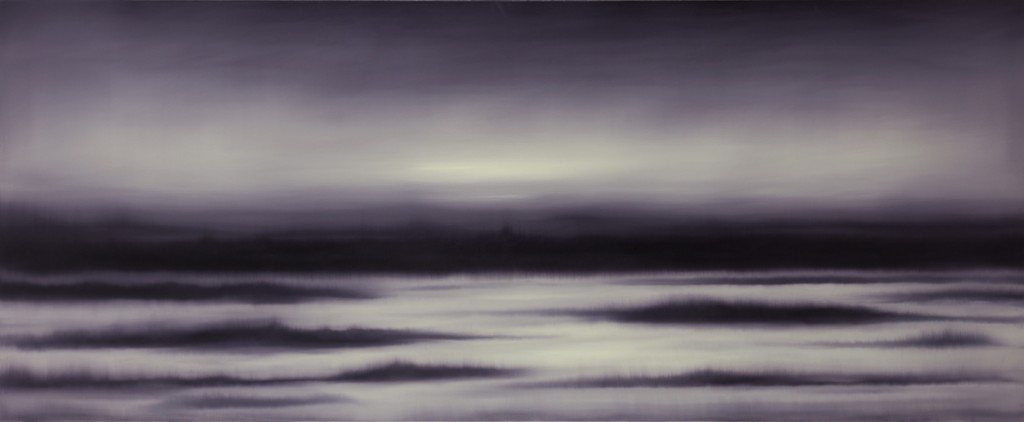
White Ink

Orly Maiberg / White Ink

Opening: 30/04/2015   Closing: 28/05/2015

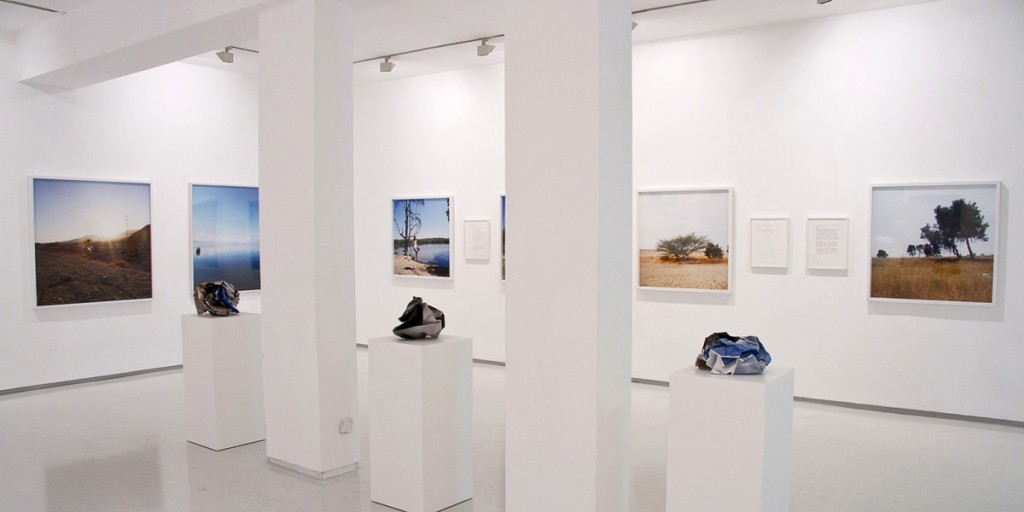
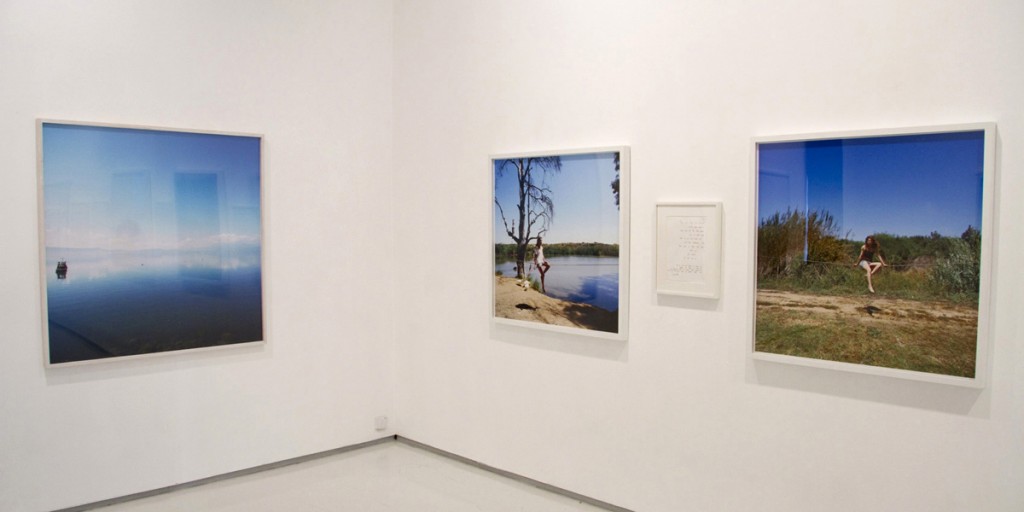
White Ink, Exhibition View, Noga Gallery of Contemporary Art, 2015
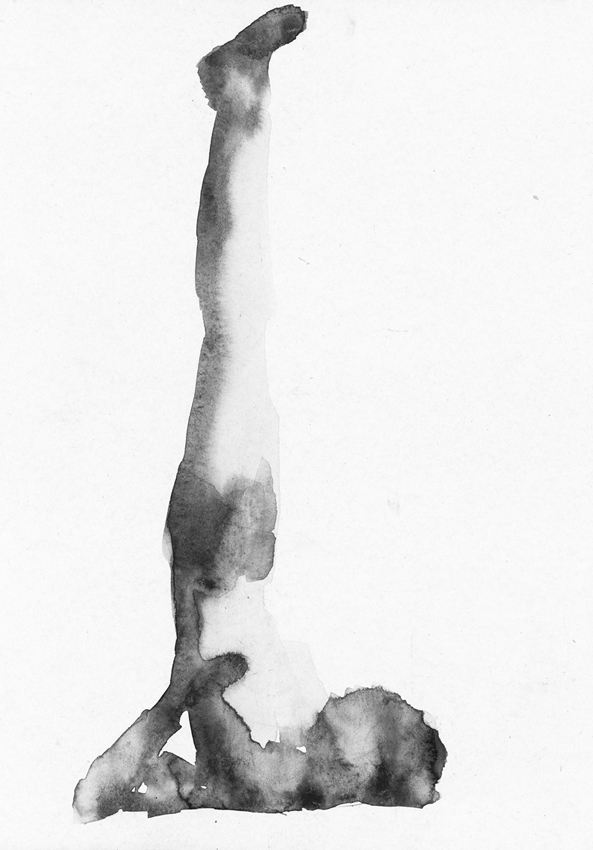
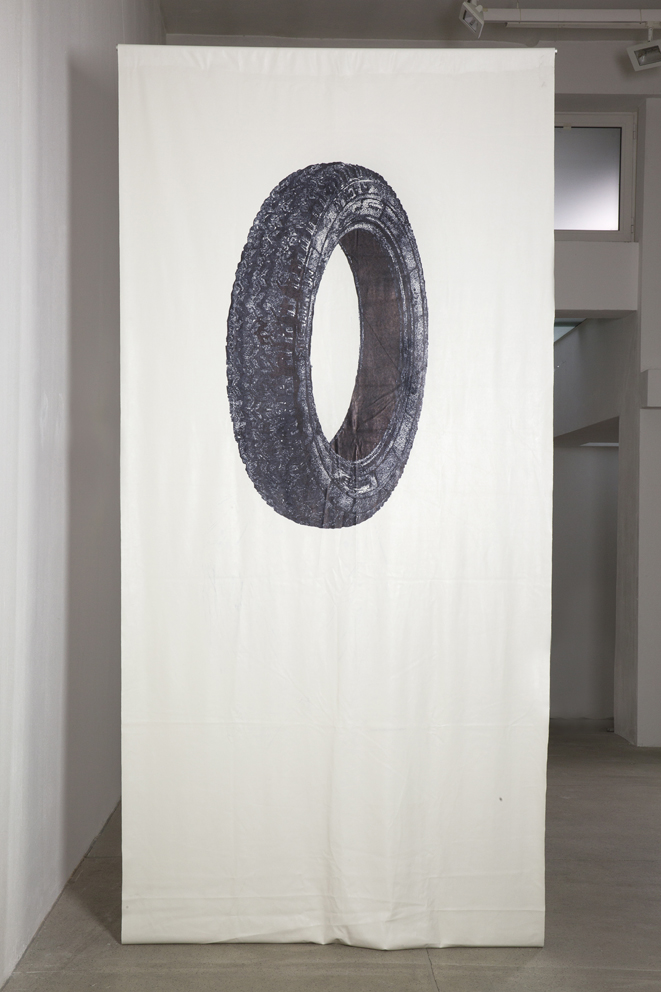
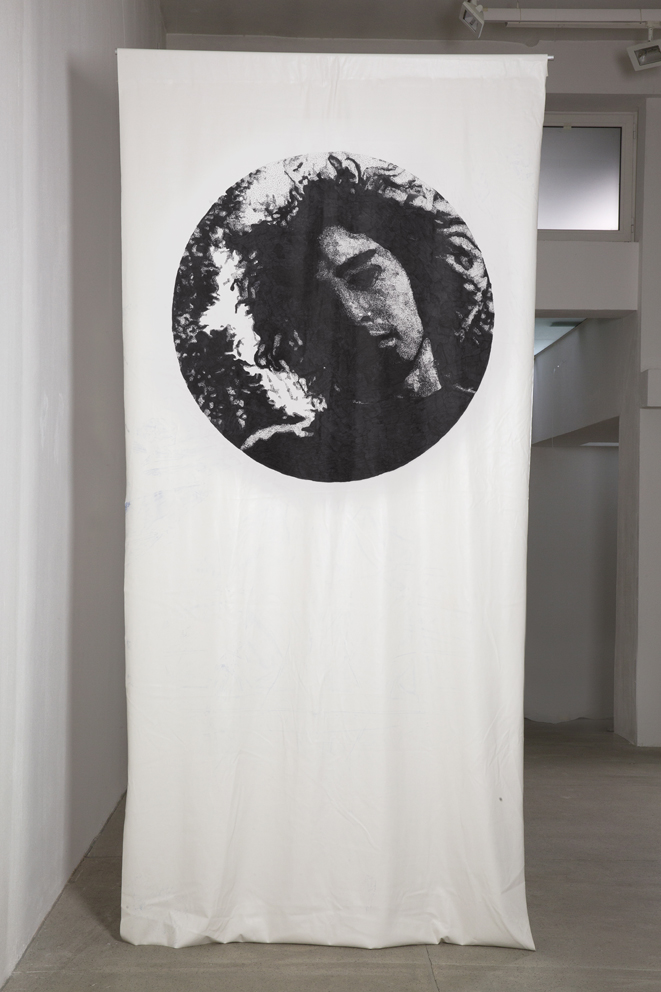
Untitled #5, InkJet Print, 210x150cm, 2015
Untitled #8, InkJet Print, 150x220cm, 2015
Untitled #1, InkJet Print, 210x150cm, 2015
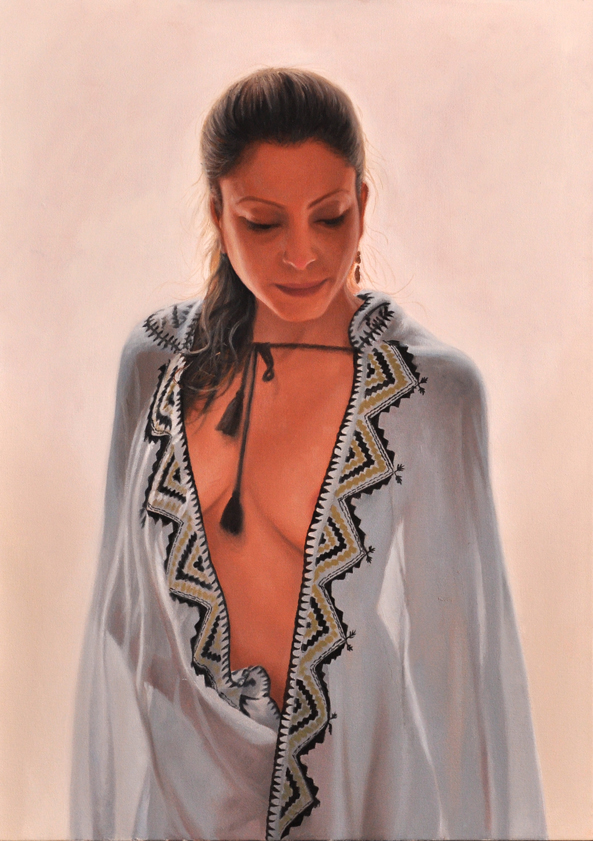
Untitled #13, InkJet Print, 100x70cm, 2015
Untitled #7, InkJet Print, 100x70cm, 2015

A Woman Who Stopped


In the end, it is about movement. Like the movement that leaves the text open-ended, as if to signify the transcendence of time, the distortion inherent in the linear sequence. The annals of time begin with a different ending, and what takes place in us moves in opposite directions, stopping at the moment of being christened as an image. And here, we have a woman who stopped, and more than once. She confers her consonants on whoever is interested, in order to say something about the strength needed to be passive. This is her natural language, her diction, if you like. Her ideological movement is the movement of consonants, and in order to take the helm with her lips she must rub against edges, embody passive and active states, action and passion, man and woman.


For her past is strewn with beds, riddled with previously registered prostrations. “She is lying down, he stands up”, writes Hélène Cixous. “She arises – end of the dream – what follows is sociocultural: he makes her lots of babies, she spends her youth in labor; from bed to bed…”[i] What shall we do with this woman who insists on stopping in motion? The streams of water moisten her organs, whispering: “You have long been dispossessed of yourself,” but a recalcitrant habit makes her stretch up her legs, turning the crucifixion gesture on its head.


Her body rests on the cool floor with her arms spread out, like in an emergency instruction manual she once saw, warning against being trapped in quicksand. The head is bent back, the arms float, and only the legs are already sunk deep in the downsucking force. Surrender as a first, vital resort.


Now she pulls out her legs from the grip of the everyday and uses them to outline, almost unawares, a new vertical order. Her body delineates two contradictory paths – a perpendicular, structuring, organizing, hierarchical dimension, tolerating no interruption and containing all she knows, and a horizontal, expanding, all-encompassing dimension that contains her secret. Her confidants know the rebellion embodied in a rising which is not an erection, but an ever continuous, changing, diffusive flow.


How wicked is the joy that permeates her, her unseen gaze trained on her toes, become a horizon. She can almost speak, get reacquainted with the efficiency workers that gulp up the spaces of her life, generate the role reversal, the hovering that will be their lot. She teaches them to hold what is stronger than her, like a wave she has learned to tame, inhaling air into her lungs as if she were newly born.


In the end, it is about movement.


Dalit Matatyahu


[i] Hélène Cixous and Catherine Clément, The Newly Born Woman. Trans. Betsy Wing. University of Minnesota Press, 1986, p. 66.

Here and There

Keren Cytter / Here and There

Opening: 26/02/2015   Closing: 18/04/2015

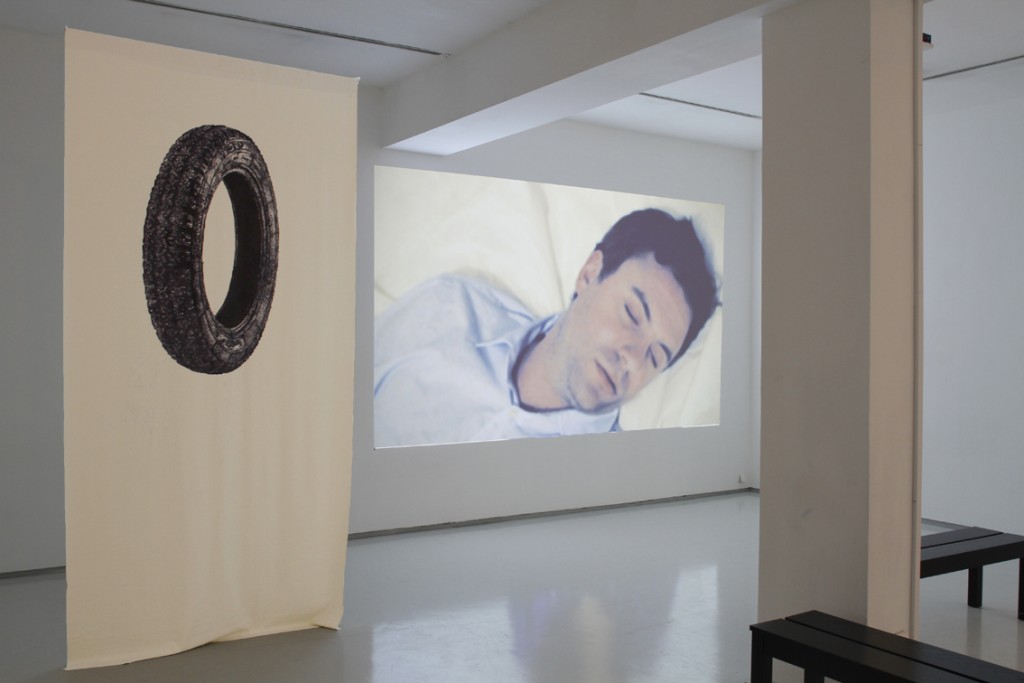
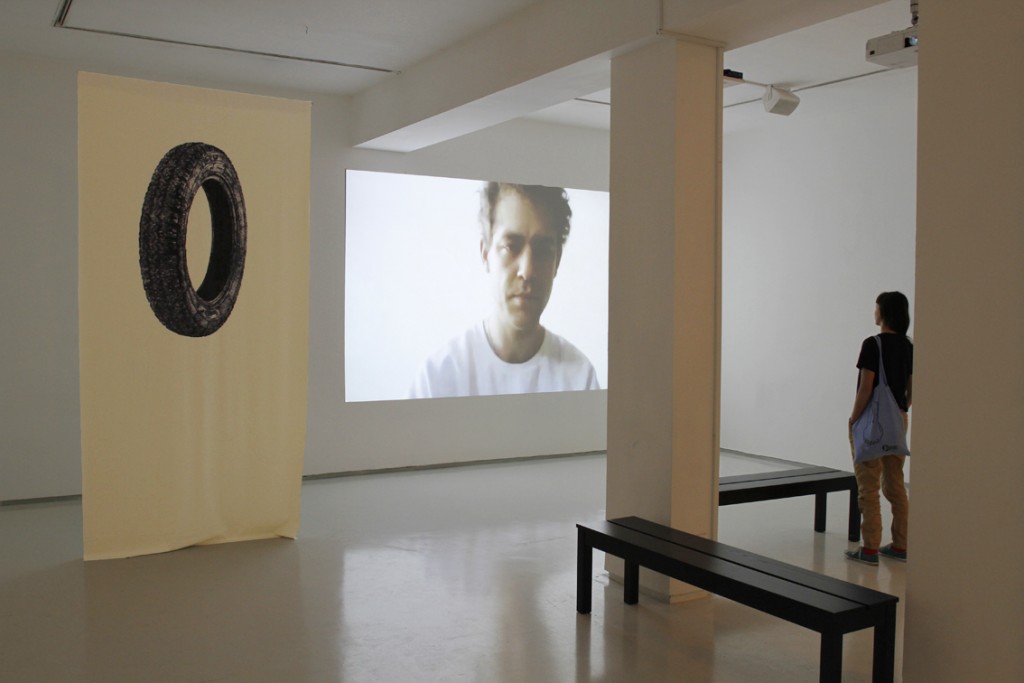
Here and There, Installation view, Noga Gallery of Contemporary Art, 2015
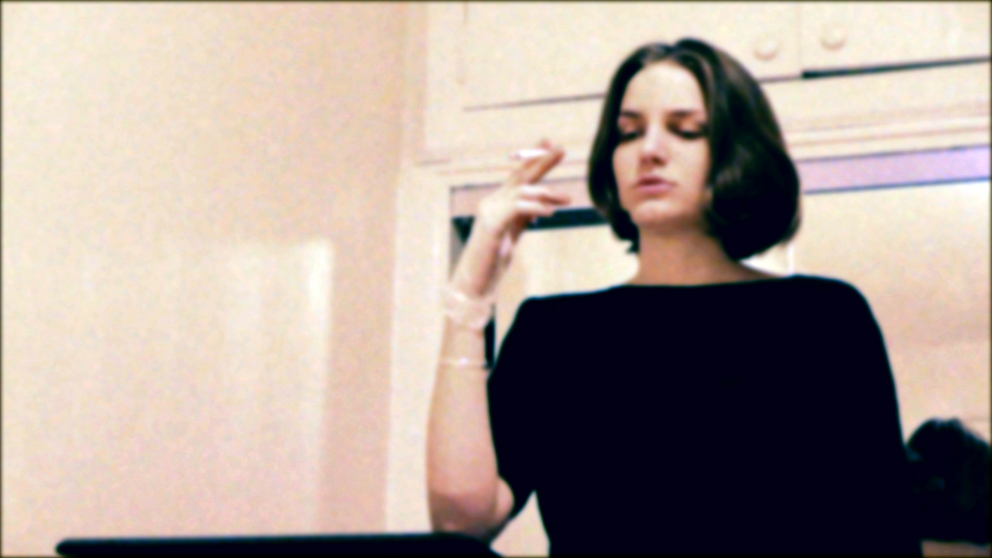
Siren, Still from video, Digital HD Video Duration 14’39", 2014
Siren, still from video, Digital HD Video Duration: 14’39", 2014
Siren, still from video,Digital HD Video Duration 14’39", 2014
Black Wheel, Sharpie on vinyl leather fabric, 298x139cm, 2014
Tim Buckley, Sharpie on vinyl leather fabric, 294x138cm, 2014
Red Hand, Sharpie on vinyl leather fabric, 304x139cm, 2014

Noga Gallery of Contemporary Art is happy to present the fourth solo exhibition  of the multidisciplinary artist Keren Cytter.The exhibition features three films :Ocean, Rosh Garden and Siren, all from 2014. Three new drawings that relates to Siren film and 35 Polaroid photographs.


Keren Cytter (b. 1977 in Tel Aviv, lives in New York) is a fertile storyteller. She works mainly with video and film and has made more than 65 scripts and films within the last decade. In 2008 she founded the dance and theatre company D.I.E. NOW (Dance International Europe Now) and in 2010 she co-founded APE – Art Projects Era, a foundation working from New York and Rotterdam with the aim to realize art projects outside of traditional institutional structures.


Keren Cytter uses visual media in strikingly original ways to build powerful and affecting narratives out of skewed scenes of everyday life. Cytter’s films, video installations, and drawings represent social realities through experimental modes of storytelling characterized by a non-linear, cyclical logic and multiple layers of images: conversation, monologue, and narration systematically composed to undermine linguistic conventions and traditional interpretation schemata. Recalling amateur home movies and video diaries, these montages of impressions, memories, and imaginings are poetic and self-referential in composition, thought provoking, and inescapably engrossing. Cytter’s pared-down style of filmmaking utilizes the barest of resources; she often films in her own apartment and incorporates intentionally kitschy, lo-fi effects. Even as Cytter’s characters enact intense moments, the actors are often emotionally detached from the drama or are even playing multiple roles; actions repeat themselves and seem out of sequence. Her work plays with the conventions of narrative cinema to reveal or upend unwritten rules, and as Cytter moves between multiple languages, plotlines, and genres within a single work, her work can foster anticipation and disbelief. Cytter also draws heavily on music to create a certain drama and atmosphere within her films. The narratives are often broken up and touch on themes of love, hate, sex, jealousy, revenge and violence.


The films:


Siren shows her typical way to narrate insane stories, mostly centered on the conflict between genders and based on disorienting flashbacks, together with new digital tools that create a new visual language and change our approach to images. In Siren Keren Cytter deals with “poor images” and their mass processing and circulation through mobile and smart- phone cameras. Images and scenes of different qualities are repeated to show the wide range of ambiguous possibilities of interpretation images can have and to insist on issues such as love and revenge: the female narrator convinces her male friend to murder another man in the name of all women to revenge unequal treatment in the battle between sexes.


Ocean opens with the written instruction, “Place your head here and your shoulders here,” whose letters compose the profile of a figure; the spectator is required to adjust, like in a subway photo booth. Then a voice starts: “If you don’t want to drown, be an ocean. You are waking up to the sound of the waves [seagulls in the background]. Your mind is an island. You are facing reality by yourself. Relax. Concentrate on the screen in front of you and face your own reflection.”


The story, whose fractured plot is told from different voices and individual viewpoints, as per usual with Cytter, takes place in a beach house. It involves a few characters, some of whom are lovers; a lonely boy; a bit of sex; several dialogues; and passionate kissing next to a bonfire, accompanied by the sticky romanticism of Leonard Cohen’s song Undertow. The voiceover, at one point coupled with the same pulsating binaural beats as Constant State of Grace, repeats instructions on what to do and how to feel until the circular logic of the video closes in on its last words: “Concentrate, look at your reflection. You are relieved. Your mind is empty. Your thoughts are public. […] You recognize your reflection and smile with the embarrassment of a blind date. Relax. Your mind is now an ocean.”


The drawings realized specifically for the exhibition, which have a dialogue with the footages from the film. The drawings on vinyl leather fabric become curtains used to play with the idea of theater curtains and of the installation.


Keren Cytter Recent solo exhibitions and performances include: Kunsthal Charlottenborg, Copenhagen (2014), State of Concept, Athens (2014); Der Stachel des Skorpions, Museum Villa Stuck, Munich (2014), Institute Mathildeonhohe, Darmstadt, (2014); Where are we Now, 5th Marrakesh Biennial, (2014); High Performance. The Julia Stoschek Collection, (2014) Show Real Drama Fondazione Trussardi, Milano (2013); A Theatre Cycle, NOMAS Foundation at Teatro Valle Occupato, Rome (2013); Show Real Drama, Tate Modern Oil Tanks, London (2012); Avalanche, Stedelijk Museum, Amsterdam (2011); Project Series: Keren Cytter, Hammer Museum, Los Angeles (2010); Moderna Museet, Stockholm (2010); X Initiative, New York (2009); CCA Center for Contemporary Art, Kitakyushu (2009).


The Museum of Contemporary Art (MCA) Chicago will presents in March 28th the  first large-scale presentation of the artist’s work in the United States. The exhibition features eight videos from the past decade and a new series of drawings and live performance works. To accompany the exhibition, the MCA and the Kunsthal Charlottenborg co-produced a new anthology of all of Cytter’s film treatments-judged as “the best” or “the worst”.

Man Without Qualities

Lea Avital / Man Without Qualities

Opening: 01/01/2015   Closing: 14/02/2015

Man Without Qualities, Installation view, Noga Gallery of Contemporary Art, 2015
_MG_8282
eye, plaster, 40x45cm, 2015

Archive Skin

Jossef Krispel / Archive Skin

Opening: 13/11/2014   Closing: 27/12/2014

Archive Skin, Exhibition view, Noga Gallery of Contemporary Art, 2014
Untitled (Yellow), Photograph, wallpaper and acrilic on paper, 100x70cm, 2007
Untitled (Al Aqsa), Wallpaper, glow tape and reprudaction on paper, 70x50cm,2007
2 boys watch the world, Reprudaction and book cover on paper, 70x50cm, 2007
העיניים של אוראנוס (מספר 26), צבעי אקריליק ואקוורל על תצלום), 2009, 29X39 סמ

Where the Wild things are

Nevet Yitzhak / Where the Wild things are

Opening: 18/09/2014   Closing: 08/11/2014

Where the Wild things are, Installation view, Noga Gallery of Contemporary Art, 2014

Where the Wild Things Are, the title that the artist chose for her exhibition, is borrowed from Maurice Sendak’s renowned children’s book, which blends a childish fantasy with violence and horror – just like the Afghan war rugs that serve as the point of departure for the video installation exhibited here.


Nevet Yitzhak’s accidental encounter with Afghan war rugs could not but capture her attention and set fire to her creative imagination, for they are infused with the same subject matters that motivated her artistic practice from its nascence.[*]


The Afghan war rugs, a fascinating and unique phenomenon, are a combination of traditional rug weaving technique with a history paved with conflicts and foreign military presence. The Soviet invasion of Afghanistan in the late-1970s and a decade of occupation, civil wars and American military intervention have yielded a plethora of war rugs.


Some of the Afghan war rugs are narrative in nature, and feature figurative portrayals of modern weapons, portraits of warriors, war and terrorism casualties, geographical maps alongside various inscriptions that attest to the military and political upheavals. The war rugs, the anti-war rugs and victory rugs, both spectacular and horrifying, have become sought after collector’s items in the West, the subject of research and numerous exhibitions. What started as an authentic expression of the changing reality and landscape, a means for transmitting to the world the horrors of war and occupation, migration and uprooting, an expression of resistance and a means of survival, had been commodified and turned into touristic memorabilia industry. The weaving was performed predominantly by women and the trade by men. They were weaved in the rural areas of Afghanistan, but also in the refugee camps in Pakistan and Iran, and thus absorbed stylistic influences from different traditions.


Many rugs maintain the symmetrical ornamental composition of the traditional Afghan rugs while the decorative patterns were replaced by images of war. Geometrical patterns of rich and stylized flora and fauna were converted into convoys of tanks, helicopters formations, landmines, hand grenades and missiles, which were transformed into a tapestry of decorative patterns.


Rugs of this type served as the point of departure and basis for Nevet Yitzhak’s video installation exhibited here. In this work, the stylized images of Soviet firearms were replaced by three-dimensional models of weapons commonly used by other armies and warzones, and their animation, created by  various software, re-instills in them the violent, destructive potential. The labor-intensive craftsmanship of weaving the rugs has been transformed into a no less laborious digital work, and the materiality of the rugs was replaced with a projection of light.


At times it seems that spreading the digital rugs by projecting them along the walls of the gallery brings them back into the domestic intimate space for which they were designed. The illusion is interrupted when the three-dimensional models (taken from computer games and combat simulations) which the artist integrated into the rugs, erupt and realize the qualities of the programs that rendered them when they embark on a carpet war accompanied by sounds of explosions and gunshots, also taken from computer games, wreaking havoc on the non-material material of the rug (the Second World War term “carpet bombing” comes to mind here).


Like other artists before her, Nevet Yitzhak makes use of the seductive nature of animation, as well as the aesthetics of computer games in order to express weighty subject matters in her works.


The manner in which the images of war were assimilated in the tapestry of the rugs and their animation, erasing the original images as a result, are akin to processes of assimilation and integration of culture that entail violence and oppression on the one hand and a struggle to preserve cultural difference and singularity on the other hand. The interest in the construction of cultural identity and gender stereotypes in a postcolonial and post-feminist society, originate in the examination and criticism of the Israeli state of affairs.


The relation between a Western or Westernized culture to an Eastern culture, concepts like conservatism and progress, cultural hegemony and ethnic traditions, high and low, art and craft, localism and globalism, appear in Nevet Yitzhak’s work not as contrasting dualities, but as notions that are interweaved with one another.


Text: Edna Moshenson


3D Animation: Itay Goren


Duration: 8.00 minutes
[*] For instance, in Video Concert, 2005, a multichannel video installation, a rhythmic orchestration of images and war sounds, archive footage of Israel’s wars, with music and images taken from classic Egyptian musicals, and in oriental rugs animation works in several video installations.

Landmarks

Naomi Leshem / Landmarks

Opening: 19/06/2014   Closing: 25/07/2014

Landmarks, Exhibition view, Noga Gallery of Contemporary Art, 2014
Itay, Archival Pigment Print, 92X92 cm, 2013
Untitled#1, Archival Pigment Print ,120x120cm, 2004
Runway #3, Archival Pigment Print, 80x80cm, 2007
Midbar 2 Forty, Archival Pigment Print, 120x120cm, 2013
Trust Me 1, Archival Pigment Print on Fine Art Paper with Varnish, 2012
Ravit, Archival Pigment Print, 92X92cm, 2013

Noga Gallery is delighted to present a solo exhibition of the artist Naomi Leshem. The exhibition LANDMARKS consists of a series of new works from 2012/13 alongside earlier photographic series.


Centered 2012/13


Centered comprises 10 photographs, each of a solitary figure – five male, five female–placed in a challenging physical or psychological situation by Leshem. Each was thus forced to confront and cope with the difficult position by finding a sense of order and balance; they each find a way to be centered. While Leshem photographs the figures in stasis, this deceptive calmness is reached only after much struggle. These “struggle to surrender” scenarios address and shed light on multiple issues, namely the questions of gender stereotypes, of the role of the individual in a larger societal context, and of the relevance of a physical place to one’s identity.


Naomi Leshem subsequently traveled around the world, asking strangers for their impressions of the photographs; these foreigners then wrote their responses in their native languages, by hand. Both the sense of calm and the questions brought up by the ten photographs in the series are further reinforced by the abstracted texts and the mystery of what they may mean.
Leshem created a project that is at once international and local, providing a global context that has become increasingly important and inescapable in an ever-changing and complex world. Naomi Leshem’s pairing of the photographs with personal and international responses establishes that contemporary art is often the best conduit to make sense of these changes.


Trust Me 2012


The glossy surface of Leshem’s photographic sculptures is reminiscent of porcelain and appears to be both fragile and precious. The photos, folded and fixed using a clear varnish, establish new connections within the images’ content, telling a story of their own through fragments of their subjects that can be made out and identified.


Way To Beyond 2003/06


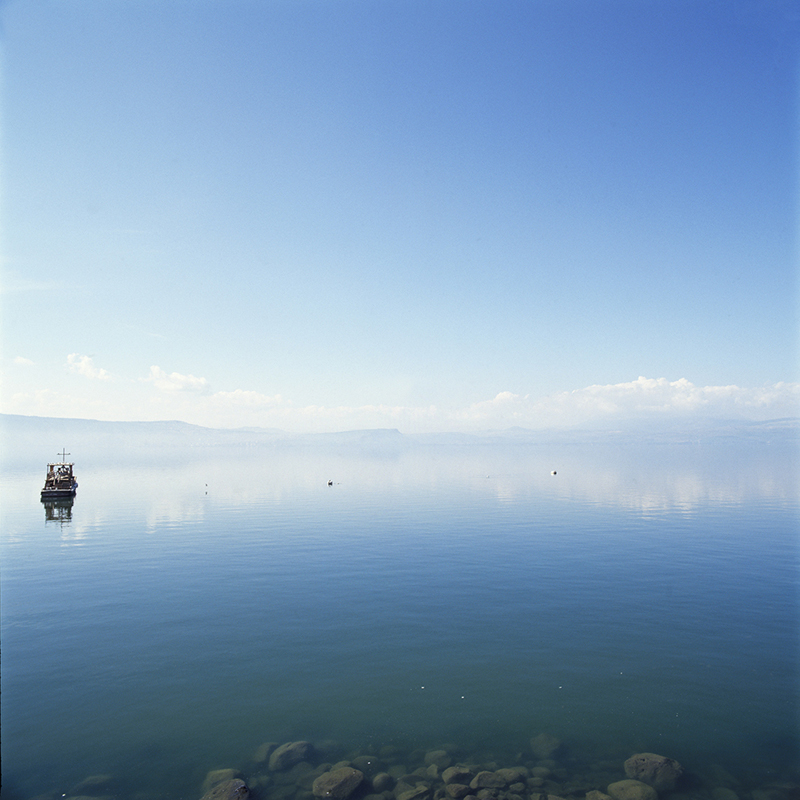
Leshem narrates a story of disappearance in seemingly serene and quiet locations, places of vanishing; such as, a remnant of an airplane in the depth of the Sea of Galilee, traces of an airplane that crashed and remained in the sand of a crate in the desert, a motorbike accident in a highway leading to the south of the country, a policeman stabbed to death found in a back side of an apartment building, or a drown man who was found in a swimming pool.


Photographing these landscapes not only describes the moment of its capturing, but also the moment of the death of a human being in the landscape. Therefore, the location was not shot as a landscape but as an observation of what accrued within the landscape.


Runways 2007


The series Runways is photographed in a symmetric composition with accurate alignment controlled by linear perspective creating harmony within these photographs. The landscape is burned and dry and the sensation of blazing heat rises from the scorched asphalt in the far horizon.  The stillness in which the runways are found creates a high tension reality, this is the moment where we encounter the absence in the afternoon shining sun there is no movement on the burning runways, a place of threatening danger.  Alongside the runways Leshem staged young women giving life signal in the still and barren landscape suggesting an axis-mundi, the idea that a pole is an axle of the world linking earth and heaven and symbolizes the dialog and mediation axle between the known and unknown.


Forty 2013


The desert is an image that Leshem is constantly exploring, drawing a parallel between the desert space, an organic, infinite and abandoned, fluid space and the hard to define orders, a pre-rational space of spirit and contemplating territories which are not bound to civilized logic and a part of its rules. Nonetheless, Leshem covers the desert landscape with urban measures, and thus turns the image into an arena of confrontation between the rational and irrational.  In the imagery of the desert, which is often conceived as monotonous, Leshem leads the gaze into the depth of the frame: a red stain of vegetation, land that rises up to sort of a barrow that creates rhythmus with the hills and wall sands next to it – the desert landscape being discovered not only as primordial and ancient, but also as a spectacle of delicate balances, hushed almost lyrical landscape.


In all of the works there is a representation of Leshem’s observation of the landscape. Some of the works appear strictly as landscapes, however, there will always be another element – immersed gazes into death (in Way to Beyond death landscapes are being depicted; Runways carries a violent and deadly potential in staging the young women in these sites), representations of narratives, contemplations, and associations.


There is a tension between the local and the universal in Leshem’s works. The debate is not the political or social aspects of Israel; instead the basis of the scenery through the Israeli landscape is one of the substances which effects Leshem’s practice.


The work reflects the general and does not remain in the personal state of the artist although it has biographic and autobiographic derivatives. Concurrently, the subjects of Leshem’s work, such as death, adolescence, transitions between different phases are universal even though they are staged in local districts. The concept of time the decisive photographic moment is prominent in her works turns in her works to defuse and captures different times within one image.
**

Naomi Leshem, born 1963, graduate of Hadassah College, winner The Constantiner Award for an Israeli Photographer, The Tel Aviv Museum of Art, Tel Aviv, Israel, exhibited in solo and group shows in Israel, Europe and the U.S.


In 2014 Leshem had two solo exhibitions at the Andrea Meislin gallery in New York where she exhibited works from the series Centered and at the Jerusalem Artists House where she exhibited Forty. Leshem is currently participating in the group show Journeys at the Israel Museum.  In July 2014 Leshem will participate in a group exhibition at the Rietberg Museum in Zurich.


Her works are in the collection of the Israel Museum Jerusalem, the Tel Aviv Museum of Art, the Norton Museum of Art (Florida U.S), the Shpilman Institute of Photography Tel Aviv, and private collections in Israel and abroad.

Mirrors, The Garden (3)

Joshua Borkovsky / Mirrors, The Garden (3)

Opening: 08/05/2014   Closing: 13/06/2014

Mirrors, The Garden (3), Exhibition view, Noga Gallery of Contemporary Art, 2014
Mirrors, The Garden (3) ,Archive ink print, 150x100cm, 2013/14

The exhibition shows a group of new works, Photomorphosis photographs, from the Mirrors, The Garden (3) cycle.


The works of this cycle have been evolving over the years and The Garden motive is central to them.  The fields of meaning of the reflection, the echo and the repetition are fundamental to the images that are embodied in them.


Reflection is a repetition. The echo and the repetition structure, writes Hagi Kenaan, embodies “a possibility that the recurrent and repetitive appearing of the identical – of what looks the same – nevertheless consists in the new and the unexpected. More specifically, what the Mirrors, The Garden cycle of works presences“is not only the principle of repetition, but also the very existence of a dimension of difference. Without such a difference, the homogeneity of the self-identical would leave no room for the possibility of repetition.  Repetition requires a difference (or, in philosophical language: the difference is a condition of its possibility)”. This means that repetition, or reflection, which is essential to the Mirrors, The Garden   images “never appears as a mere duplication, but always already bears within it the echo of a difference that has inscribed itself into the movement of repetition”.


“Repetition is a movement that creates change and development while internalizing the law of the constant. This means that at its base repetition sustains an irresolvable tension between change and fixation, between heterogeneity and homogeneity. As such, repetition has two apparently contradictory aspects: on the one hand it creates a movement from the one to the many and, beyond any particular multiplicity, to the infinite; but on the other hand, the very condition for this movement – its modus operandi – is its surrender to the absolute hold of the One, the constant, the unchanging. Repetition, or reflection, is a kind of development whose fundamental form of appearance is the manifestation of that which remains itself”; Mirrors, The Garden.


*This exhibition completes Borkovsky’s comprehensive exhibition, Veronese Green, held at the Israel Museum last year, on which his works in the field of photography wasn’t included. The quotations above are taken from Hagi Kenaan essay, “Joshua Borkovsky: Painting as a Meta-Optics”, written for the exhibitions’ catalogue.

Cracks

Michael Halak / Cracks

Opening: 20/03/2014   Closing: 02/05/2014

Cracks, Exhibition view, Noga Gallery of Contemporary Art, 2014
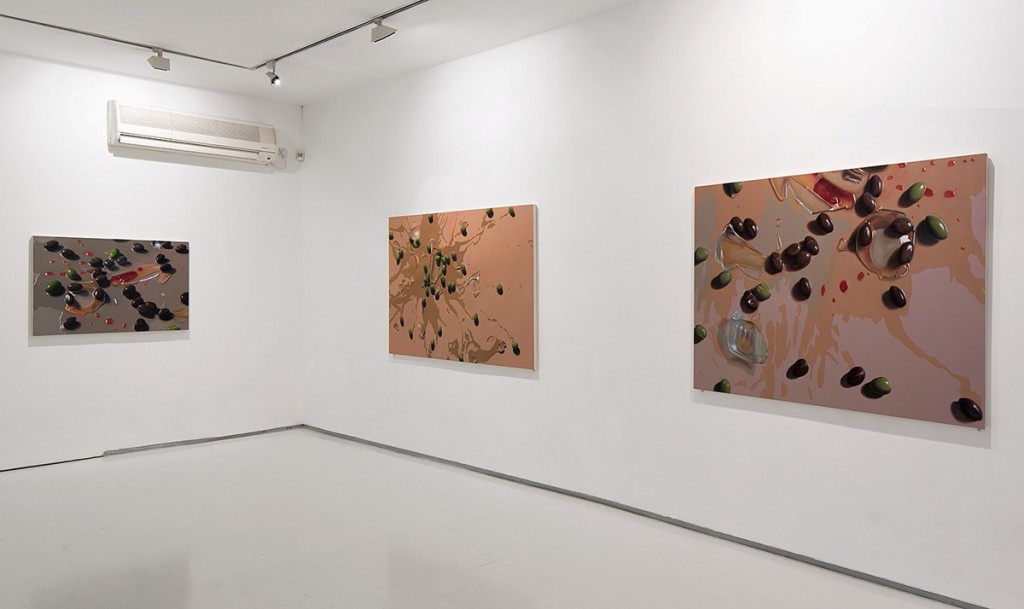
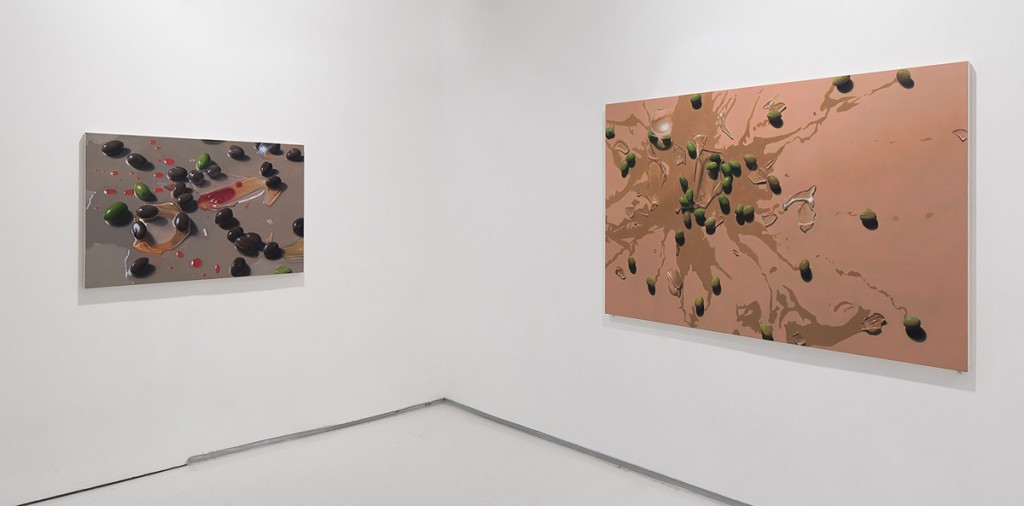
Olive, Olive Oil and Oil Press, oil on canvas, 180x120cm, 2014
Locale Pickled Olives -oil on canvas, 180X120cm, 2014
Common European Olives, oil on canvas, 120x80cm, 2014
I will dress you a gown of concrete and cement, oil on canvas, 800x300cm, 2014
Alhan, oil on canvas, 50x70cm, 2014

Michael Halak’s solo exhibition at the Noga Gallery of Contemporary Art presents the fragility, transparency and impossible structure of broken tools. The cracks are internal and are an inherent feature of an introspective dive. The ensuing explosion is centripetal while exposing one’s inner personal parts. Metaphorically, the light and dark olives embody the fragility of personal existence. The tension created between the fragmented vessels containing olives and oil, which are strewn across the damp saturated earth, indicates an obstinate repudiation of the inevitability of fragmented being.


Halak’s personal view corresponds with the works of British artist Phyllida Barlow, however not at eye level, but rather at ground level where all life’s cracks, which Halak is focusing on, lie wallowing in the ashes of the saturated earth.


Dispersion of the fragments is not incidental but rather predictable. They cannot be gathered up, and can no longer be reconstructed, but can only be used to produce new tools that are perhaps even more resistant to internal pressures. Halak provides an intense and painful glimpse of his innermost parts. This outward view from the inside, allows the observer to feel the vortex of internal pressures, the almost impossible combination of a private and public life, and the Sisyphean task of coping with life’s finiteness.
Similar to the German artist Ulrich Rückriem, Halak is more interested in cracks and parts rather than in the whole. The display of cracks shows the loss of the absolute value of the whole and of unbroken perfection. Even the olives are cracked as if they are participants in a general cracked scene.
The concrete wall, still exhibited as a whole unit, is there to separate the fragments on each side of it: both those broken from within and those broken from without. The chaos exhibited on the different canvases represents an anthology of repressed and forgotten memories of whole tools that were removed from their natural environment. Halak’s metaphors, referred to by Linda Nochlin as “fragments, ruins and mutilation echo the mourning for past grandeur as a whole, which can only be revisited through its remains amidst modernity”1.0 Those fragments beckon us to descend to the saturated earth and observe the fragmented tools – those cracks in our lives.


Halak attempts to cope with the absurdity of what he sees against the wall while expressing his yearning for unity. In a world created out of fragments and the inherent contradiction that spumes forth through the invisible cracks in the concrete wall, Halak suggests correcting a point of view — one that makes meeting with a transparent and imperfect past more feasible.
Curator: Dr. Gabi Geva
1 Nochlin, Linda, (2001), The Body in Pieces: The Fragments as a Metaphor of Modernity, Thames and Hudson

Ash Dreamer

Mosh Kashi / Ash Dreamer

Opening: 30/01/2014   Closing: 14/03/2014

Ash Dreamer, Exhibition view, Noga Gallery of Contemporary Art, 2014
Nocturno land, oil on canvas, 160x120cm, 2014
Light ash land, oil on canvas, 240x100cm, 2014
Large Violette, oil on canvas, 300x160cm, 2014
Crimson land, oil on canvas, 145x95cm, 2014
Azure mountain, oil on canvas, 70x50cm, 2014
Ash Tree, oil on canvas, 145x95cm, 2014

Noga Gallery of Contemporary Art is pleased to present a new solo show by Mosh Kashi, ASH DREAMER, consisting of a distinguished and diverse series of works created over the past four years in oil on canvas.


The exhibition title ASH DREAMER, reveals a great deal of Kashi’s painting stance in recent years which presumes that the innocent gaze on a place or a view and its primal and savage nature, will always be charged with the viewer’s subconscious, conscious, and personal feelings.


In his new exhibition, Kashi intensifies and enhances his profound artistic practice, examining the immensity of nature in its different aspects, both visual and mental: wild fields spread out from one horizon to the next, lonely trees rooted in a wide open and barren space, great dark mountains and thickets painted with great precision. All illustrated in a light neither of day, nor of night.

Mosh Kashi, born in Jerusalem in 1966. Bachelor’s degree from Ha’Midrasha School of Art (1987), MFA graduate at Burton Hall University Leeds, UK (2000).


Kashi has participated in solo and group exhibitions both in Israel and abroad. Two artist books were published on his work, in 2006 and 2012.

Frontier

Oren Ben Moreh / Frontier

Opening: 19/12/2013   Closing: 24/01/2014

Frontier, Exhibition view, Noga Gallery of Contemporary Art, 2013
Untitled, oil on canvas, 80x110cm, 2013
Watching, oil on canvas, 50x60cm, 2013
Ggrapvine, Oil on Canvas, 100X150cm, 2013
Arch, Oil on Canvas, 100x150cm, 2013
Cat watching a cat, Oil on Canvas, 100X150cm, 2013

Court Painting: the Works of Oren Ben Moreh
Leah Abir


Something about vegetation provides the painter with everything she needs: a thin veil through which to make things visible; a dense thicket in which to dip the strokes of oil paint time after time; a supple twig with which to frame and enclose the image; majestic foliage with which to play in monochromatic tones, a choice which means that faithfulness to realistic colors might take us as far as phosphorous, industrial, and toxic colors. One brushstroke is needed to portray the long life of a leaf, as well as the vitality inherent to its growth potential.


In paintings with no openings or sky, Oren Ben Moreh creates closed, back and front yards. She dubs them “frontiers” and imagines them as fortified fronts, but also as elaborate surfaces. There is no point in separating the works’ subject matter from the technique in which they were executed – contemporary painting is “not only a painting but also the representation of an idea about painting.”[1] Ben Moreh’s painting is imbued with the image just as it is filled with ideas about painting and of painting.


“Court painting” – we imagine decadent wealth, a class which is as self-indulgent as much as it is dependent on the elaborate depictions of that same wealth to which they could hold on and never let go. Ben Moreh paints actual courts, framing front and back entrances of houses: the area which is removed from the house just enough to populate ordered illusions of nature, magnificently broken statues, fountains, dozy cats, and unwarranted visitors who peek through the thick vegetation or hide in the dark entrances of sheds. The yard is the area through which one may invade the house or its surrounding spaces. It should be cultivated as a layer of protection, just as it should be defended against intruders. The vases, and the sculptures, and the fountains, and the cats, and the roof tiles, and the fences, and the benches, and the stone walls, and the arches, and the chairs, and the rugs, and the hammocks, and the flowers, and the leaves, and the branches, and the trees, and the shrubs, all produce impenetrable frontiers in the likeness of serene, orderly, barricaded life. A life which offers restricted entry and is blocked from view. Much like the domestic scenes portrayed in Ben Moreh’s earlier works, which were taken mostly from cinematic scenes, the yards similarly remain in the realm of the private which is open, yet does not relinquish its impenetrability.


In these paintings of cultured and populated vegetation, Ben Moreh joins numerous contemporary artists who engage directly or allegorically with yards and gardens as expanses that revert to the botanical order through private and dilettante manifestations of the ecological turn, and which are associated with the reexamination of the self-world relations put forward by post-humanist thought. In Ben Moreh’s works, the courtyards (or “frontiers”) direct us to our private spaces over which we are losing our grip, and to nature which is lost in our grip. However in her painting, as mentioned, there is no point to separate the rich and specific technique of oil painting (a technique the artist presents here for the first time in her work) – dense, layered, bold, speckled, and flattened – and the image it renders. The courtyard manifestly exists in these works as a portrayal of the existential state of painting itself – a private space that goes out to the public, fraught with a tense duality, as a space of both nesting and fantasy: an invaded area that skillfully designs its own fortifications.


[1] Barry Schwabsky, “Painting in the Interrogative Mode,” in Vitamin P: New Perspectives in Painting, London: Phaidon, 2002, 8.