Anat Betzer | “That is the Bunch of Live Flowers!”

Anat Betzer | “That is the Bunch of Live Flowers!”

Opening: 07/10/2021   Closing: 04/12/2021

Noga Gallery_001
Noga Gallery_002
Noga Gallery_003
Noga Gallery_004
Noga Gallery_005
Untitled #1,2021, Oil on canvas, 70X50 cm
Untitled #2,2021, Oil on canvas, 100X70 cm
Untitled #3,2021, Oil on canvas, 100X70 cm
Untitled #5,2021, Oil on canvas, 100X70 cm
Untitled #16,2021, Oil on canvas, 50X30 cm

“That is the Bunch of Live Flowers!”[1]

Anat Betzer at Noga Gallery of Contemporary Art


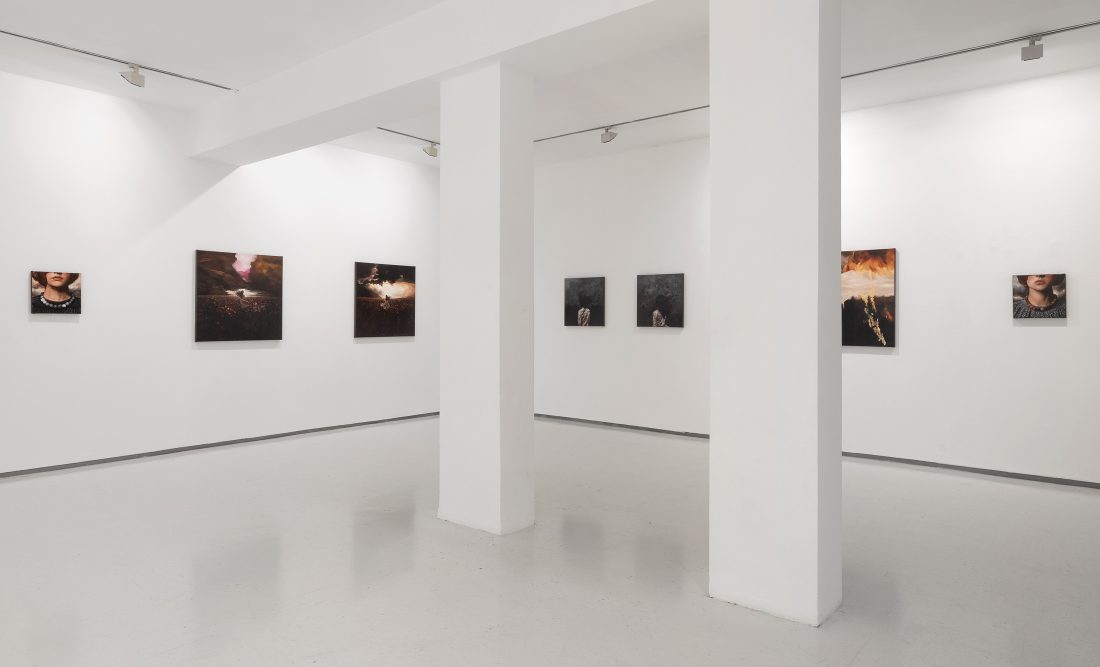
In her new exhibition, Anat Betzer continues her in-depth exploration of painting and its realistic manifestations. The show is centered on women’s heads painted from the back—a delicate erotic image that transforms into a black hole of sorts, floating in a bright sky, detached from the body. Fauna and flora, both framing and framed, hover in a world which is empty yet ornate, fragmented, terrifying, but full of humor.


The images are acutely depicted in great detail, cut-cropped and placed in the middle of the canvas like a feverish vortex in the heart of the desert of nothingness; a wound (hole) or a scar (hill) left as a sign of something that once existed or as a seductive hint of a hidden face. The images leap out towards us or look at us. They are as sensual as the onset of the thicket, where something tried to take an orderly shape but became disheveled and underwent a near-surrealistic metamorphosis. Hair pulled-back becomes a rococo ornament; a braid is assimilated in a feather, like a montage concatenation of dreams. And the painting—its quintessential or latent axis signifies the center, the target composition kept in our consciousness, facing us like a mirror.


In other paintings the image falls to the bottom of the canvas and even beyond it. It is cut exactly along the line of the painted eye, leaving the focal point as an absent-present—an unexplained cut that confronts us with a cognitive dissonance: an occurrence of which we get only the “tail”; an event whose essence is external, taking place outside (as the cruel beheading performed by the artist on the chicken images in the exhibition), and its “plot” is derived from the assimilated habits of our perceptions, of the self-evident imprinted in us by observation of life.


In his book And It Came to Pass, Hayyim Nahman Bialik recounts the legend of King Solomon and the bee, featuring three main characters: King Solomon, the wisest of all men, the bee, and the Queen of Sheba. Having been stung in the nose by a small bee, and once his anger subsided, the Queen of Sheba comes to visit King Solomon. As part of the teasing verbal exchange between the two, the queen proposes to the king the challenge of the living flowers: a bunch of artificial flowers (“the work of men’s hands”) versus a bunch of live flowers (“the work of nature”). His embarrassment at the inability to distinguish between the two by their appearance is solved for him by the (cheeky) little bee, who identifies the bunch of live flowers. Nature is wiser than man, even the wisest of men.


In the exhibition “That is the Bunch of Live Flowers!” Betzer looks directly at the politically, socially, and ecologically chaotic reality, addressing the question of representation in a unique complex manner. She delves into center and margins, back and forth, a gaze at and a reciprocated gaze, inviting the viewers to look at themselves, at their reflection, to peek at the world and at the woman.


The Covid-19 year, which has led many of us to realms of anxiety, helplessness, and loss of meaning, is conspicuously present in this new series of paintings. Their small scale, relative minimalism, modesty, silence, and sense of solitude (not to say isolation)—in addition to Betzer’s constant desire to find and create beauty, to cling to the flimsy, familiar and hackneyed image, reexamine it and reaffirm its power—yield a powerful statement about a moment of radical existence. It is a statement underlain by despair and profound concern alongside passion and great vitality.


[1] A quote from the legend of “King Solomon and the Bee,” in: Hayyim Nahman Bialik, And it Came to Pass: Legends and Stories about King David and King Solomon, trans. Herbert Danby (New York: Hebrew Publishing Company, 1938), p. 92.

Back Mind

Anat Betzer / Back Mind

Opening: 15/12/2023   Closing: 03/02/2024

Untitled, 2022-2023, oil on canvas, 30x30 cm
Untitled, 2022-2023, oil on canvas, 40x40 cm
Untitled, 2022-2023, oil on canvas, 30x30 cm
Untitled, 2022-2023, oil on canvas, 40x40 cm
back mind, exhibition view. photo by elad sarig

Anat Betzer, Noga Gallery of Contemporary Art, 2023
(The text was written before the Oct 7th attacks and ensuing war)


“With the wreath’d trellis of a working brain” (John Keats).


The central image in my new exhibition is a woman’s head painted from behind. The back of the
neck, the less familiar, vulnerable, hidden side. Long months of painting a portrait that is not a face,
a hidden face (“hester panim,” if you will). A topography that turns back, charting with 0 and 00
brushes the details of this “no-face coming towards me” (Abraham Chalfi).


The different hairdos in the paintings are like a shroud, a curtain or a veil, which cover, conceal, and
illuminate – a woman, femininity.


The head that grows from the bare back seems to emerge from a nebulous background, like an
infinite cosmic space. Pictorial surfaces, brush strokes or splashes of paint seem to unfold from an
indeterminate realm. The ball of hair is in sharp focus with realistic specificity and characterization,
which is paradoxically also abstract and almost indistinct, like an obsessive realization of the
decorum, the ornate, the trifling.

The pattered or chaotic arrangement, the regular or irregular construction reveals how the “tangle”
on the back of the head is the X-ray image of a structural paradigm, method, thinking. Conversely,
these can also indicate eclectic modes of seemingly disheveled disorganized order, piled and tossed
back in a rush, like examples of chaos theory (a paradoxical expression), like the movement of the
clouds in the sky, their shape and transformation, which are not logical and cannot be replicated.


Metaphorically, one can think of a hairdo as the pet scan/reflection of the brain, of electric circuits,
the exploration or attempts to pattern the mysteries of the unknown. A network of synapses that
carry information, thoughts, an emotional labyrinth as thick as the depths of the forest – continuing
my early forests paintings and those featured in this exhibition. The twists of the paths in the forest
disappear towards the dense darkness or a source of light, towards the unknown.


In the painting, a polyphony of interlacings that intertwine one on top of the other, sometimes
interwoven separately, or as a flower and foliage arrangement that emerges from the purple-green
darkness – this is a dark (and enchanted) metaphysical nature that appears as a disturbed, mysterious
mutation, like the back of the neck that remains hidden from view. The painting heightens the
concealment, veils the veiled.

The woman that appears in the paintings, who turns her back to the viewer almost defiantly, is
“nature.” This is a seductive and thorny, embellishing and wounding, floating or captured “nature.”
The beauty erupts from within it or disappears into it like a miraculous grafting, like a parasitic plant that climbs a body, a human head, above the timeline of the mind. This is a dark forest lit by flickering fireflies.


The beauty, which I insist on, is a deceptive mask. Underneath its meticulous aesthetics, this series of
paintings can be read as an echo of an ongoing struggle, which also reflects the cardinal dramatic
conflicts of this time. Behind the curtain of beauty, unfolds the drama of undoing orders, of
challenging the “method” to the point of unbearable conceptual chaos.


“…the Impressionists, were perfectly right in electing domicile among the scrub and stubble of the
daily spectacle. As for us our heart throbs to get closer to the depths…. These oddities will
become…realities…because instead of being limited to the diversely intense restoration of the
visible, they also annex the occultly perceived portion of the invisible” (Paul Klee, quoted by
Merleau-Ponty in Eye and Mind).


Anat Betzer

Wind

wind / anat betzer

opening: 12/12/2025   closing: 31/01/2026

Untitled #11 (Wind), Oil on canvas, 60 × 60 cm, 2025
Untitled #14 (Wind), Oil on canvas, 90 × 90 cm, 2025
Untitled #3 (Wind), Oil on canvas, 30 × 30 cm, 2025
Untitled #15 (Wind) Oil on canvas, 90 × 90 cm, 2025
Untitled #5 (Wind), Oil on canvas, 35 × 35 cm, 2025
exhibition view by elad sarig

Through the frozen language of painting, Anat Betzer is grasping on the attempt to depict structures of movement, of the indescribable: wind, clouds in the sky, vapor, like fire, like water. It is almost a heroic effort to cross into the transcendental dimension of the eternal hunting fields, into a place about which nothing more can be said. With a slow, meticulous, and highly detailed painting motion, Betzer depicts the figure of a woman turning her back, a woman in the stabbing heart, growing, swirling in every direction. It is a beauty that seeks to hold the dynamic, that will vanish in another moment, that will be though as it never was, merging into the movement of transformation within an infinite nature, becoming other in a light moment.


The concealment of the face appears in this series in a slightly different manner than in Betzer’s previous series (Back Mind, Noga Gallery, 2023), in which the woman’s hair was tied, braided, and held in place. Here, it exists also as body, as a garment, as Lot’s wife stepping (escaping) there, her face turned toward a wild background, like the flight of her hair echoing in the clouds. This is a woman who seeks to dissolve into the great skies, who wishes to merge with the chaos of the clouds – or perhaps, one who’s fleeing from the terror of the reality outside the painting.


This is an operatic visual drama, in which – as in Munch’s paintings – the figure reverberates in the distant landscape. It is an audiovisual frequency in which the far outside emerges from the inside, always, always. “The Scream” spreads across the painting, across the space of the world, in waves upon waves.


In Betzer’s paintings, the delicate relationship between the tiny and close and the vast and monumental is always present. Her paintings are meditative resonances of this relationship – perhaps a version of the silent scream of the world’s sorrow.


In the exhibition, there are also three small works in which the absent faces face forward with an eyeless, blank expression. With their backs turned to the stormy landscape, young women seemingly gaze ahead, their faces cut and shadowed, their hair tied, necklaces on their necks. What does this turn mean? What is the meaning of this seemingly reversed motion?


The necklaces, like strings of candy, may suggest a new rhythm, another taste, a different time. These are the same women, always alone, maybe before, maybe after. The vulnerability that characterizes the woman seen from behind is replaced here by the force of directness – like the force of nature (the clouds) surrounding her. These silent portraits are the counterpoint to the grand and awe-striking exterior paintings of landscapes and skies, functioning within the gallery space as a static anchor, a key or stabilizing footnote, a kind of frozen weight, a still life that is both point of departure and point of return to the still-living.


This is the silenced place of sober awareness: here is the boundary – the inherent limitations of the medium of painting since forever: flatness, stillness, the non- movement in time, the historical challenge or struggle of the medium that had never fulfilled its own death – how to set an event in motion, to propose a visual stillness that nevertheless holds an event within and against the restricting lines.


She walks away, she stands before the rye field, I no longer see her face, it is turned toward the field, and then I see it again, unchanged. She gazed at the setting sun, at the rye field in flames.

Marguerite Duras, The Ravishing of Lol V. Stein


“Unlike ideology, paintings say nothing. They only strive toward truth,” said Gerhard Richter, whose cloud paintings also crashed upon this rock of paradox, striving to capture the mutable, to discipline, to weave what exists into a chain of logic, or knowledge.


Anat Betzer dwells within this place, carving pearls of beauty and mystery from painting to painting in a sisyphean struggle toward the impossible, one that slips through the fingers, that stands before us as an enigma, as magic.

In The Making

In The Making / Group exhibition

opening: 13/02/2026   closing: 20/03/2026

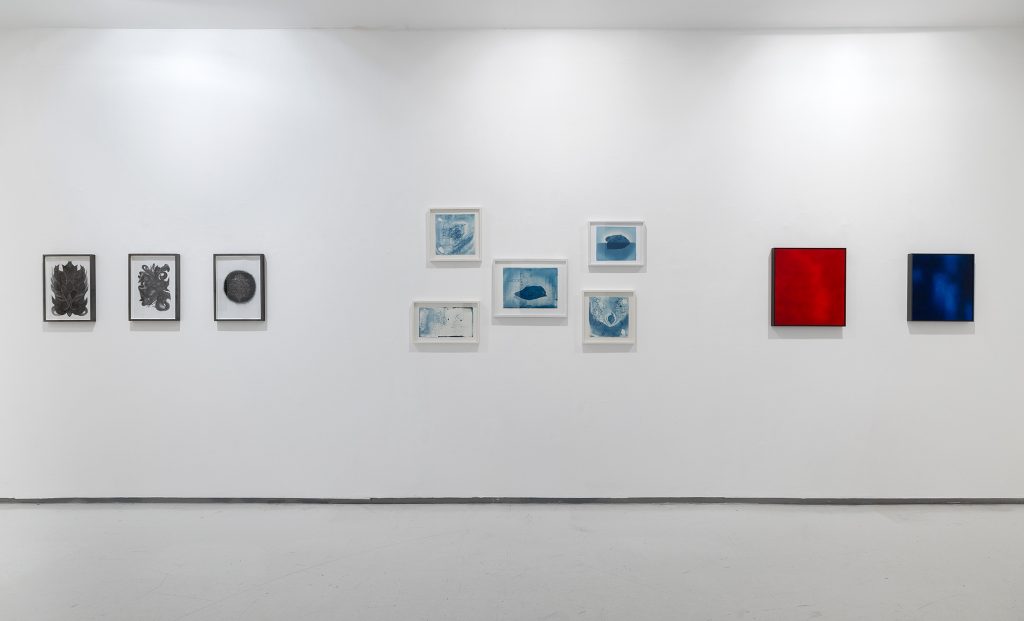
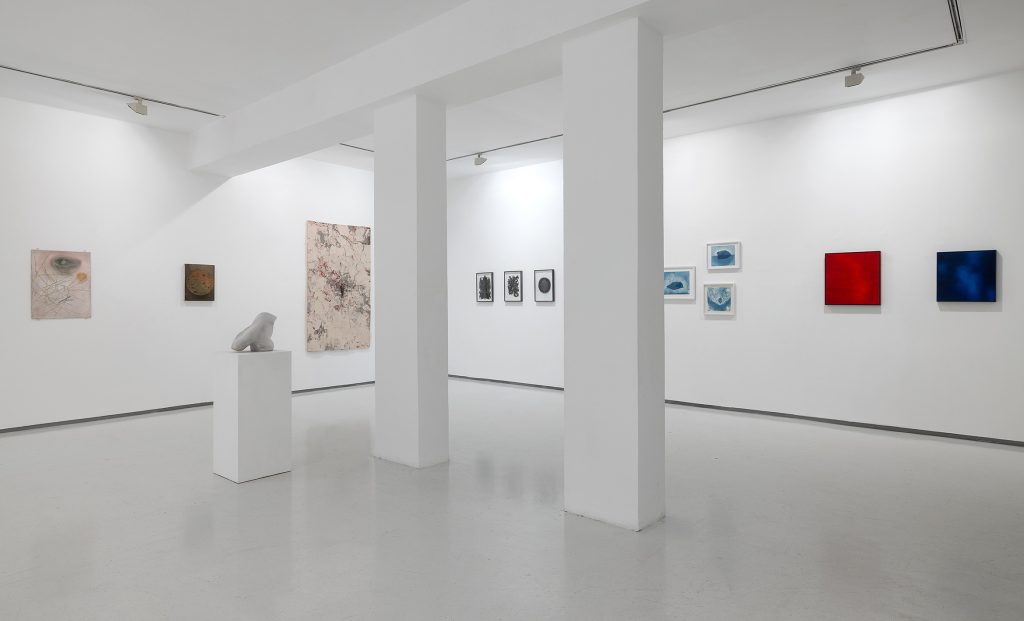
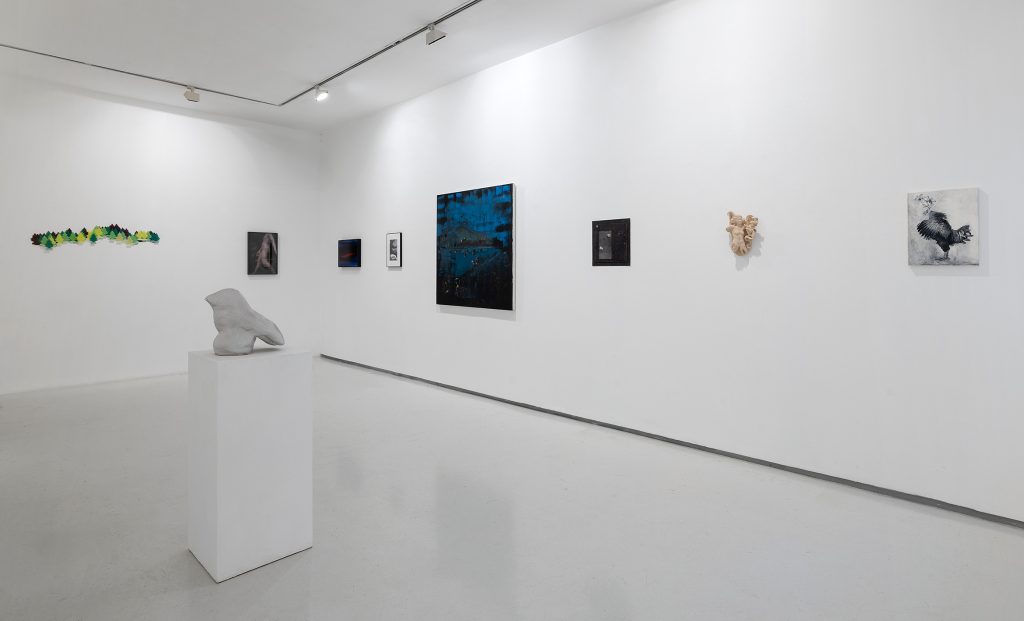
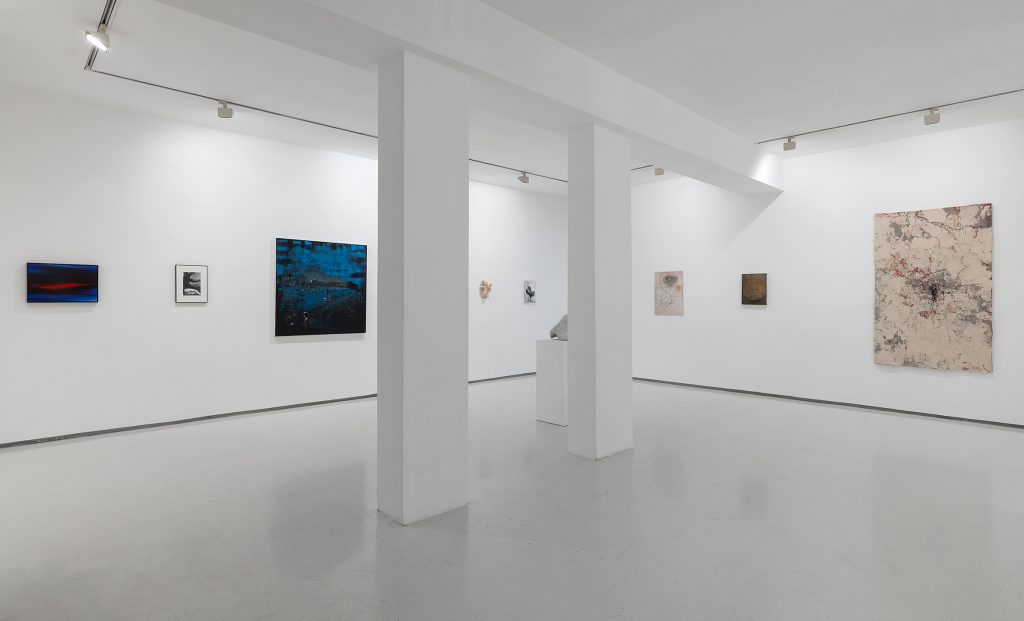
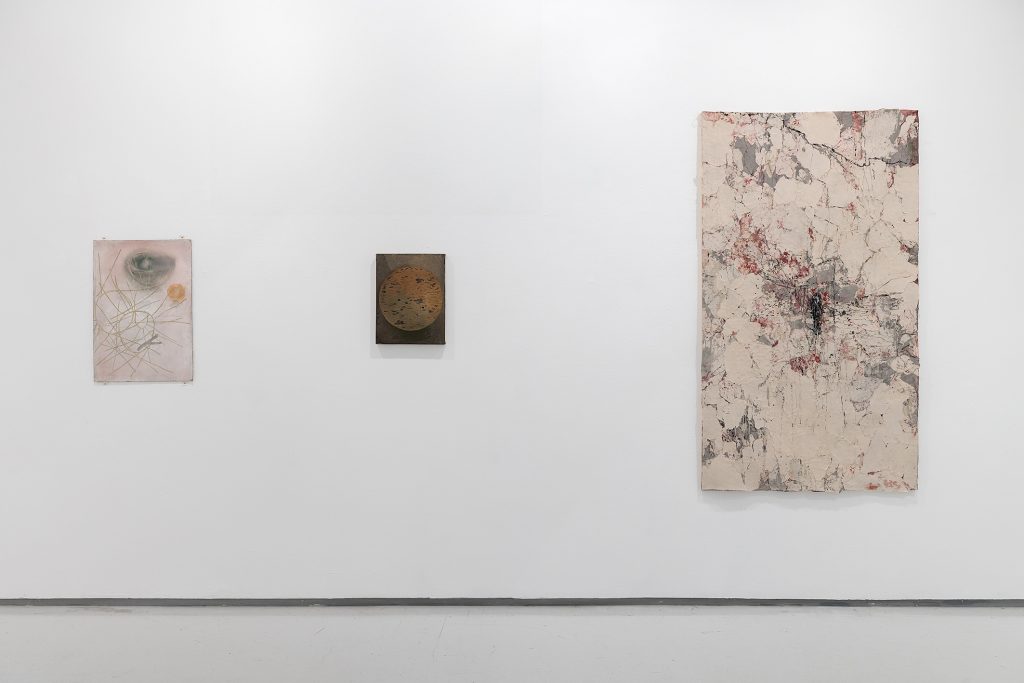
Shahar Yahalom, stone (detail), cyanotype on paper, 30x30cm, 2024
Hadas Hassid, Untitled (blue), oil on paper, 58x57 cm, 2025
Eti Jacobi Lelior, Untitled, Acrylic on canvas, 120x120 cm, 2025
Talia Keinan, Broken Cage, mixed media, 70x49 cm, 2025
Yakira Ament,  Emanations, Charcoal on cotton paper, 42x30 cm, 2023

Yakira Ament • Tal Amitai Lavi • Lea Avital
Anat Betzer • Hadas Hassid • Eti Jacobi Lelior
Mosh Kashi • Talia Keinan • Orly Maiberg • Shahar Yahalom

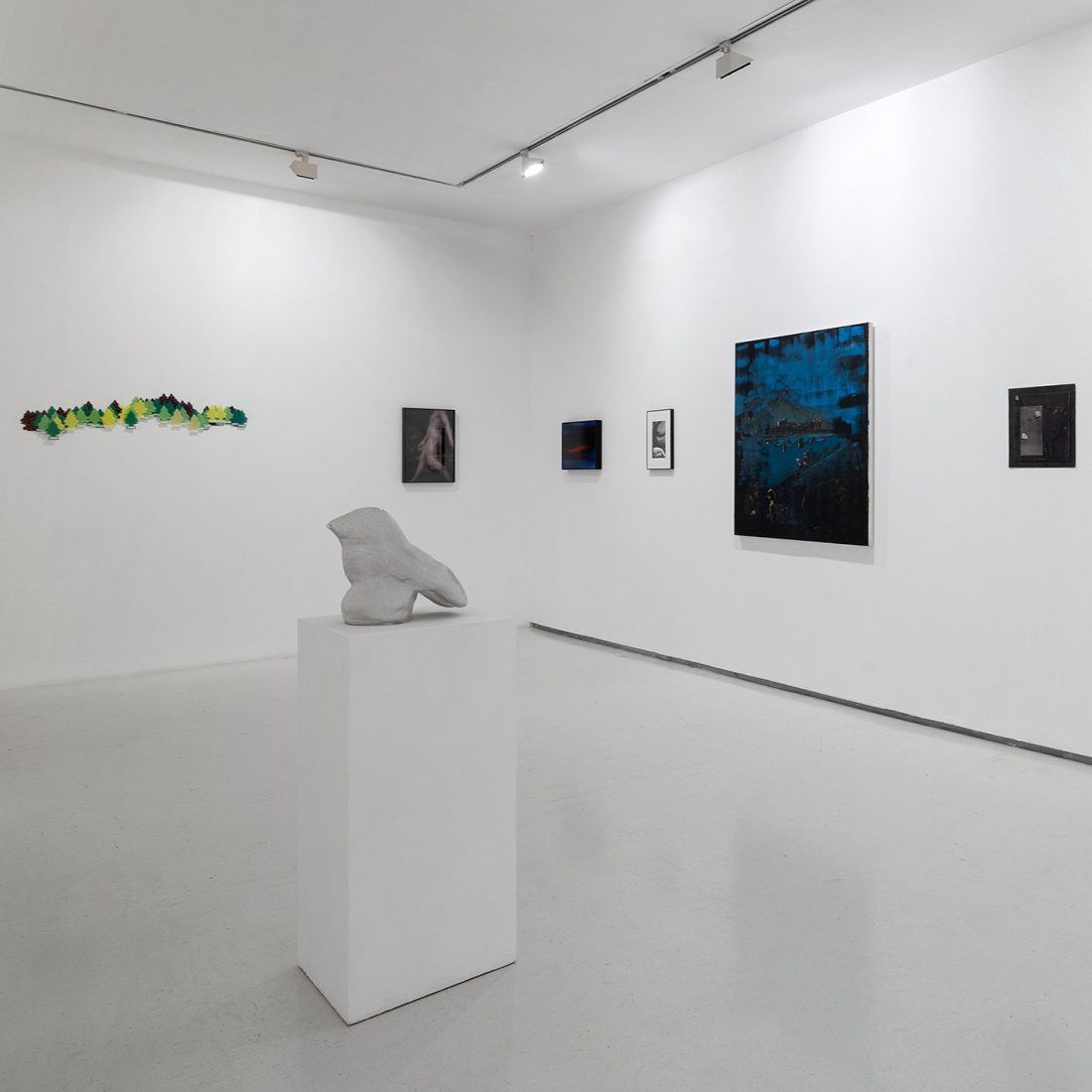
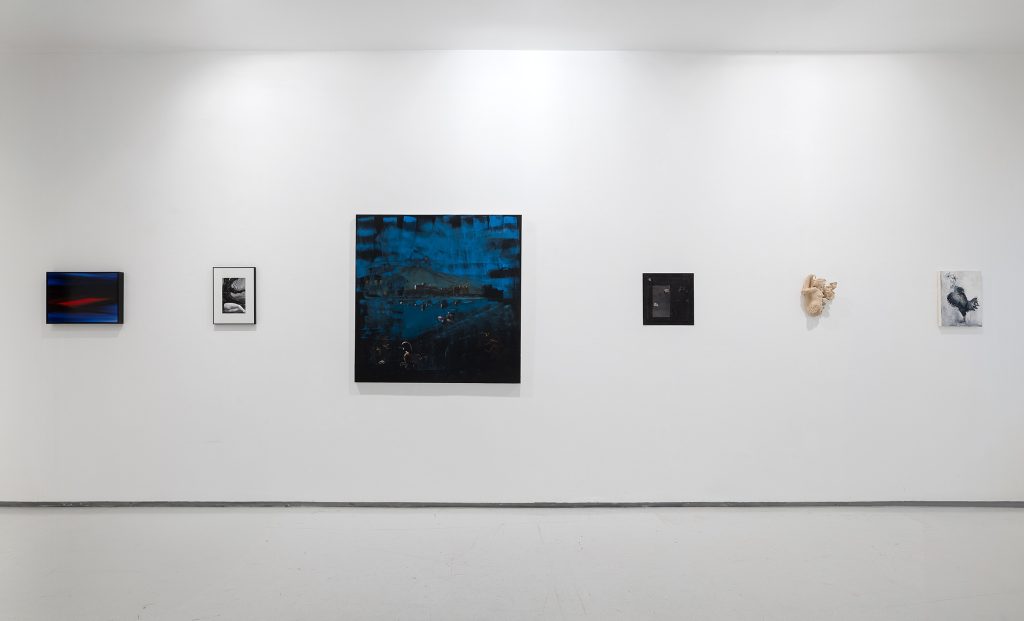
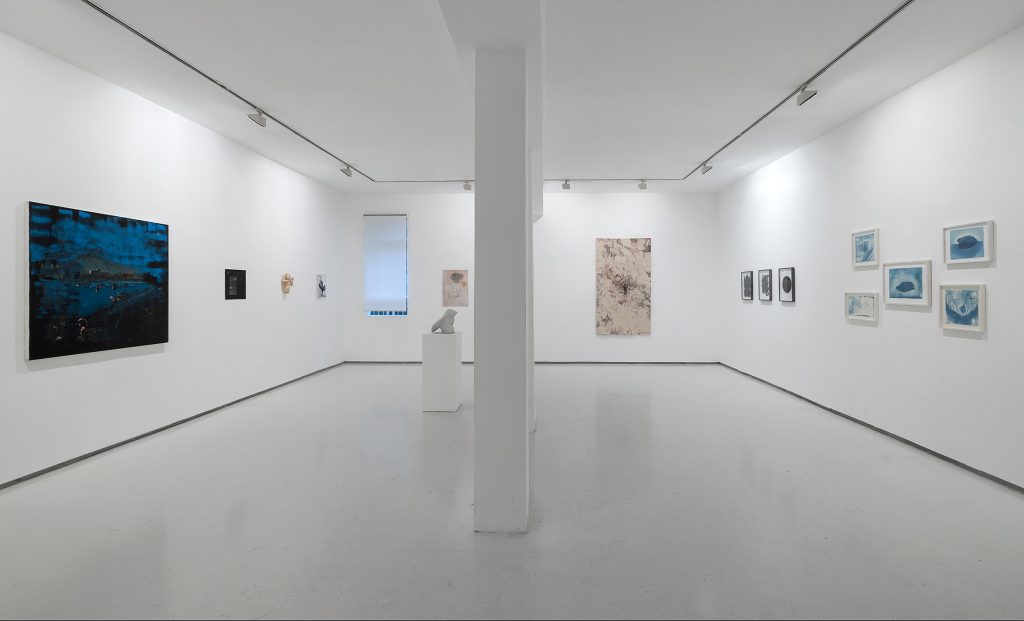
The exhibition In the Making approaches the present as an ongoing act shaped through the process of making itself – a space in which process takes precedence over conclusion, and meaning emerges from what is being made.