Sunflowers of the Middle East

Sunflowers of the Middle East / Ido Michaeli

opening: 04/09/2026   closing: 30/10/2026
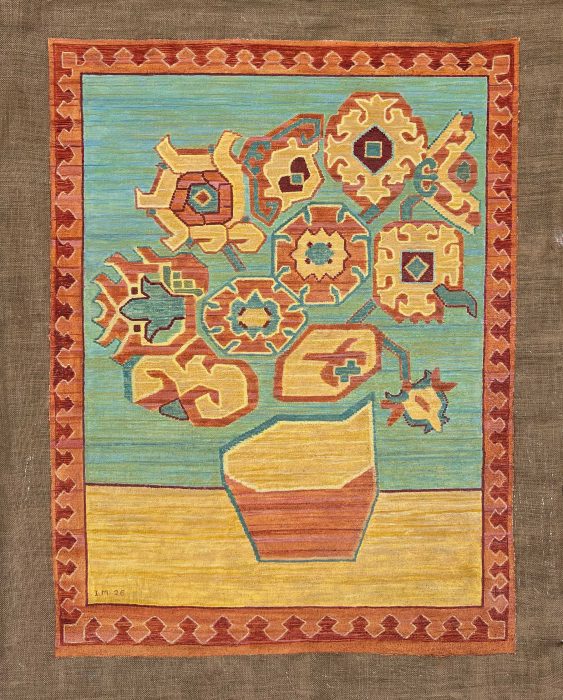
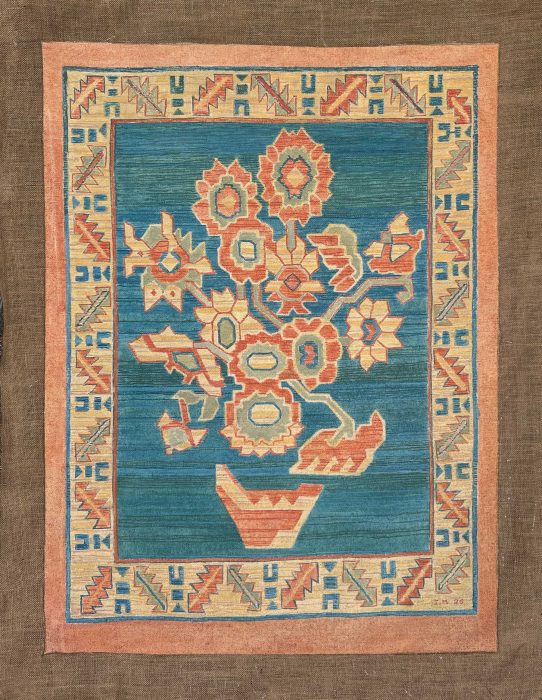
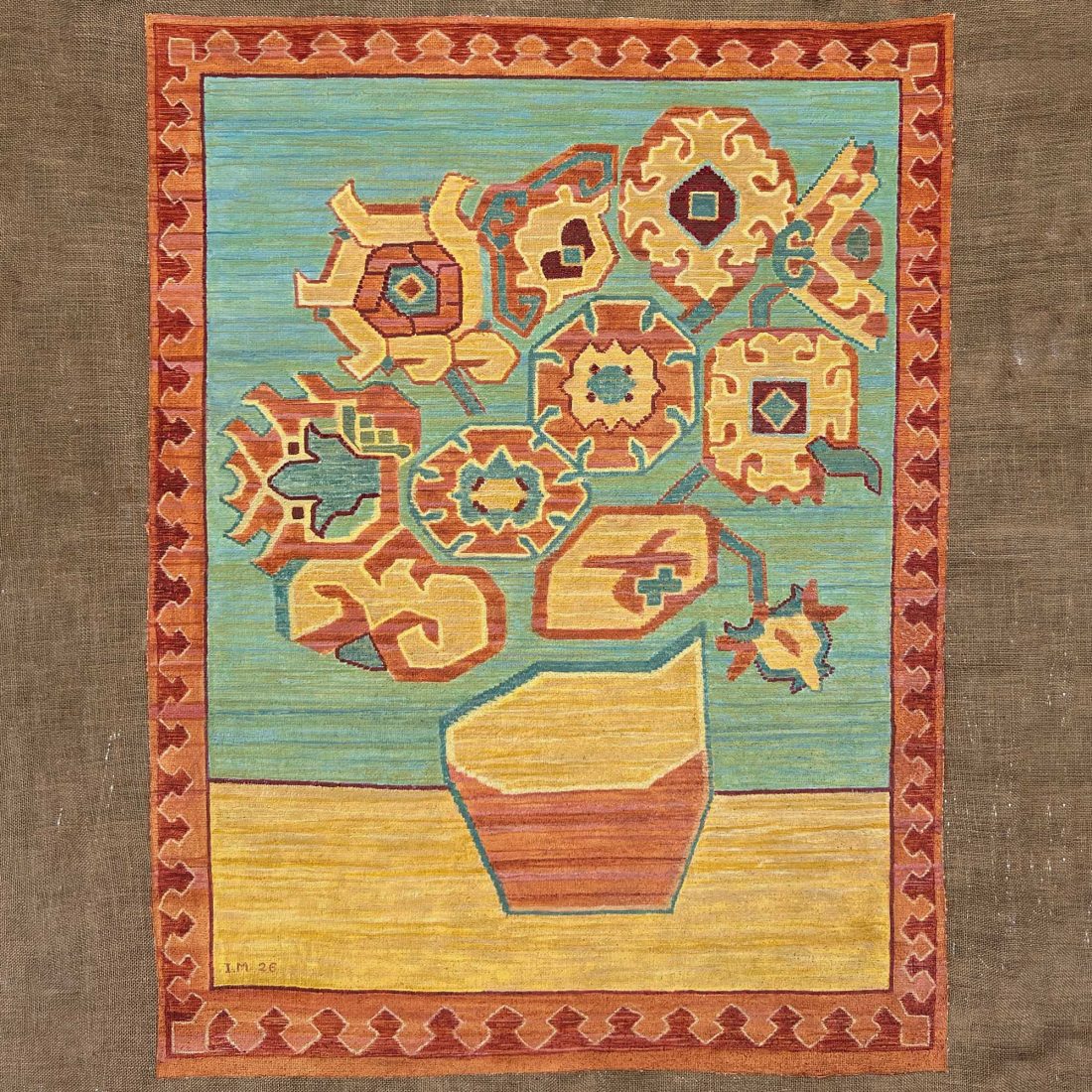
Ido Michaeli, Sunflowers of the Middle East (1), Oil on fabric, 145 x 105 cm, 2026
Ido Michaeli, Sunflowers of the Middle East (2), Oil on fabric, 145 x 105 cm, 2026
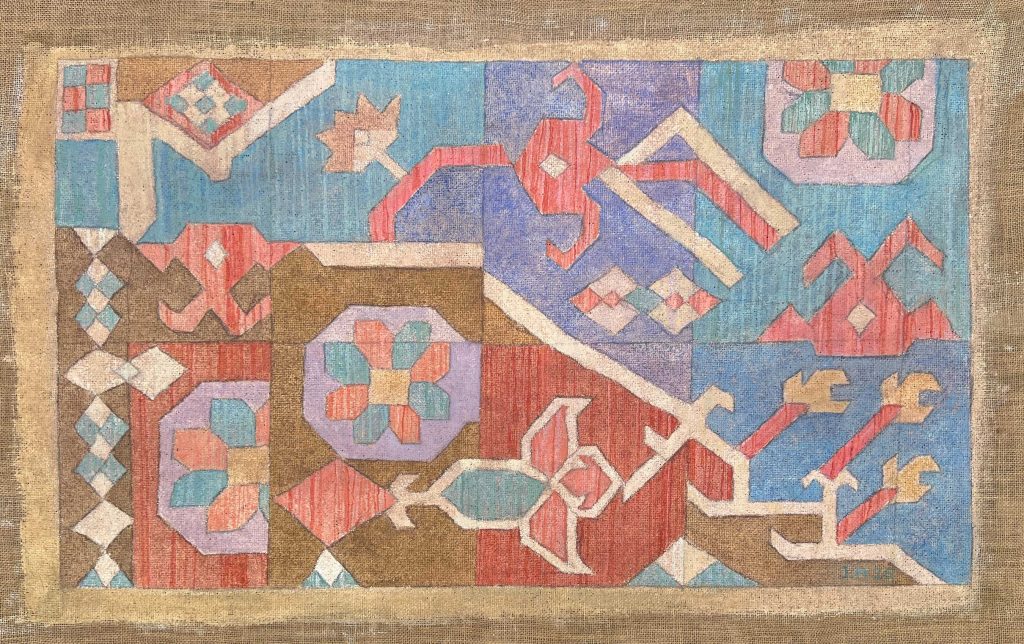
Ido Michaeli, Sunflowers of the Middle East (19), Oil on fabric, 70 x 115 cm, 2026
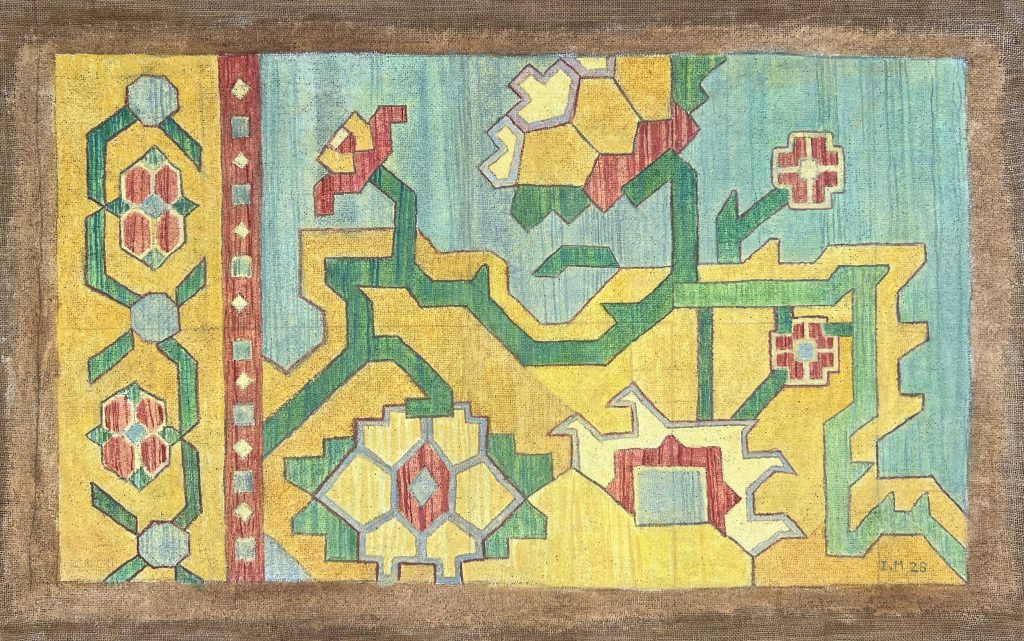
Ido Michaeli, Sunflowers of the Middle East (18), Oil on fabric, 70 x 115 cm, 2026
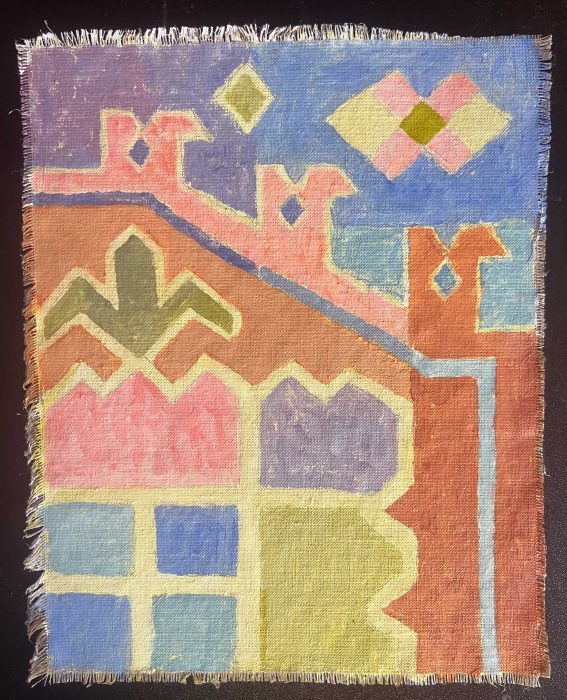
Ido Michaeli, Sunflowers of the Middle East (16), Oil on fabric, 26 x 21 cm, 2026
Ido Michaeli, Sunflowers of the Middle East (17), Oil on fabric, 26 x 21 cm, 2026

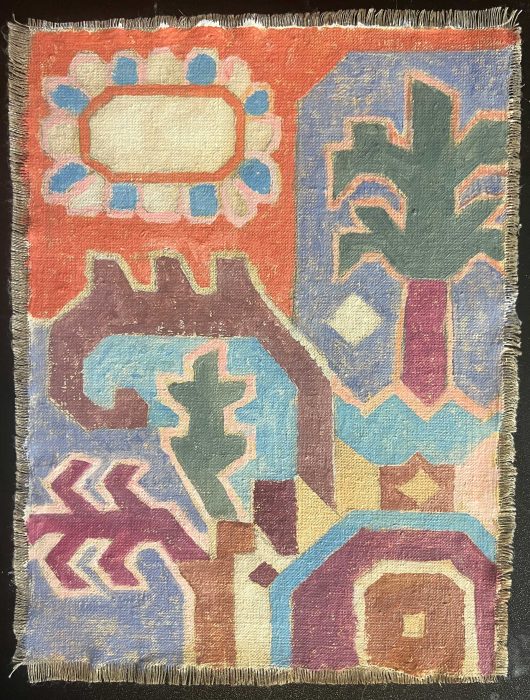
The exhibition presents a series of oil paintings paying homage to Van Gogh’s iconic Sunflowers, alongside landscape paintings influenced by elements drawn from Oriental carpets.

The exhibition explores the ways in which images travel between cultures and gather new meanings. Van Gogh’s Sunflowers are translated here into a visual language inspired by nomadic carpets and are re-celebrated through an ideal of beauty rooted in the Middle East. The syntax of one visual language is translated into that of another. Gaps in information emerge, as certain cultural codes may be accessible to some viewers while remaining blocked to others.

Throughout the history of Western art, European artists frequently depicted Oriental carpets in still-life paintings featuring flowers. Here, the direction of the gaze is reversed: a canonical image of Western art is being transferred through a Middle Eastern visual language. The translation from painting into carpet also seeks to challenge the distinction between painting as a form of representation and the carpet as decorative or traditional art. The images and motifs of the carpet are not only ornamental; they are also a way of looking at the world, remembering it, and representing it.

The exhibition also draws inspiration from Kurdish carpets, whose vivid colors and expressive qualities reminded me of Van Gogh’s paintings. Kurdish carpets are known for their artistic freedom, spontaneous color choicesincluding rich rust tones, indigo, and turquoiseand bold geometric designs.
Unlike urban carpets produced in large, organized weaving workshops, the weaving traditions of Kurdish nomads allowed for a different degree of freedom of expression. The movement of nomadic tribes between different regions also fostered an ongoing encounter between visual languages, motifs, and ideas from diverse sources, reflecting a sense of belonging to multiple cultures rather than to a single place.

The Middle East is an area of conflict, full of conflicts that seem impossible to settle. The exhibition is situated along this fracture line, moving through an unresolved tension between “here” and “there.” It serves as a wandering gaze – one that is not anchored in any single, defined cultural territory.

Surface

Ido Michaeli / Surface

opening: 22/03/24  closing: 18/05/24

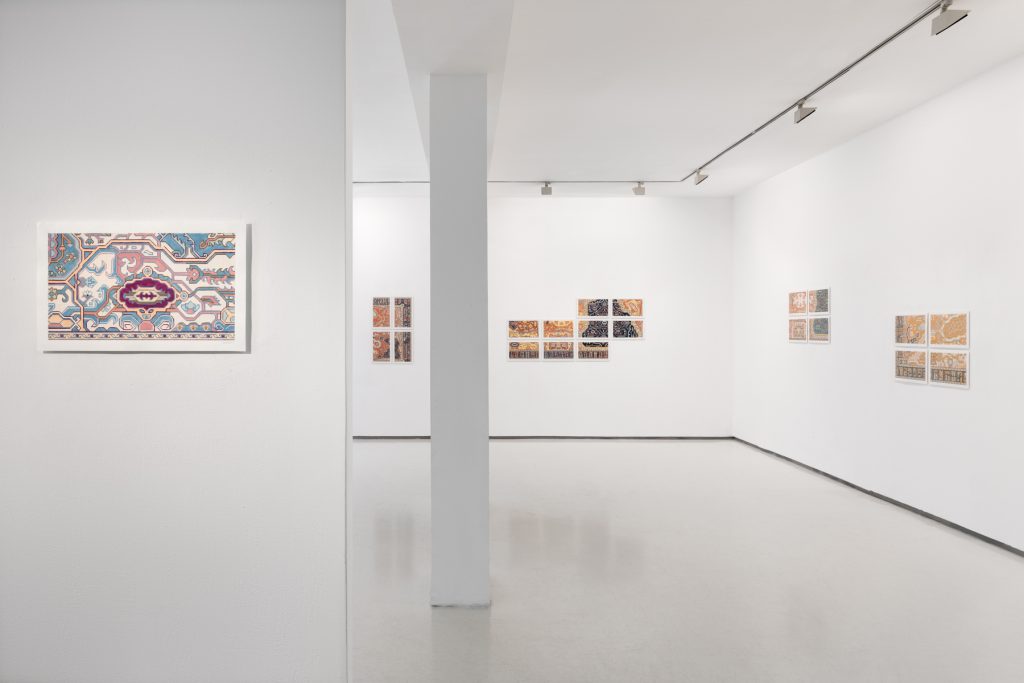
Installation photography: Lena Gomon
Central Park Carpets (D), 2022, 90x60cm, Watercolor on paper
Central Park Carpets (35), 2022, 45x30cm, Watercolor on paper
Central Park Carpets (06), 2022, 45x30cm, Watercolor on paper
Central Park Carpets (25), 2022, 45x30cm, Watercolor on paper
Central Park Carpets (E), 2022, 180x90cm, Watercolor on paper
Central Park Carpets (09), 2022, 45x30cm, Watercolor on paper
Central Park Carpets (11), 2022, 45x30cm, Watercolor on paper
Central Park Carpets (13), 2022, 45x30cm, Watercolor on paper

Noga Gallery is pleased to announce the opening of Ido Michaeli’s first solo exhibition at the gallery and at Artport Gallery,  Tel Aviv.


The exhibitions feature an ambitious project that Michaeli has been working on for the past few years, conjoining images of the West with techniques from the East.


Four large scale carpets woven in Afghanistan according to the artist’s instructions depict Central Park in New York. Each carpet represents a season: winter, summer, autumn and spring. The carpets are rich in details from the park depicting gardens, lakes, paths, bridges, statues and nearby buildings, in the style of a Persian carpet.


The exhibition at Noga Gallery will feature drawings that were the base for the creation of the Central Park carpets.

Prior to the production of the carpets, Michaeli translates the map of Central Park into detailed symbols and images which are then transferred onto grid paper, where each square marks a location. From there, the paintings are sent to traditional carpet weavers in Afghanistan.

Michaeli’s work is rich with symbols and images taken from past and present cultures. It aims to bring closer the boundaries between art and craft.
In long-term projects, he collaborates and works with professionals and traditional artisans from around the world: Afghan carpet weavers, Chinese tailors, Palestinian tailors and Ethiopian embroiderers, people with whom the situation in the world prevents him from meeting directly. He builds partnerships, weaves traditions and brings together eastern and western cultures that have grown apart. By combining different historical traditions, both in the process and the product, Michaeli raises questions about Orientalism, identity politics, economics and globalisation.

In a quote from his website, Michaeli says: “Born to an immigrant family, I grew up on the seam of conflicting identities: The Eastern traditions of my family versus the Western environment we were living in. This cultural split made me constantly juggle between different cultural codes; an experience that deepened even further a decade ago when I moved to the United States and became an immigrant myself. My main motivation as an artist is to challenge cultural, racial, and political stereotypes, and to bring together clashing worldviews. I believe that art enables us to find the common ground where it seems as if there is none.”

“…I come from a tradition of iconography designed to mediate stories for those who cannot read and write in signs and symbols. My way of working is similar to a graphic designer or an architect in terms of creating an outline and sending it to execution. But I try to stretch it to a critical point: an artist is expected to raise questions and be critical while infographics are meant to give answers, similar to missionary or religious art…”


Ido Michaeli, b. 1980, Petah Tikva, Israel is a multidisciplinary artist who lives and works in Connecticut, United States. He has a bachelor’s and master’s degree in art, from Bezalel Academy of Art and Design in Jerusalem.

His work is on the seam between art, craft, textiles, stained glass, ceramics, digital painting and painting.

He is the winner of the Kolliner Award for a young artist from the Israel Museum for 2017, the Young Artist Award 2015, the Artport scholarship for the years 2013-2014. Michaeli has exhibited in many exhibitions, in Israel and world wide.

Michaeli’s works are included in private and public collections  such as:  The Israel Museum, The Herzliya Museum of Contemporary Art Collection, the “Haaretz” Art Collection, the Igal Ahouvi Art Collection, and the Serge Tirosh Collection.


The Central Park Carpets project was made with the support of the following organisations:

Tel Aviv Museum of Art

Artport,Tel Aviv

Pioneer works

Turquoise Mountain

Outset